



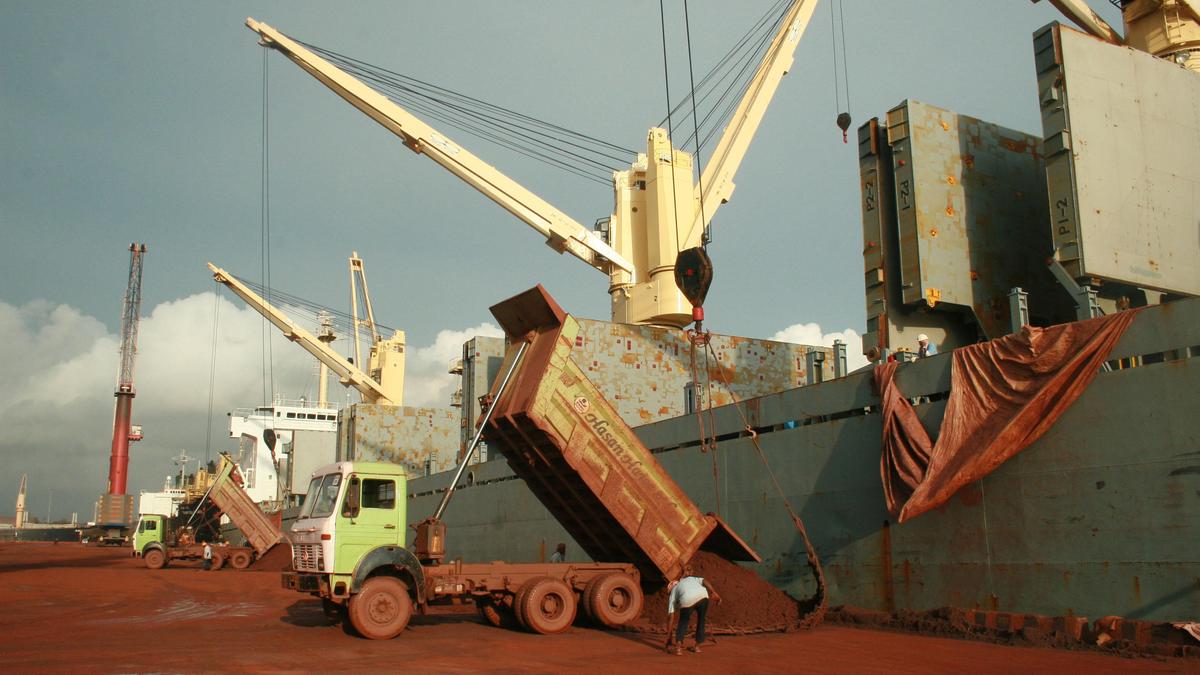

According to the Cabinet note, the policy would result in revenue earning to the government.
| Photo Credit:
To clear the export of iron ore from minor ports in Karnataka, the State government on Thursday approved Karnataka Non-major Ports Iron Ore Handling Policy, 2025, for handling of iron ore through non-major ports under the Karnataka Maritime Board.
Amid large-scale violation of rules in extraction of iron ore and large quantities of iron ore export illegally, the State government had banned export of iron ore from 10 non-major ports in 2010 under the Karnataka Ports (Landing and Shipping Fees) Act, 1961. However, in 2022, the Supreme Court allowed export of iron ore from these ports strictly under the policy of Indian government. It permitted export of iron ore through ports in Karnataka as is being done in the rest of the country.
“The policy is a standard operating procedure for the export of iron ore from these ports. The policy will come into effect prospectively. Since a number of cases are pending in courts and the Lokayukta report, it cannot be implemented with retrospective effect,” Law and Parliamentary Affairs Minister H.K. Patil explained in the post-Cabinet briefing.
The 2010 order
The 2010 order had banned export of iron ore from ports in Karwar, Tadadi, Bhatkal, Malpe, Old Managlore, Belekeri, Honnavar, Kundapura, Hangarkatta and Padubidri. In all, Karnataka has 13 non-major ports.
Incidentally, Belekeri port hit headlines during the peak of illegal transportation and export of iron ore as several lakh tonnes of confiscated iron ore was reported “missing”, which figured in the Lokayukta report too. It was believed that with the connivance of officials, the iron ore had, in fact, been exported.
Revenue generation
According to the Cabinet note, the policy would result in revenue earning to the government through registration fees, license fees (for allotment of land for handling iron ore), wharfage charges, minimum guarantee deposits, security deposits, penalties for non-compliance, or shortfalls and a recurring pollution mitigation, safety and supervision fee of ₹13 per tonne.
Published – November 27, 2025 08:33 pm IST