




Cinema is constantly on a quest for raw talent that breaks existing norms, pushes boundaries, and offers something new to audiences. Yet, talent can be one untamed beast which, when not channelled efficiently, can go haywire. Raju Weds Rambai, a rural romance put together by a young team, presents an unfiltered gaze on a gruesome real-life incident from the late 2000s, unaware of its own toxicity.
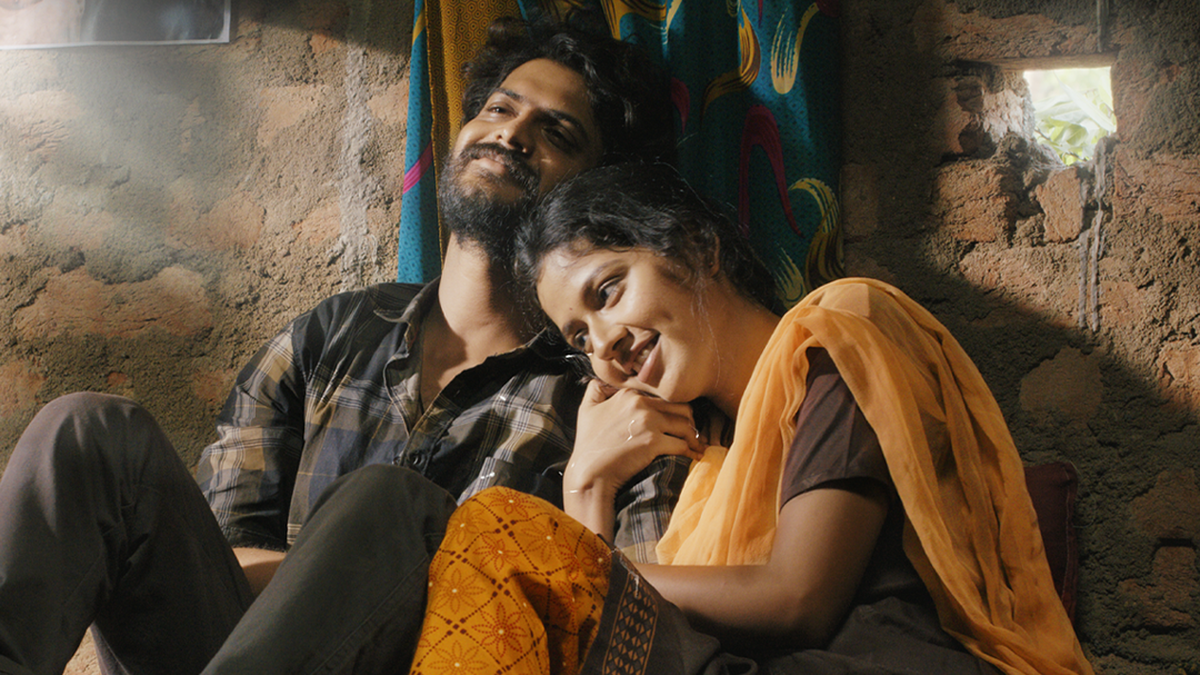
Debutant Saailu Kaampati’s film opens with an arresting visual motif, a drum used by a village music band. It is personified as a sole witness (voice over by Manoj Manchu) to key events in a mortal’s lifetime — birth, marriage and death — indicative of the gloom ahead. The story is centred on a doomed romance between a band owner, Raju (Akhil Uddemari), and a college-going girl, Rambai (Tejaswi Rao).
Raju Weds Rambai (Telugu)
Director: Saailu Kaampati
Cast: Akhil Uddemari, Tejaswi Rao, Chaitu Jonnlagadda
Runtime: 135 minutes
Storyline: The future of a much-in-love couple hangs in balance due to the girl’s father.
While Raju and Rambai are head over heels in love with one another, opposition comes in from the latter’s father, Venkanna (Chaitu Jonnalagadda), a physically challenged man who works as a compounder in the village’s government hospital. He masks his insecurities with his aggression, always provoking uncalled-for confrontations, at home, work and everywhere in between.
Both men, Raju and Venkanna, fall prey to their anger, needlessly complicating simple situations, which have catastrophic repercussions. The women (Raju’s mother, Rambai and her mother) are either hapless victims of the men’s actions or willingly accept their decision. This trope takes quite a problematic turn in the latter part of the film, causing irreparable damage to their lives.
What works for Raju Weds Rambai? Very little, but in its finest moments, it takes a peek at the simple dreams, conflicts of the ordinary villager — the obsession to get a government job, a similar pressure to marry a girl to a government job holder, the temptation to move to a city in quest of greener pastures, the ultimate tussle between self-respect and livelihood demands.
Raju Weds Rambai may have borrowed inspiration from true events, but what it lacks is the introspective lens of a filmmaker. It seems an effort made by, of and for men, struggling to provide a multi-dimensional view of a tragedy. The climax repulses you for its shock value and nearly makes a saint out of Raju for his ‘bravura’ act, forgetting all his previous follies conveniently. As the film battles a larger social malaise, it points a finger at the obvious bad guy, not looking within.
Like many mainstream films, it stretches the elastic too far in sexualising the way a man comes of age and normalises it as humour. Raju and his friends salivate at the prospect of watching a soft-porn film in one of their houses. It could have been just another straightforward depiction of male fantasy, but the tone is too crass to call ‘true to life’.
Later, another sequence has Raju admitting to Rambai about watching adult films and promises to quit it only if he gets to kiss her. Even as the men get to hold their first mobile phone (the film is set in and around 2010), they pay a store owner to download the latest adult videos. In a ‘contest’ between two drunk men, Raju is asked to beat his chest (till the other tires) and yell ‘I love Rambai’ as a proclamation of his ‘sincere’ love.
The music band backdrop gives the license to pump in film (and song) references from the 90s, 2000s and beyond — from Peda Rayudu to Chitram, 6 Teens, Kotha Bangaru Lokam and Falguni Pathak’s pop numbers. The film, in fact, opens with a frame crediting a host of 2000s actors — Tarun, Uday Kiran, Rohit, Arjan Bajwa and others — as men who taught a generation about love.

Both the lead actors, Akhil Uddemari and Tejaswi Rao, are aptly cast in relatable characters in their late teens/early 20s. Akhil is more at ease in the comic segments (the rare ones that work), sharing a good camaraderie with his on-screen friends. Shivaji Raja gets his sympathetic-father act right, while Anita Chowdary isn’t left with much to do.
There are no doubts about Chaitu Jonnalagadda’s promise. The fact that he can pull off the massy, funny dad in Bubblegum as effortlessly as the no-nonsense officer Diwakar in Hit 3 says enough. Raju Weds Rambai pictures him as a toxic father one would love to hate, though the performance would’ve worked better if the role had more meat (beyond his insecurity and rage).
Suresh Bobbili continues to impress in his comfort zone — rooted rural drama, but he could do more to diversify himself without succumbing to market demands. The cinematography leaves a lot to be desired, particularly the intent with which a few sequences are filmed. The dialogues lack focus and precision, sometimes at the cost of crushing a scene’s spirit.
Raju Weds Rambai’s tone-deaf, crass treatment is the primary antagonist for a tragedy that demanded a more cautious, nuanced filmmaking approach.
Published – November 21, 2025 02:14 pm IST