


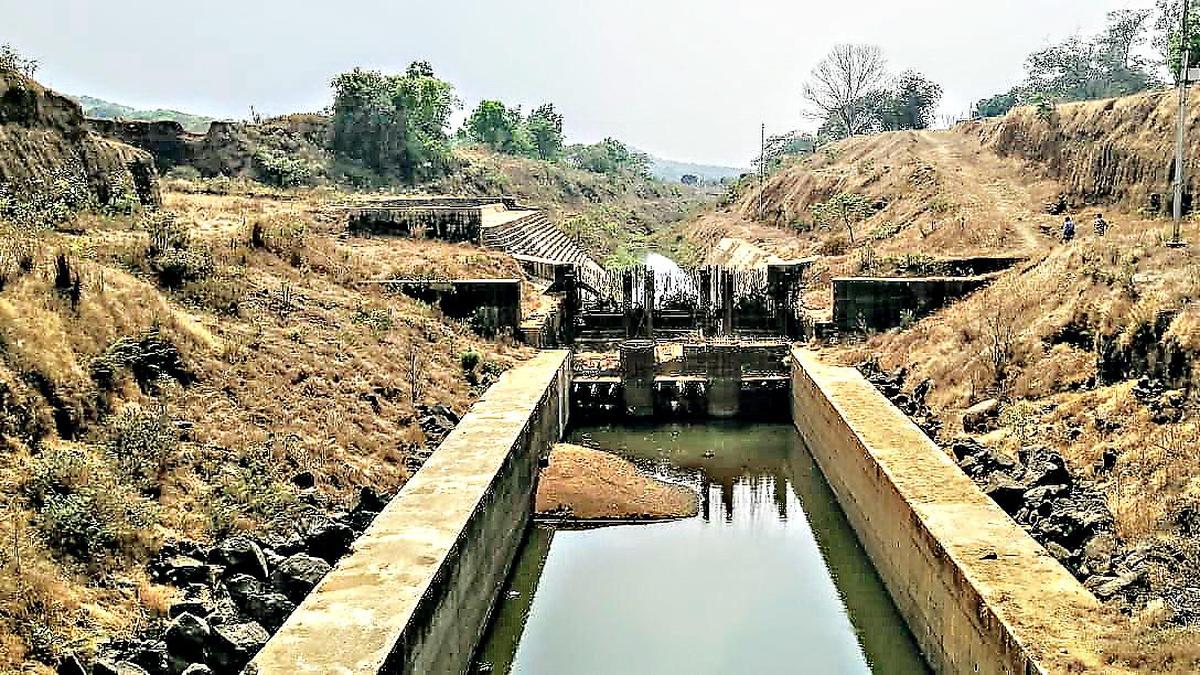

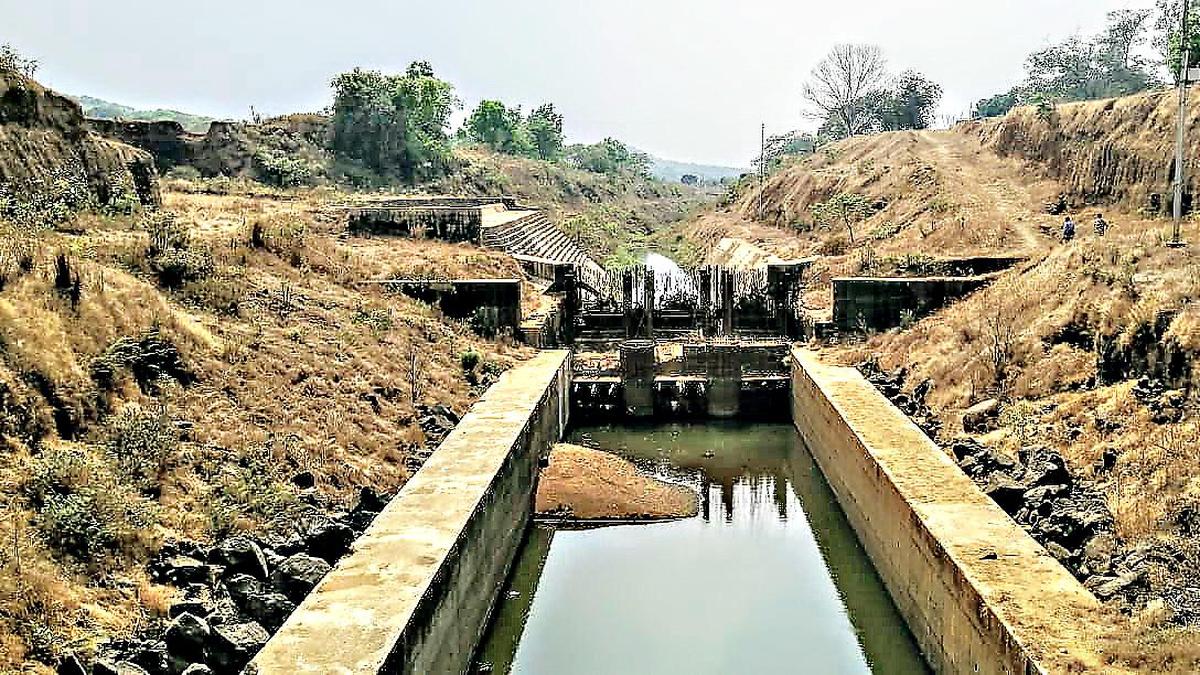
A file photo of work on the Mahadayi river diversion project in Belagavi district.
The Save North Karnataka Citizens Alliance has released a report on the Mahadayi basin projects, saying allowing river diversion schemes in the region could damage the Western Ghats and lead to drying up of rivers in north Karnataka.
In a comprehensive report on Bandura Nala Mahadayi river diversion project and the desertification of northern Karnataka, members of over 30 organisations and 60 individuals, that include environmentalists, social activists, retired officials, and writers, have cautioned against river diversion projects. They said that such projects could dry up northern Karnataka region. They have urged a concerted efforts to protect Western Ghats and its rivers.
“This report is for the benefit of policy-makers, administrators, elected representatives, socio-cultural community heads, grassroots influencers, members of project affected communities, bureaucrats and general public. Most importantly, it is for the people of Belagavi, Bagalkot, Hubballi-Dharwad and Gadag districts,” Nitin Dhond, environmentalist and member of the alliance told The Hindu.
This report deals specifically with the Bhandura Nala Diversion Project and its ecological, economic, socio-cultural, legal, scientific and technical aspects. The analysis categorically points out that the project is untenable in the long term. Additionally, it opens up serious possibilities of advancing the desertification process of north Karnataka region as well as the Malaprabha Basin, he said.
The Mahadayi River Diversion Project is aimed at replenishing the deficit in river Malaprabha through inter-basin transfer. It is located in the Western Ghats forest of Khanapur taluk in Belagavi District. The agricultural community at the tail-end of the left bank canal of Navliuteertha Dam on the Malaprabha views the river diversion as an answer to their irrigation needs. For the ease of obtaining necessary compliance, Karnataka Neeravari Nigam Ltd (KNNL), the project execution agency, portrays it as a drinking water project. However, its implementation has remained indecisive for the past two and half decades, the report said.
In the recent Detailed Project Report (DPR), the project is presented as two separate smaller projects: the Kalasa — Haltara diversion project (1.72 tmcft) at Choria and Kankumbi villages; and the Bhandura Nala Diversion Project (2.18 tmcft) at Nersa Village. Both are headwater spring-streams of the Mahadayi, originating in the vicinity of Bhimgad WLS and Mhadei WLS in the Eco Sensitive Zone I of the Western Ghats. These sanctuaries and their adjacent contiguous forests find their place in the WGEEP and HLWG reports of Madhav Gadgil and late Kasturirangan respectively, for their ecological sensitivity.
The report also attempts to provide alternatives that are most cost effective and beneficial to sustaining the river systems. These river systems are the backbone of agriculture further downstream in the Malaprabha basin, the north Karnataka region, and beyond. In the recent months the concerns of local resident communities of villages near the proposed project site are palpable as there is a Gazette Notification under the seal of the Governor of Karnataka for land acquisition of their productive agricultural lands.
Residents of Hubballi-Dharwad-Belagavi-Khanapur areas have contributed to the report. It represents the voice of resident communities of the Bhimgad region as well as concerns voiced by people of the affected regions.
The authors of the report have relied heavily on scientific and research documents and publications of IISc, ATREE, KSNDMA, NIH, ISRO, IMD and other studies.
Members have been distributing copies of the reports to senior officials in the State government and district administration and the legal support team of Karnataka that is engaged in court battles over the projects.
Published – November 29, 2025 05:06 pm IST