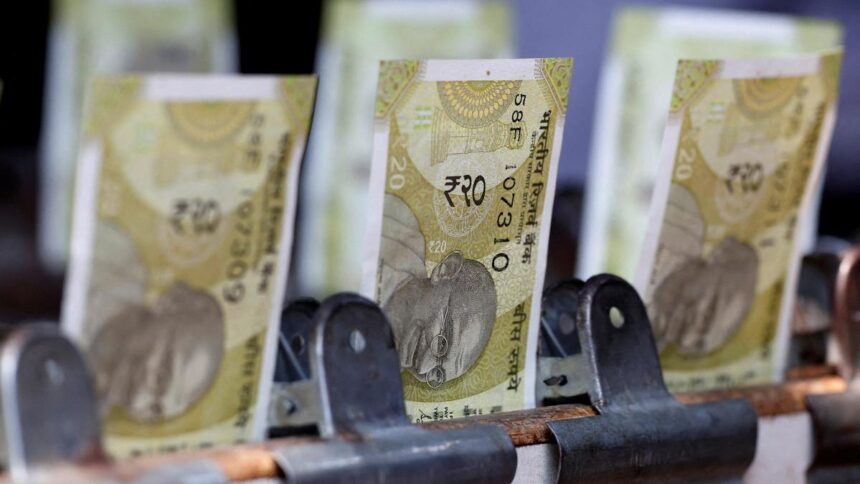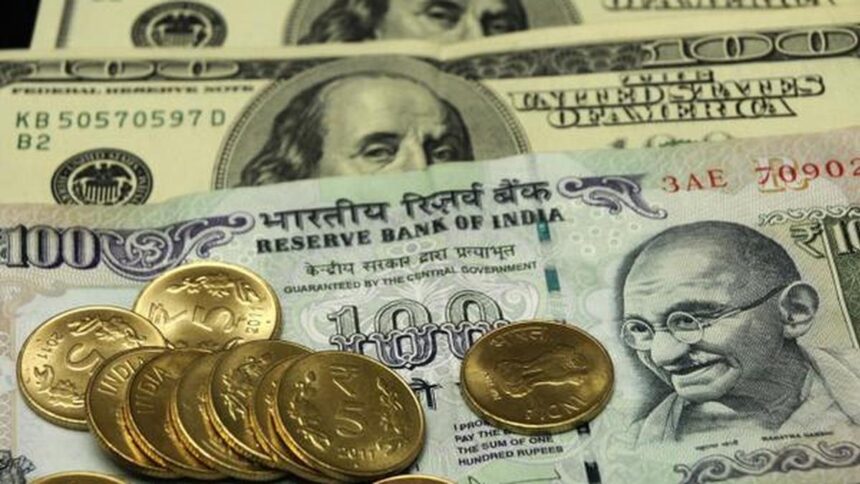




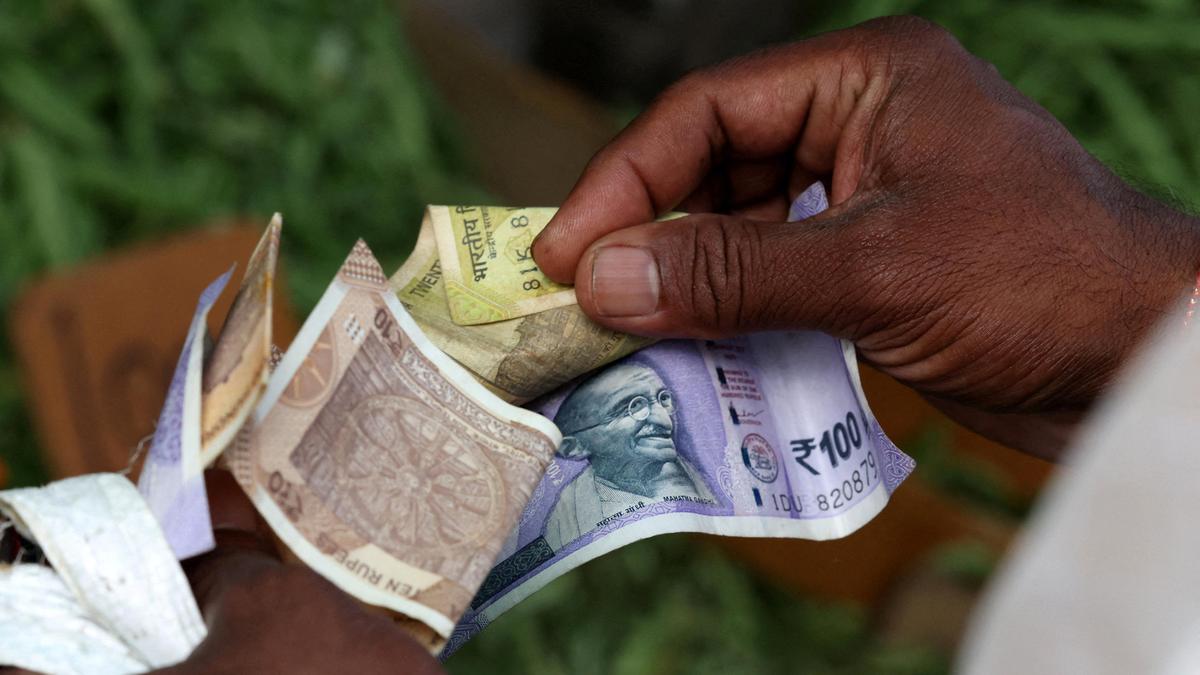

Image used for representational purposes.
| Photo Credit: Reuters
The rupee hit a record low on Friday (December 12, 2025), as sentiment remained bogged down by the absence of a trade deal with the U.S. and portfolio outflows, drawing likely intervention by the Reserve Bank of India (RBI) to curb the fall.
The rupee weakened to ₹90.55 against the U.S. dollar, slipping past its previous all-time low of ₹90.4675 hit on December 11. The currency was last at ₹90.3475 as of 10:00 a.m., little changed on the day.
The rupee is Asia’s worst performer this year. It has fallen nearly 6% against the dollar year-to-date, as steep U.S. tariffs of up to 50% on Indian goods hurt exports to its biggest market, while also diminishing the appeal of local equities for foreign investors.
With negotiations ongoing, Prime Minister Narendra Modi said he spoke with U.S. President Donald Trump by phone on Thursday (December 11), as New Delhi seeks relief from 50% U.S. tariffs.
“The rupee weakness has further to go if tariffs are here to stay. The expectations are currently one-sided explaining importer demand while exporters remain missing, plus the pressure from portfolio outflows,” said Dhiraj Nim, an economist and FX strategist at ANZ.
“The RBI will be open to weakness but in a calibrated manner,” he said.
Foreign investors have net sold $18 billion of Indian shares in 2025 so far, making it one of the hardest-hit markets in terms of portfolio outflows.
Traders pointed to firm dollar bids in the non-deliverable forwards market alongside hedging demand from importers as factors behind the rupee’s decline on Friday (December 12).
The Central Bank, meanwhile, likely stepped in via dollar sales through state-run banks to curb the rupee’s fall, four traders told Reuters.
“As the rupee touches an all-time low and remains near it, we continue with our process of asking exporters to continue selling (dollars) in cash and importers to keep buying the dollars on the dip (in USD/INR),” said Anil Bhansali, head of treasury at Finrex Treasury Advisors.
Asian currencies were trading mixed while the dollar index wallowed near a two-month low.
According to analysts and bankers, U.S. trade negotiations remain the focal point for the rupee, and a breakthrough could help the currency snap from its recent falling streak.
The rupee’s rough patch has also pushed into undervaluation territory.
The currency’s trade-weighted real effective exchange rate, which accounts for the variation in inflation with trading partners, declined to 97.47 as of October, RBI data showed. A reading below 100 signals undervaluation.
Published – December 12, 2025 11:42 am IST