



The Supreme Court on Wednesday directed seven activists accused in the alleged larger conspiracy behind the 2020 Delhi riots to furnish their permanent addresses at the next hearing.
A Bench of Justices Aravind Kumar and N.V. Anjaria issued the direction while considering the bail petitions filed by Sharjeel Imam, Umar Khalid, Gulfisha Fatima, Meeran Haider, Shifa-ur-Rehman, Mohammad Saleem Khan, and Shadab Ahmed, all charged with orchestrating a coordinated conspiracy to incite the unrest. No reasons were assigned for seeking the addresses.
Addressing senior advocate Siddharth Dave, appearing for Mr. Imam, Justice Kumar orally stated, “Please furnish the permanent addresses. Please inform the other accused as well.” Mr. Dave agreed to convey the instruction.
The court on Wednesday could not hear arguments on behalf of the accused owing to paucity of time. The judges expressed concern over the extended proceedings, observing that arguments on bail petitions ought to be concluded with greater promptness.
“The bail pleas are being argued as if they were a second appeal. Fresh arguments are being made,” Justice Kumar remarked.
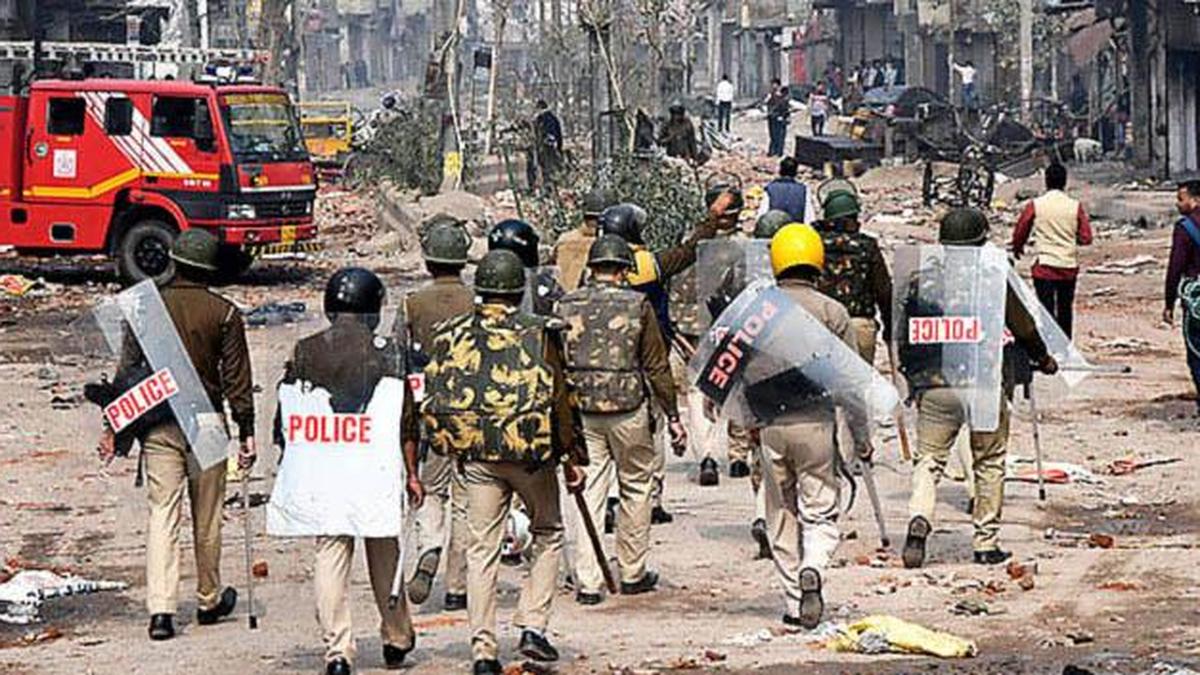
The Bench has been hearing the bail petitions for over a month. The accused have challenged the Delhi High Court’s September 2 order denying them bail. The High Court had described their roles as “prima facie grave,” observing that the material on record suggested a coordinated plan behind the riots, which left 53 people dead and hundreds injured.
Time caps on arguments
The Bench prescribed time limits for the oral submissions yet to be advanced. Senior counsels appearing for the accused were directed to restrict their remaining arguments to 15 minutes each, while any clarifications sought by Additional Solicitor-General S.V. Raju on behalf of the Delhi Police were capped at 30 minutes.
“Arguments have been advanced by both sides substantially. We are of the view that a time schedule needs to be fixed. Oral arguments shall not exceed 15 minutes each, and clarifications by the Additional Solicitor-General shall not exceed 30 minutes,” the Bench recorded.
Delay has emerged as a significant point of contention. The activists have attributed the pendency in the trial to the Delhi Police, contending that such delay infringes their constitutional right to a speedy trial. They alleged that the police took over three years to complete the probe, filing four supplementary charge sheets until June 2023, and that the special prosecutor alone had sought adjournments on 59 dates.
Refuting these claims, Mr. Raju contended that the proceedings were repeatedly stalled by the accused themselves, who resisted the commencement of arguments on the framing of charges.
Bail conditions
Earlier, senior advocate A.M. Singhvi, appearing for Ms. Fatima, told the Bench that she was the only woman still in custody and described her “endless custody” as “astonishing” and “unprecedented.” He questioned what public interest was served by keeping her in prison for over six years, highlighting that in other jurisdictions, including the United States, accused persons are routinely released on bail subject to stringent conditions to prevent witness intimidation and safeguard evidence.
“In other countries, liberty is ensured with anklets and GPS. What public interest are we serving by keeping her in jail? What will she do? Will she try to flee?” he asked.
In a similar vein, senior advocate Kapil Sibal, appearing for Mr. Khalid, contended that his client’s prolonged incarceration amounted to a “punitive act” by the State, intended to deter other university students from protesting.
“Ultimately, what is the public interest? First, if I come out, I should not do activities that endanger the State. Your Lordships have enough power to ensure that I don’t. This is punitive. What have these kids done? They were protesting. You cannot say that it is a terrorist act,” he submitted.
In its affidavit, the Delhi Police alleged that the accused conspired to use the protests against the Citizenship Amendment Act as a “sponsored camouflage” and a “radicalising catalyst” to engineer nationwide communal riots aimed at “regime change.”
The affidavit further claimed that to achieve this objective, Mr. Khalid and Mr. Imam “broke the secular fabric of JNU” and created a communal WhatsApp group, Muslim Students of JNU, to mobilise students across campuses under their leadership.
Published – December 03, 2025 08:03 pm IST