





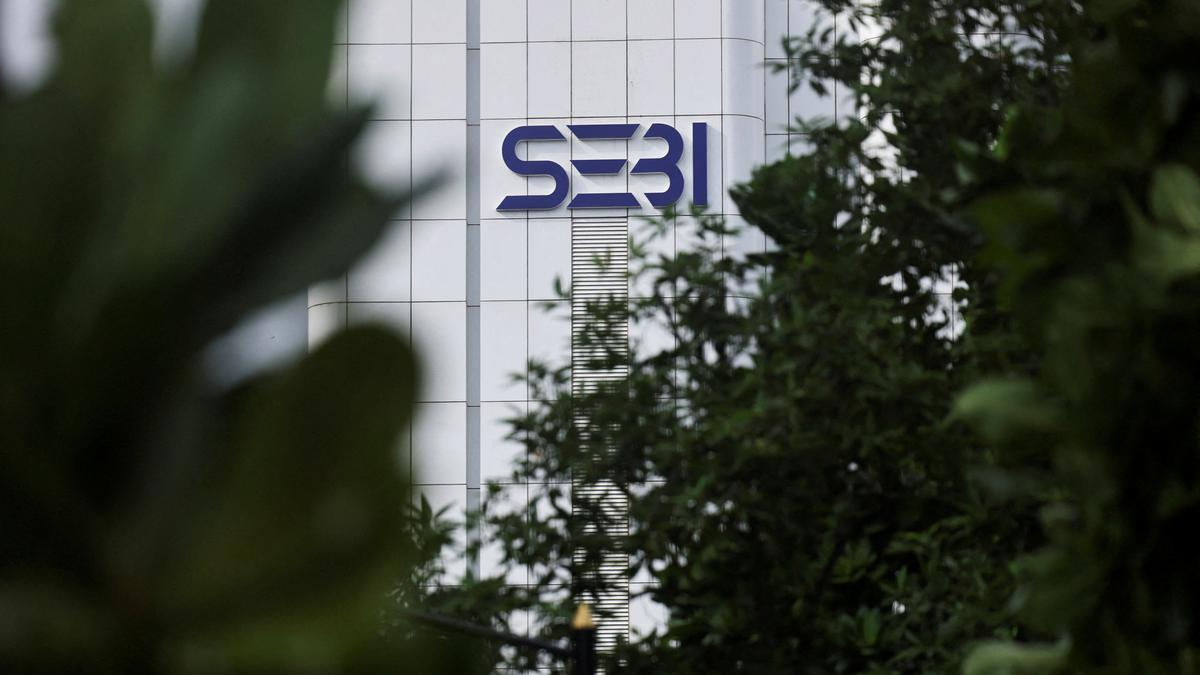
FILE PHOTO: The logo of Securities and Exchange Board of India (SEBI) is seen on its headquarters in Mumbai, India, September 6, 2024. REUTERS/Francis Mascarenhas/File Photo
| Photo Credit: Reuters
Markets regulator Securities and Exchange Board of India (SEBI) has amended rules revamping the share-allocation framework for anchor investors in maiden public offerings, a move aimed at broadening the participation of domestic institutional investors such as mutual funds, insurance companies, and pension funds.
Under this, the regulator has increased total reservation in the anchor portion to 40% from 33% earlier. This comprises 33% for mutual funds and the remaining 7% for insurers and pension funds.
SEBI stresses on cyber security besides compliance
“If the 7% reserved for insurers and pension funds remains unsubscribed, it will be reallocated to mutual funds,” the SEBI said in a notification dated October 31, 2025.
Additionally, the regulator has increased the number of anchor investors allowed for IPOs with an anchor portion above ₹250 crore, by raising the existing limit from 10 to 15 per ₹250 crore.

“Thus, a minimum of 5 and a maximum of 15 investors shall be allowed for allocations up to ₹250 crore. For every additional ₹250 crore or part thereof, an additional 15 investors are to be permitted, subject to a minimum allotment of ₹5 crore per investor,” SEBI said.
Also, in the discretionary allotment under anchor portion, Category I (up to ₹10 crore) and Category II (above ₹10 crore up to ₹250 crore) have been merged into a single category for allocations up to ₹250 crore, with a minimum number of anchor allottees as 5 and maximum as 15 (minimum allotment 5 crore per investor).
The framework would broaden the participation of long-term institutional investors in the IPOs. To give these effect, the regulator has amended ICDR (Issue of Capital and Disclosure Requirements) norms, which would come into force from November 30, 2025.

Published – November 06, 2025 04:27 pm IST