



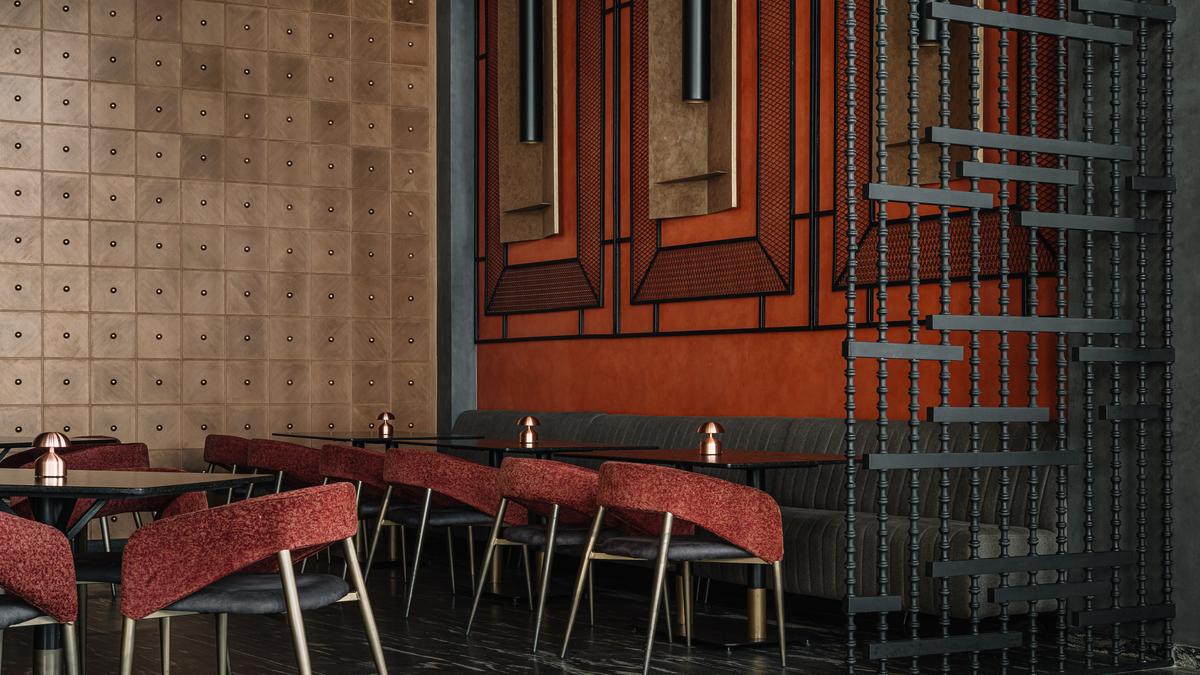

Bold red punctuated by metal, dotted with abacus tiles. Does it scream Asian eatery or modern décor that could fit any aesthetically designed interior? A unique homage to mixed-metal interiors and an inventively designed interactive layout are some of the reasons Noho Progressive Asian House, Hyderabad, made the ‘Standalone-Shortlist’ at the Restaurant and Bar Design Awards 2025 (which was announced on October 27 in Dubai).
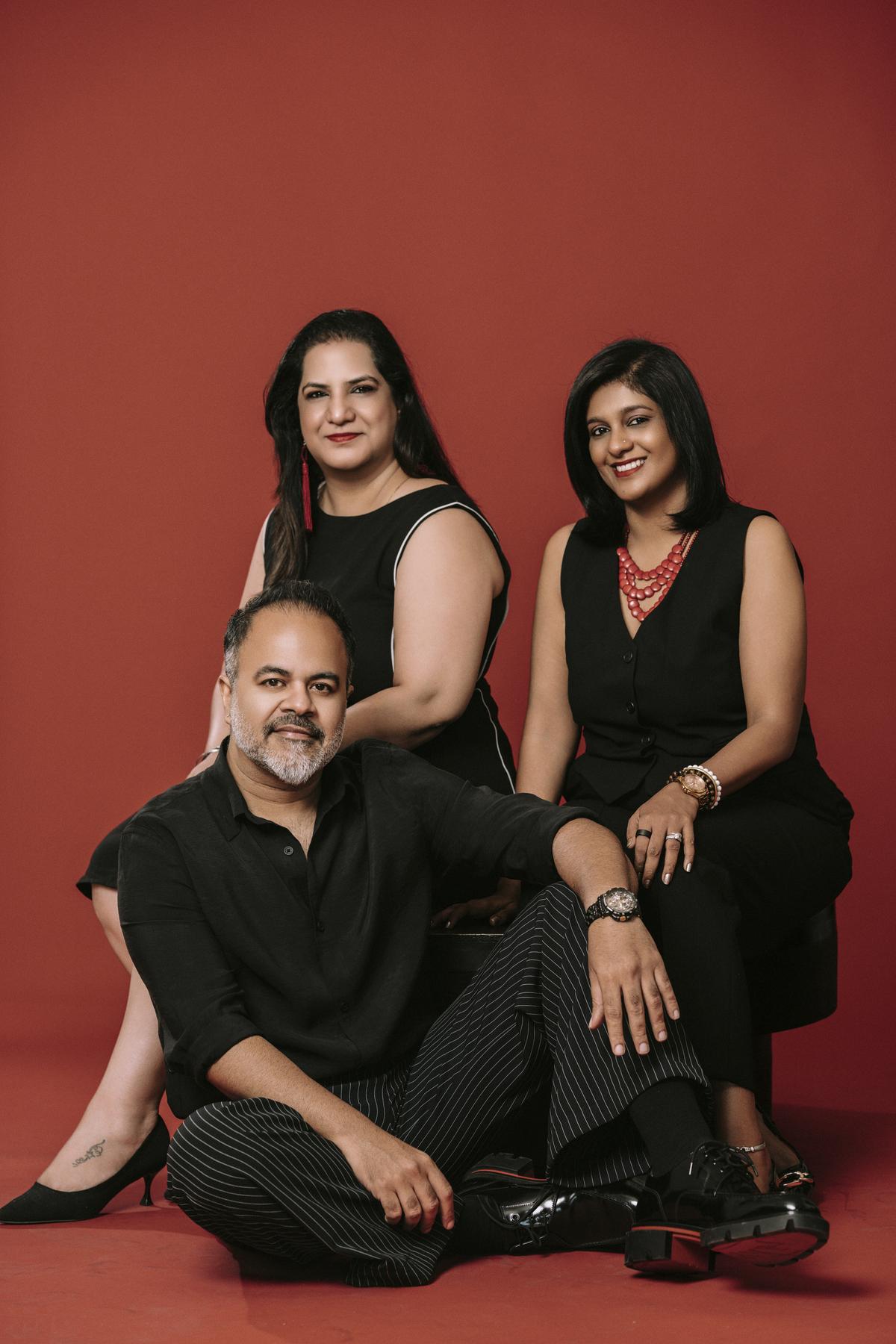
Sukhritaa Deepak Menda, Ameet Mirpuri and Kshitja Kanwar.
Specialising in Pan-Asian cuisine, Noho takes its design seriously. The Jubilee Hills eatery, ensconced in shades of scarlet replete with dragon motifs and mathematical tilework, distinguishes itself from other restaurant interiors, with its bold use of colour, metallurgy and station design.
Navigating Noho
The Jubilee Hills building has a metal façade, softened by lush greenery, so the space is inviting, not imposing. Founder Aman Chainani and Shreya Anand chose ‘NOHO’ as an acronym that embodies novelty, opulence, hand-crafted, and one-of-a-kind cuisine.
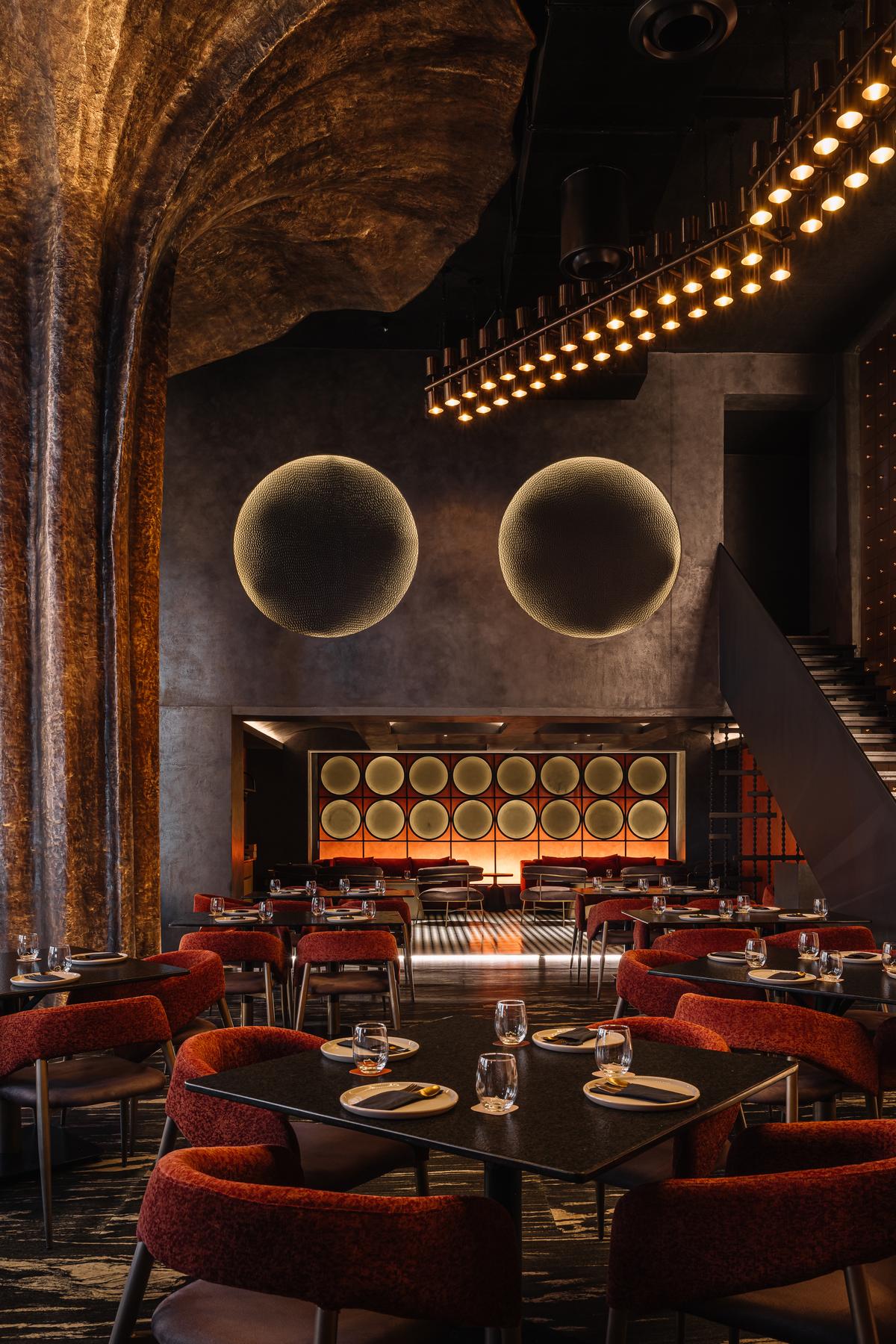
A view of Hyderabad’ Noho.
For the design team, the restaurant space had to be “elemental and lasting”. Says Ameet Mirpuri, principal designer of Visakhapatnam-based Ameet Mirpuri Design Studio, “Metal became the natural choice because of what it stands for — strength, adaptability, and a certain timelessness. Just like the restaurant itself, metal can take on countless forms without losing its character. We wanted Noho to echo that resilience and versatility.”
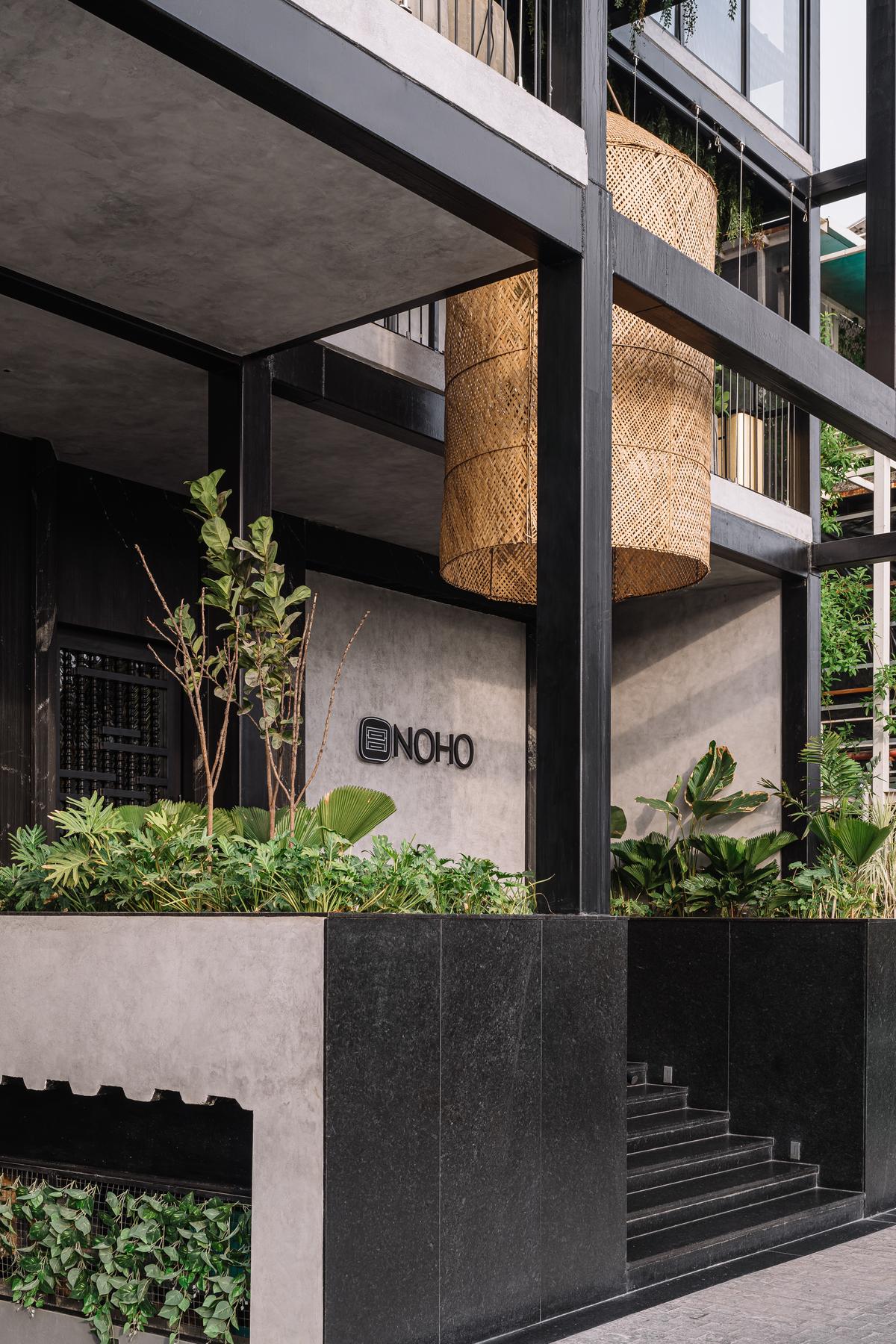
A view of Hyderabad’ Noho.
Within the restaurant, each metal plays a role — brass lends warmth, copper offers a playful glow, while iron grounds the space and steel adds edge. An abacus tile wall is a nod to Asian design. “It’s part screen, part sculpture — something that invites people to look closer and keeps the space feeling alive,” states Mirpuri. From bold chandelier beams to cascading lights over the black chrome bar fronts, every detail is designed to entice and intrigue. “We wanted it intimate, sophisticated, and endlessly revisit-worthy,” says Mirpuri.
Three circular stations anchor the main floor: the central bar flanked by a sushi bar on one side and a teppanyaki grill on the other, allowing diners to explore the space at their own pace, while offering a view of the interactive stations from across the room. The terrace bar echoes the one inside, with its metallic-ceramic frontage and a stalactite-like boulder, frozen mid-formation and illuminated from within.
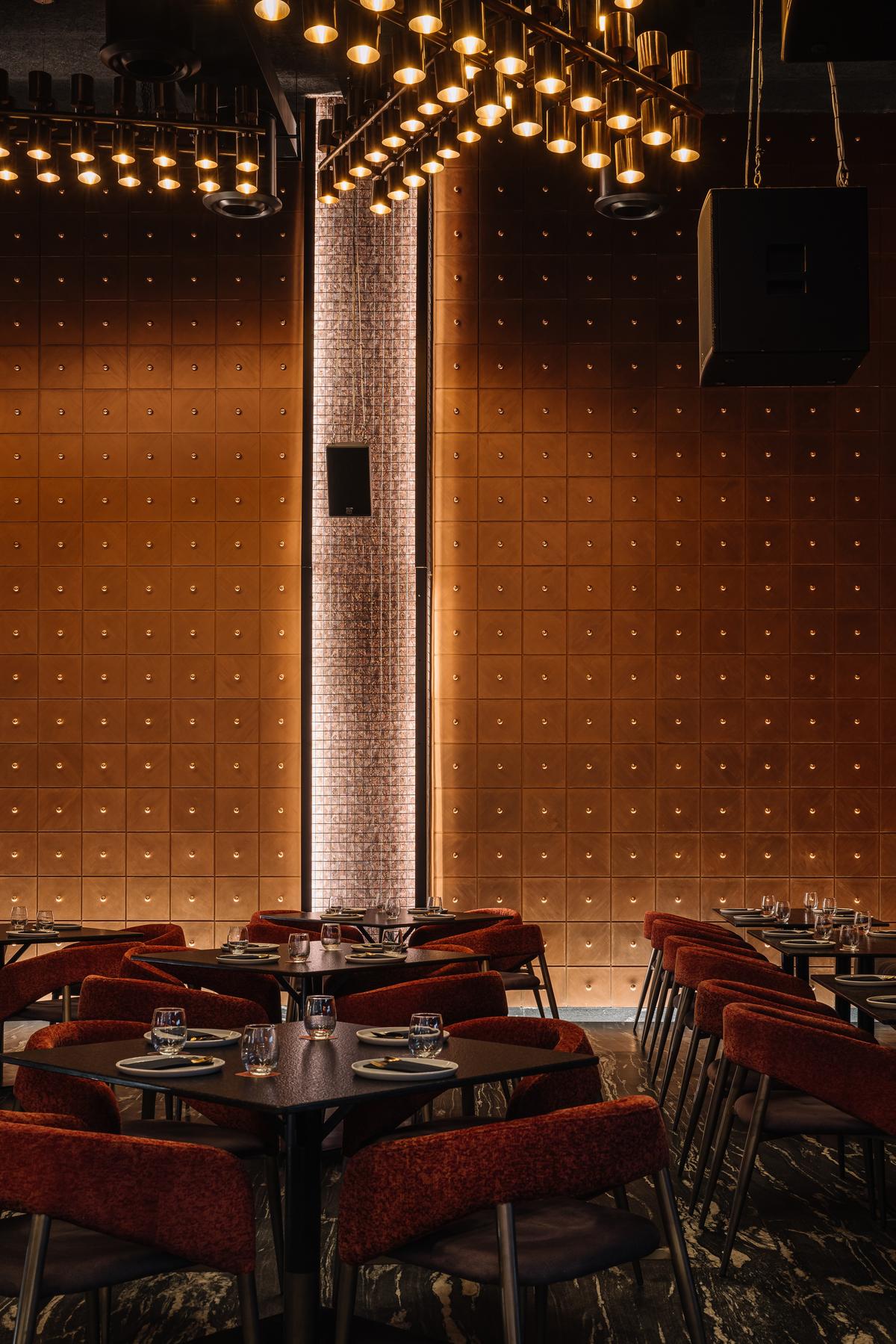
A view of Hyderabad’ Noho.
“The circular stations were about creating flow, not chasing trends. Layering guest and staff areas came from that same thinking: keep the experience seamless for the guest, while giving staff clear, efficient zones behind the scenes. It’s intimacy without compromise,” says the designer. The flooring offers a contrast to the metallic elements, with a streaked black surface offering an ink wash painting to tread on.
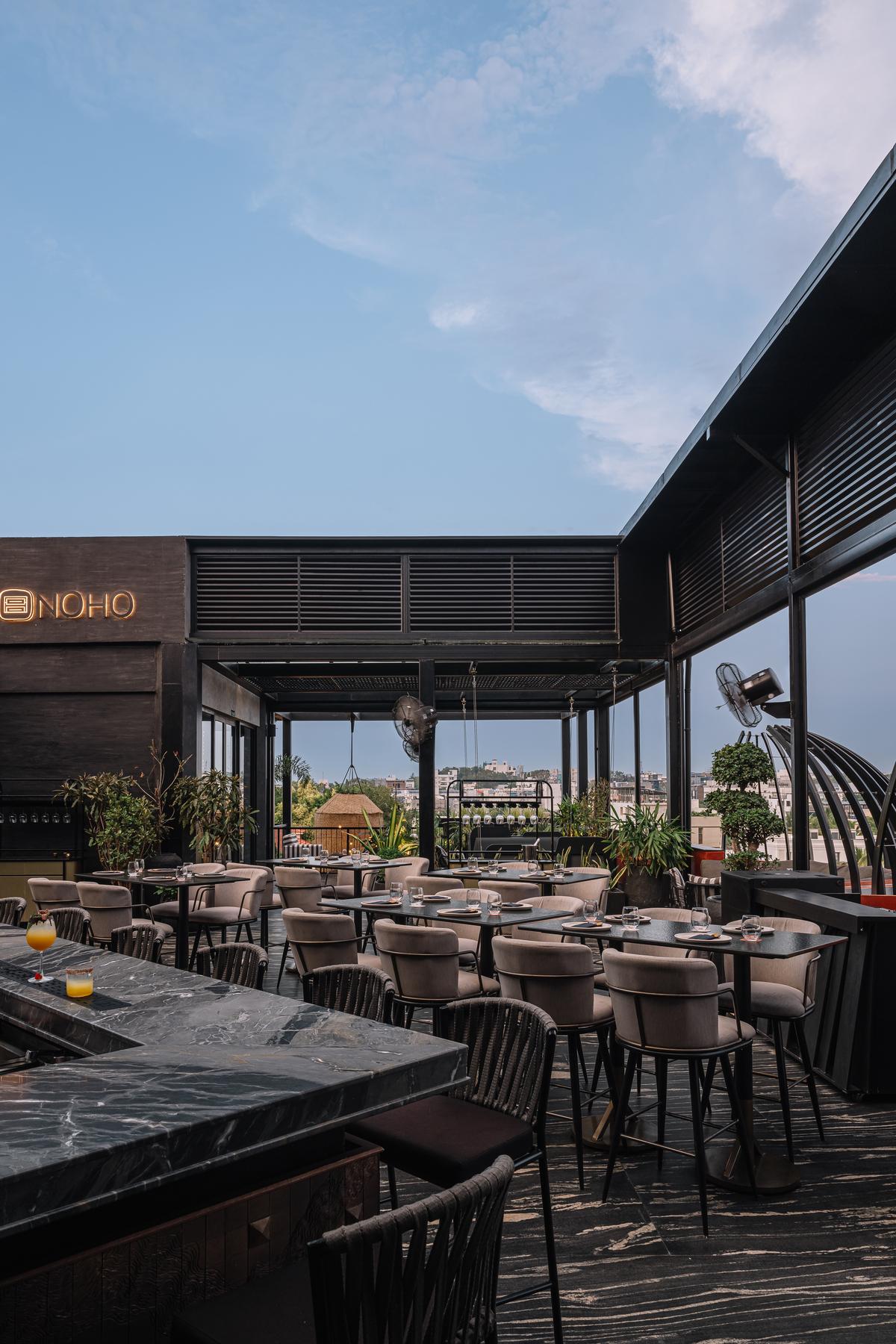
A view of Hyderabad’ Noho.
Designing for revisits
Noho’s guests come for the bold design and inventive menu, but stay for its string of live counters — sushi, teppanyaki, and a rooftop robata grill. The design plays with the senses, as you scan the ruby-hued interiors, you’re drawn in by the aroma of a 95 dish-strong Chinese, Japanese, Korean and Indonesian menu, with the sizzle of Korean stone bowls, the delicate trays of sushi, and smoky tones of robatayaki, filling the interiors. Andre Acacio Camara, lead designer at Bengaluru-based Studio Camarada, which has designed over a dozen bars, restaurants and coffee shops, says, Instagram-worthy interiors work only for the first visit. You need to set a unique language to bring diners back just for the design. “You don’t want to be bored by aesthetics. When designing with open stations, izakaya style or for tea ceremonies, the design is largely cuisine-driven, where you’re seated around a space. In chef-driven Japanese or Korean restaurants, the chef takes centre stage and provides a unique gastronimical outing. With Gen-Z diners looking for experiences over just a meal, and millennials with dual income and no kids, this immense disposable income is now spent on dining experiences a fair bit. Overall, the quality of spaces and interiors is much superior these days, to engage with this audience.”
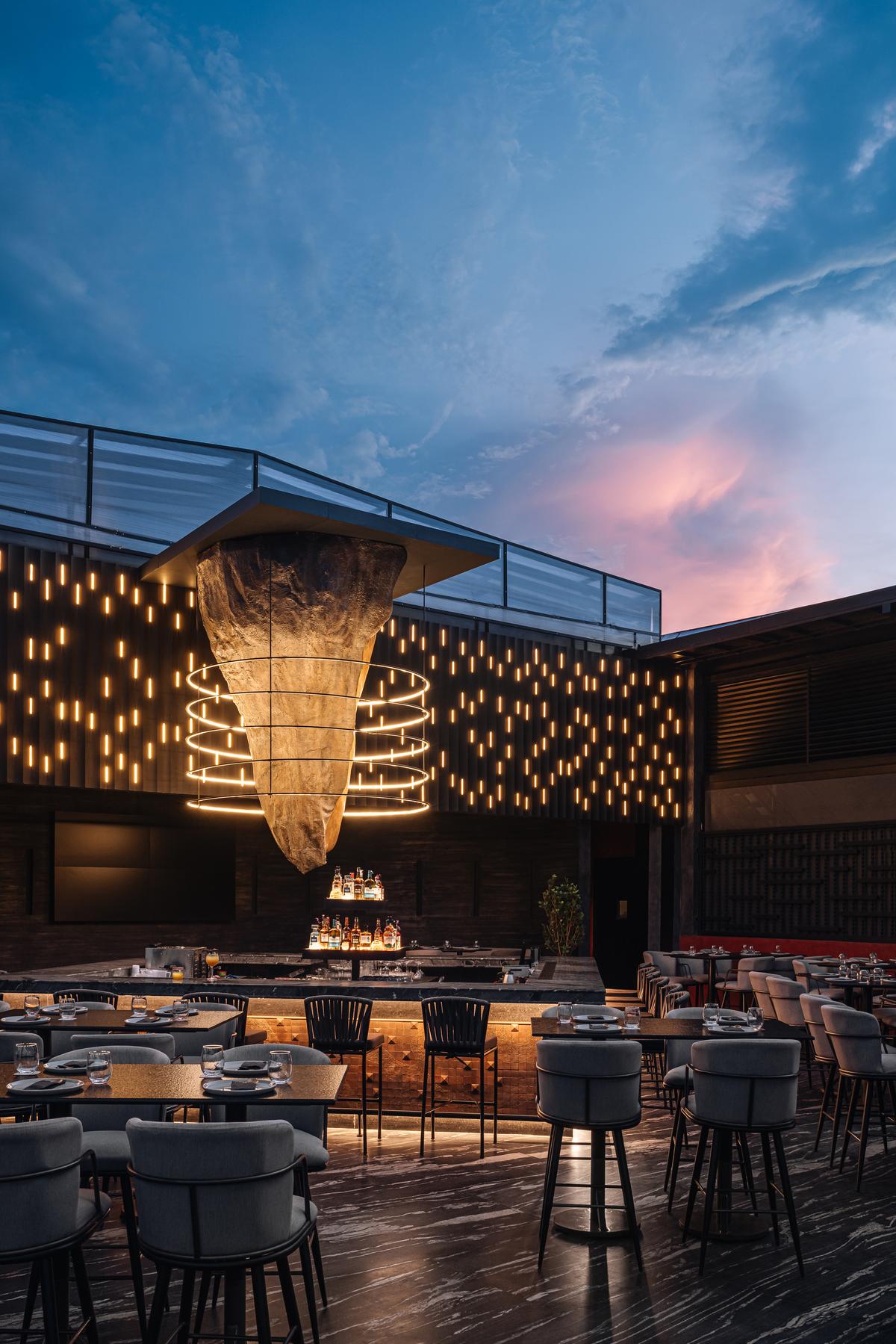
A view of Hyderabad’ Noho.
User experience
Noho is designed to offer drama. But it shines because its lighting, metallic accents, high ceilings and tactile motifs interact with each other rather than distract diners. “It all comes down to balance. You need intimacy without crowding, drama without gimmicks, and materials that can age with grace. The way a surface feels under your hand, the way a bar catches the light, the way a live counter draws people in. When those pieces click, the design stops being just décor and starts becoming part of the memory people take home,” Mirpuri concludes.
Dining trends
Urban Indians now dine out around five times a month. This is expected to increase to 7 to 8 times a month.
Restaurant formats like fine dining have surged 105% recently.
Luxury dining has risen nearly 120% as consumers with higher disposable incomes seek elevated experiences.
The freelance writer is based in Chennai.
Published – November 21, 2025 05:26 pm IST