


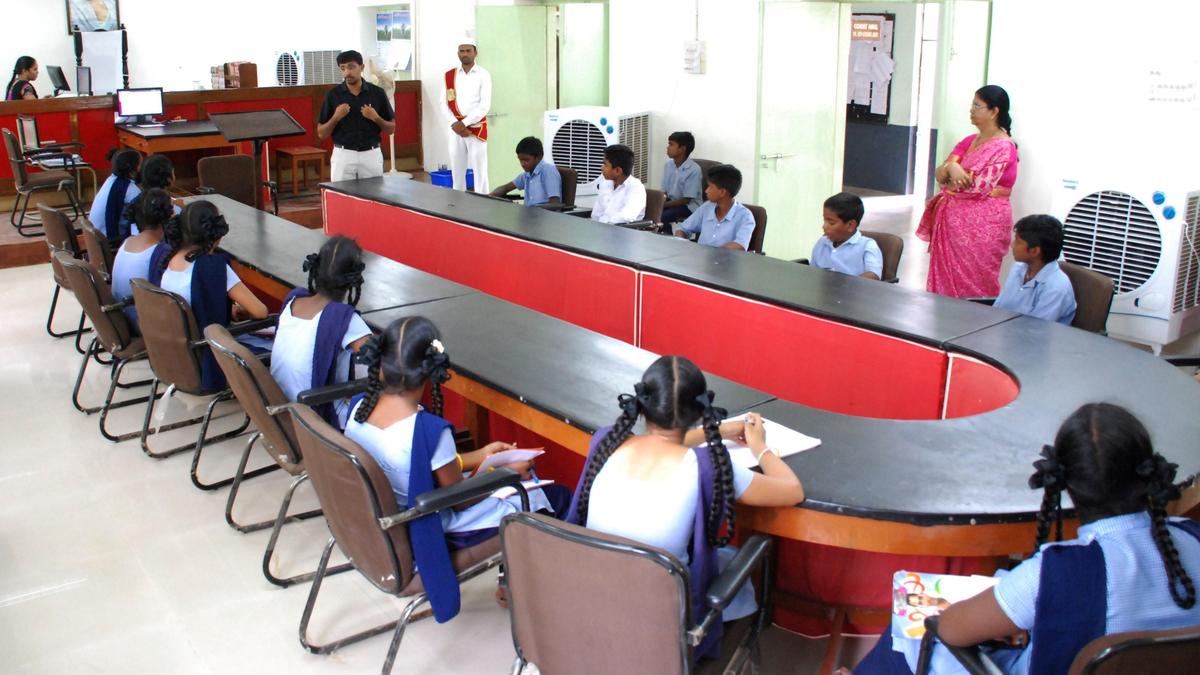

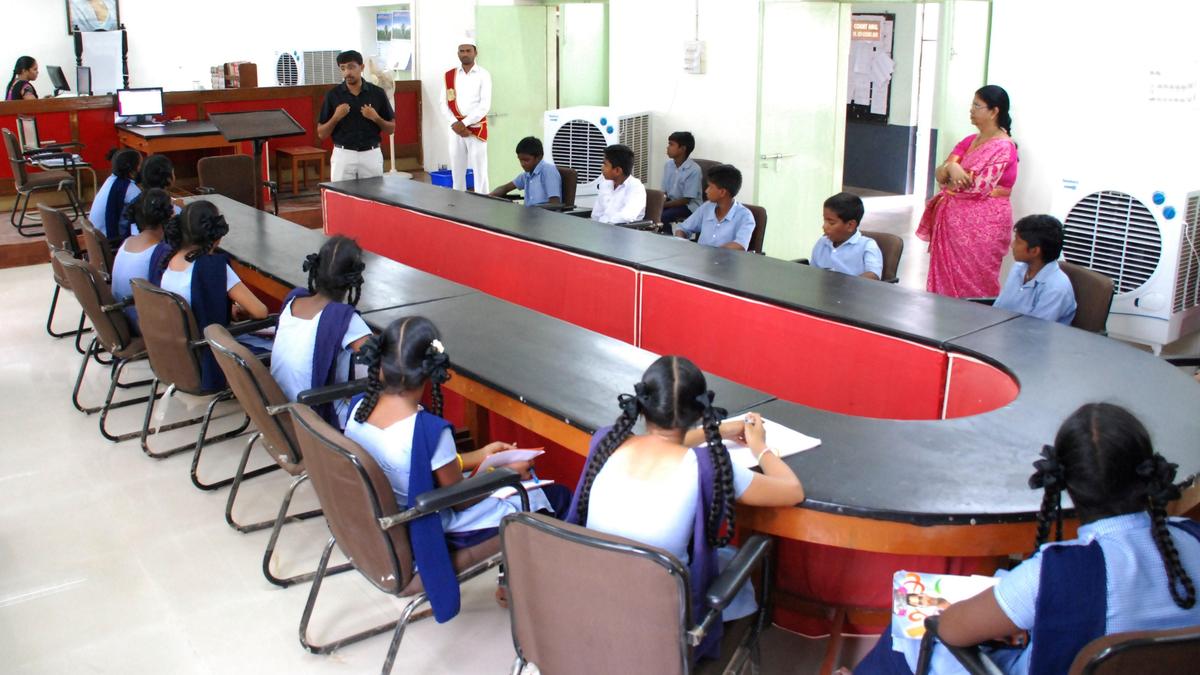
The RCT field experiment, the largest ever on the efficacy of media literacy, is also the first to evaluate the causal effect of a sustained, classroom-based media literacy programme.
| Photo Credit: Singam Venkataramana
Classroom-based media literacy programmes can be an effective intervention to counter misinformation and empower children to discern true from false information, says a new study published in the American Political Science Review.
Titled ‘Countering Misinformation Early: Evidence from a classroom-based Field Experiment in India’, the report, based on a randomised control trial (RCT) experiment, found that students who received the ‘treatment’ became sharper at telling fact from fiction, shared less misinformation, trusted better sources, and relied more on science compared to the ‘control’ group of students who did not undergo the media literacy programme.

The RCT field experiment, the largest ever on the efficacy of media literacy, is also the first to evaluate the causal effect of a sustained, classroom-based media literacy programme. It involved over 13,500 adolescent children in Bihar from grades 8 through 12. The students, drawn from 583 villages in 32 districts, participated in four 90-minute classroom-based media and information literacy sessions over a 14-week period from November 2023 to March 2024.
Separate pool of teachers
The researchers partnered with the Bihar Rural Livelihoods Promotion Society (BRLPS), also known as ‘Jeevika’, to conduct the intervention as an official course offered through the State government. They also hired a separate pool of teachers rather than relying on the existing government school teachers to deliver the lessons. The curriculum, focused on tackling health-related misinformation, aimed to “enhance scientific knowledge about health and counter”, “equip students with broad critical skills and practical tools to encourage a more responsible consumption of information”, and “shift norms surrounding misinformation”.
While the ‘treatment’ group received the media literacy education, the ‘control’ group received classes in conversational English, thereby ensuring “equivalent engagement with a long-term programme and only varying the content of instruction”.

When the participants were surveyed four months after the intervention, it was found that the effects of the educational programme not only persisted but also extended to political misinformation — an outcome the researchers connect to the fact that the curriculum was not only about knowledge expansion but also focused on critical thinking skills. Further, the study found a “trickle-up effect” in terms of “household treatment diffusion”. The parents of “treated” students became more adept at discerning misinformation. “As many countries seek long-term solutions to combat misinformation, these findings highlight the promise of sustained classroom-based education,” notes the report.
The study was led by a group of four academics, Sumitra Badrinathan from American University, United States, Priyadarshini Amar and Simon Chauchard from University Carlos III Madrid & Instituto Carlos 3; Juan March, Spain, and Princeton University, United States.
Published – October 27, 2025 07:16 pm IST