



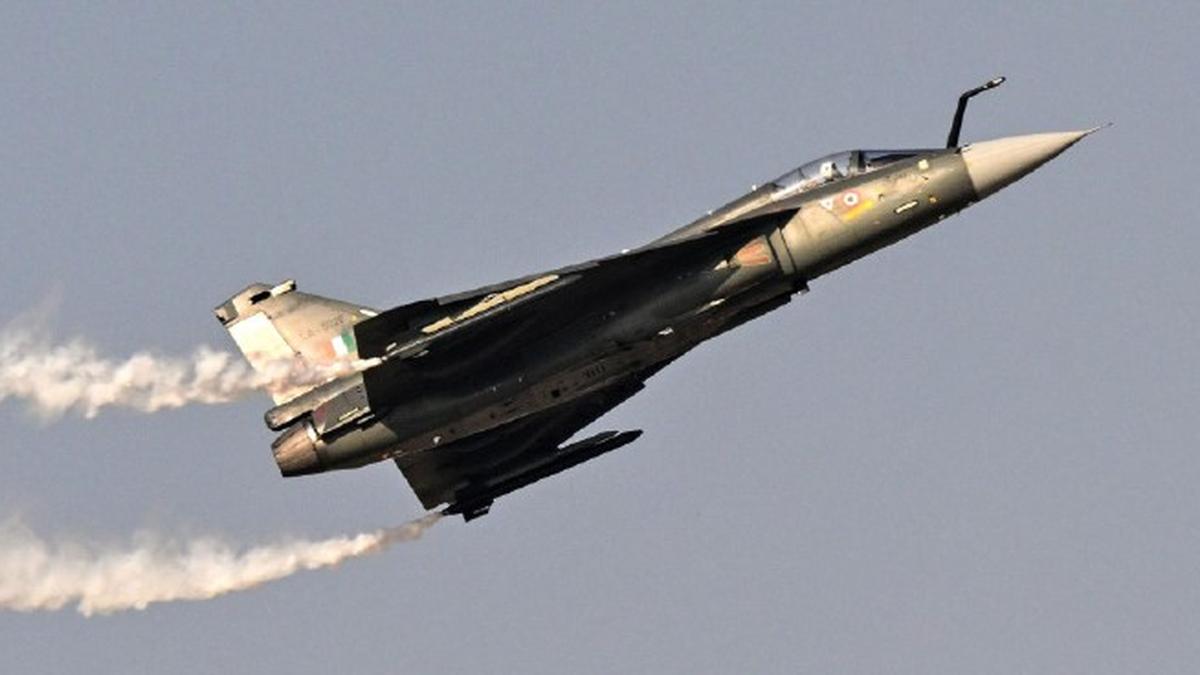

The crash of a Tejas Mk-1 Light Combat Aircraft (LCA), at the Dubai Air Show on November 21, which resulted in the tragic death of Indian Air Force (IAF) pilot Wing Commander Namansh Syal, has sparked an intense debate over Hindustan Aeronautics Ltd’s (HAL) capabilities and the government’s commitment to indigenous defence manufacturing.
Officials from both HAL and the IAF, however, maintain that the Tejas platform remains one of the safest contemporary fighter aircraft in its class. Addressing the concerns at an event in Delhi on Friday, HAL chairman and managing director D.K. Sunil strongly defended the jet’s track record. “There is absolutely no problem with Tejas; it is absolutely safe, and its safety record is the best in the world. What you saw in Dubai was an unfortunate incident,” he said.
Aviation experts have echoed this view, advising against drawing premature conclusions. They note that modern fighter operations involve inherent risks, and isolated incidents should be evaluated in context. Many believe the Dubai crash is unlikely to impact Tejas’s growing export potential.
The Dubai crash marks the second Tejas accident in less than two years. In March 2024, a Tejas fighter went down in Rajasthan’s Jaisalmer — the first crash in the aircraft’s 23-year flight history. Since its maiden test flight in 2001, the Tejas had maintained an unblemished record.
The long gap without major accidents had significantly strengthened confidence in the indigenous programme, which has been under development since the early 1980s.
The LCA was conceived as a replacement for the ageing MiG-21 fleet, which had served as the backbone of the IAF for decades. Over the years, the programme evolved through exhaustive testing, system upgrades and technological breakthroughs.
Today, the Tejas family includes several variants: the Mk1, Mk1A and the under-development Mk2, along with trainer and naval versions. The Mk1 is the initial production model currently operated by the IAF, while the Mk1A represents a substantial technological leap with its AESA radar, advanced electronic warfare suite, beyond-visual-range missile capability, mid-air refuelling system and reduced radar cross-section.
Smallest and lightest
Tejas is the world’s smallest and lightest supersonic fighter in its class. It features a delta-wing configuration and a quadruplex digital fly-by-wire flight control system, along with advanced flight control laws designed to enhance manoeuvrability.
With a maximum payload capacity of 4,000 kg and a maximum takeoff weight of 13,300 kg, the aircraft is designed primarily for air combat and offensive air support missions, with reconnaissance and anti-ship roles as secondary capabilities. The IAF currently flies the Mk1 with No. 45 Flying Daggers and No. 18 Flying Bullets squadrons at Sulur Air Force Station, with additional units planned in the coming years. A major milestone for the programme came in March 2024 when the first series production Mk1A completed its inaugural flight. HAL has since commissioned three dedicated production lines — two in Bengaluru and one in Nashik — to meet rising domestic and export demand.
Beyond the Mk1A, the more advanced Tejas Mk2 remains in development. Conceived in 2012 as a 4.5-generation fighter to replace the Mirage-2000, Jaguar and MiG-29 fleets, the Mk2 has seen repeated delays, with its first prototype now expected around 2026. Once operational, the Mk2 is expected to be the most capable indigenous fighter.
Despite the recent setback in Dubai, aviation analysts maintain that the Tejas programme represents a significant technological achievement and a critical pillar of India’s aerospace ecosystem.
The coming months — particularly the findings of the Dubai crash investigation — will be crucial. However, for now, HAL and the IAF remain firm that Tejas continues to be a safe, reliable and strategically vital platform for India’s air combat capability.
Published – November 30, 2025 01:54 am IST