


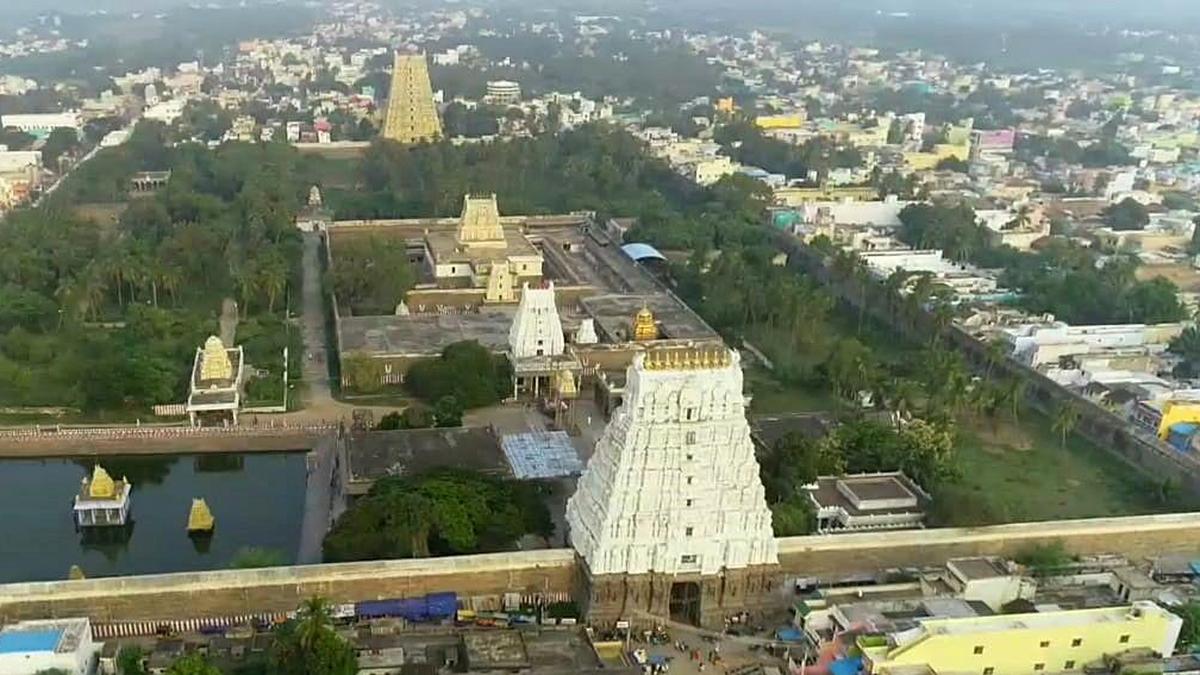

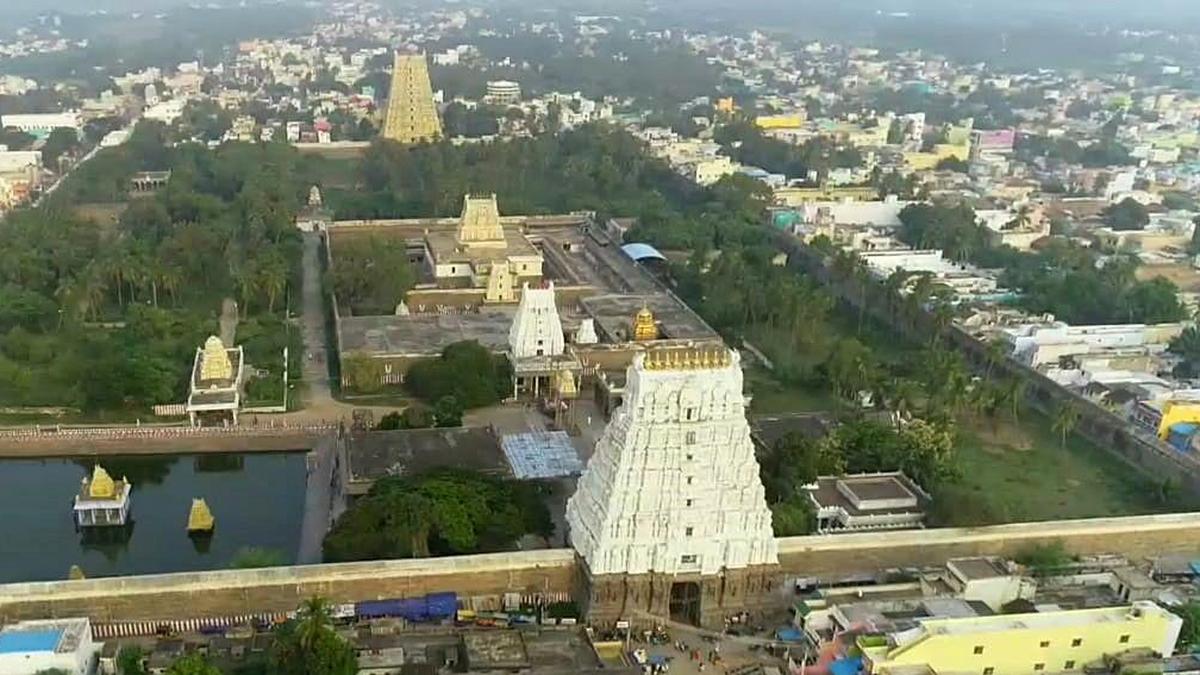
There have been multiple litigations and judgments over disputes between the Tenkalai and Vadakalai sects. File
| Photo Credit: The Hindu
In a major victory to the Tenkalai sect of Vaishnavites residing in Kancheepuram, the Madras High Court has held that only they are entitled to recite Srisaila Dayapathram, Nalayira Divyaprabandham and Manavala Mamunigal Vaazhi Thirunamam during ceremonial worship at the Devarajaswamy Temple, and the Vadakalai sect should not interfere by insisting on the recitation of Desikan Vaazhi Thirunamam and other hymns.
A Division Bench of Justices R. Suresh Kumar and S. Sounthar pointed out that both the Tenkalai (southern cult) and the Vadakalai (northern cult) were followers of Saint Ramanujar, but had different spiritual gurus. While the Tenkalai, identified by Y-shaped insignia, followed the teachings of Manavala Mamunigal; the Vadakalai, identified by U-shaped insignia, followed the teachings of their guru Vedanta Desikan.

For over 200 years, there had been continuous friction between the two sects over Adhiapaka Mirasi (the official performance of certain services to the deity during ceremonial worship at the temple, and during the ceremonial procession of the deity both inside and outside the temple). This had led to multiple litigations, and a series of judgments had been passed by the courts since the beginning of the 19th century.
The judgments delivered in 1882, 1915, 1939, and 1970 had consistently upheld the right of the Tenkalai sect, residing in Kancheepuram, to the office of Adhiapaka Mirasi. The courts ruled that the Vadakalai sect could join the recitation of the Prabandham by the Tenkalai sect, but could not form a separate goshti (congregation) and recite their own hymns, thereby interfering with the exclusive right of the Tenkalai.

The Vadakalai sect argued that three of those judgments were delivered before the Constitution came into force and hence, there was no opportunity for the courts back then to consider the fundamental right to freedom of religion and also the rights of religious denominations guaranteed under Article 25 and 26. However, the Division Bench, led by Justice Kumar, rejected the argument as untenable.
“The right to freedom of religion enshrined under Articles 25 and 26 of the Constitution cannot be expanded to affect the rights of office-holders and to vitiate the peaceful atmosphere in the temple. If such things are permitted, certainly it will affect the right to worship available to the other devotees,” the Bench said. It also said the right to freedom of religion or worship was subject to restrictions such as maintenance of public order.
Authoring the verdict, Justice Sounthar said: “No ordinary devotee or non-office-holder, including the members of the northern cult, are entitled to claim that they are also entitled to perform the official services in the temple. For example, in every temple in this part of the world, only the official priest of the temple is entitled to enter the sanctum sanctorum and perform puja. Likewise, only the person holding the office of Odhuvar is entitled to recite holy verses in front of the God.”

He went on to state: “An ordinary devotee cannot emulate the role of the official priest, puja assistants or Odhuvar during the performance of the official puja by the office-holders. When rendition of holy verses by Odhuvars is going on, an ordinary worshipper, in the guise of exercising his freedom of religion, cannot loudly recite his own poem as per his wish so as to interfere with the performance of official duties by the office-holder.”
Since the Adhiapaka Mirasi also provides for a share in the voluntary contributions made by devotees, the judge said the right to hold that office also involved the right to property. Therefore, the Division Bench directed the Executive Officer of the Devarajaswamy Temple to ensure strict adherence to the law laid down by the courts since 1882, and to secure police assistance, too, if required, for the peaceful performance of puja.
Published – December 02, 2025 06:00 pm IST