

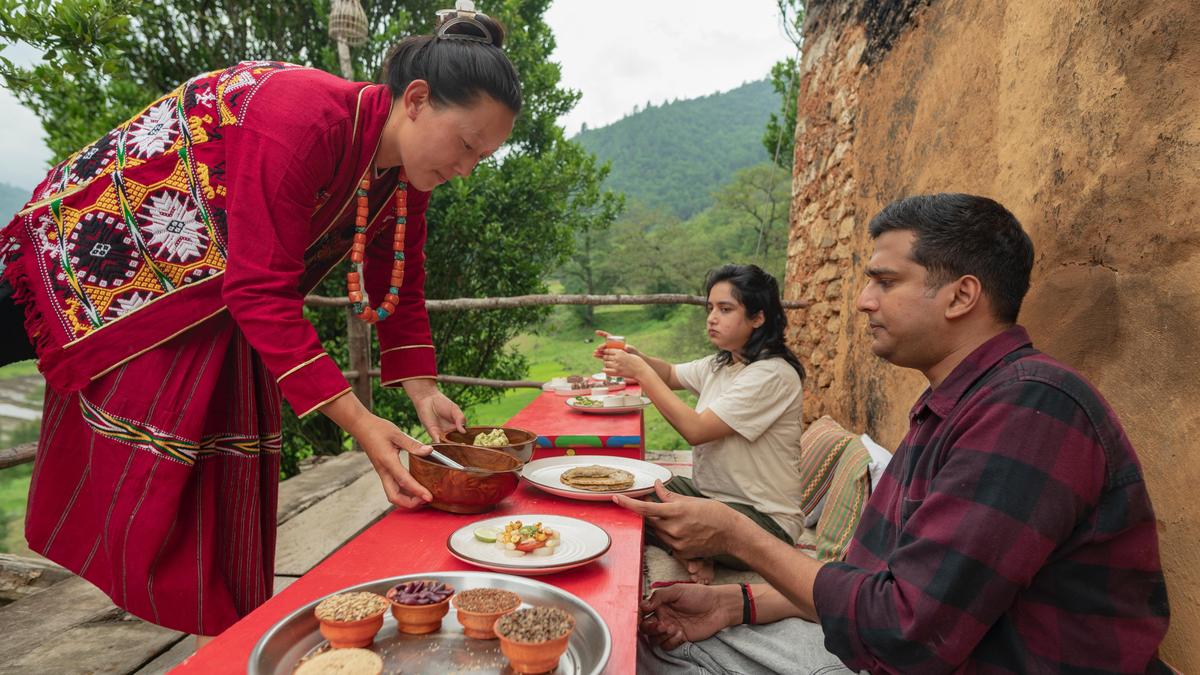

Damu in Duhumbi, the local language of the Monpa tribe in Arunachal Pradesh, means daughter. And a group of ‘daughters’ from Chug village in western Arunachal Pradesh are changing the region’s landscape with a 12-seater fine dining heritage restaurant that is named Damu’s. The all-women’s team here curates custom menus with heirloom recipes using hyperlocal farm produce. In the last 18 months, they have helped redefine healthy eating choices for both locals and tourists.
But Damu’s Heritage Dine is much more than a restaurant. It is a concept in sustainability and an experience in ancient wisdom. It is the story of empowerment and identity of the Monpa tribe with a strong connection to the forests and its conservation. They live in balance with Nature, rearing their bovines and growing their own grains (millets, barley, corn), fruits, vegetables, spices and condiments.
Each meal prepared by Damu’s women is forage-based and carries the taste and soul of the eastern Himalayas. “We only buy salt, oil and chicken from the market,” says Rinchin Jomba, the main chef at Damu’s.
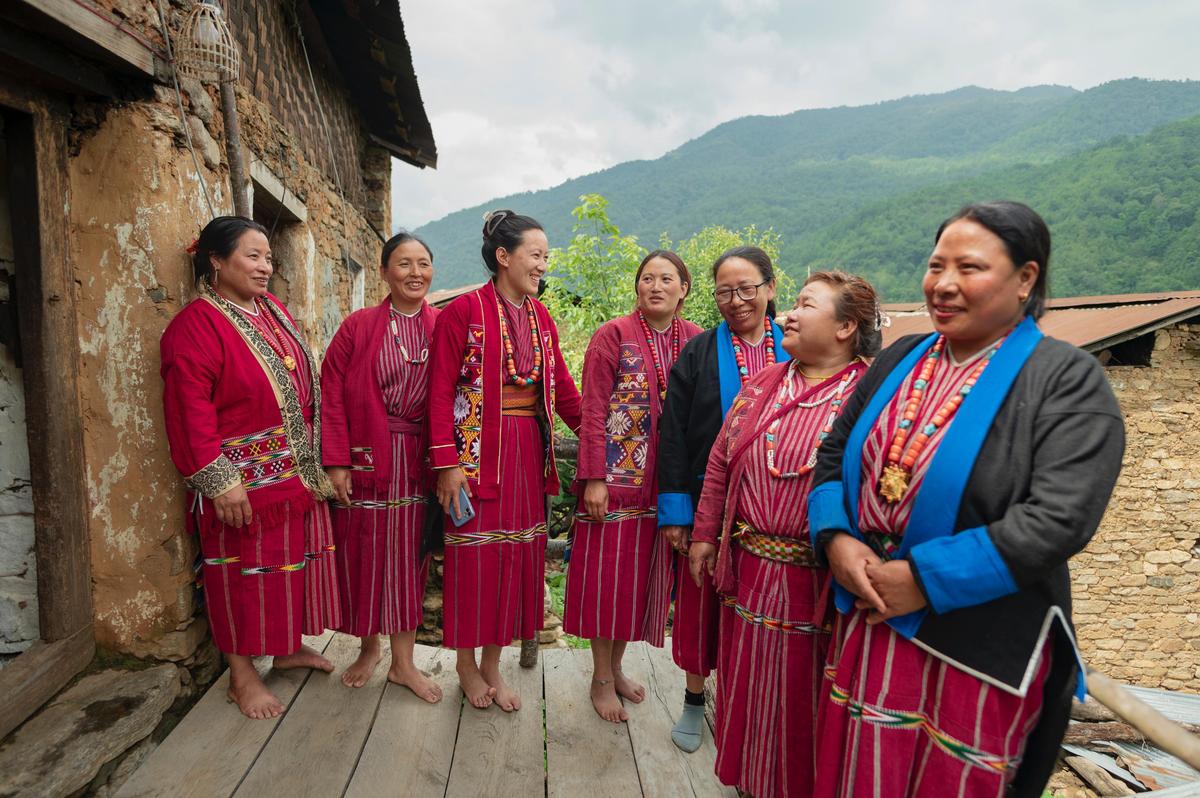
Living in her 150-year-old ancestral house made with wood, sturdy stones and mud, Rinchin’s life was simple like those of most women around her: Farming, weaving or doing casual labour and taking care of the families. Now, 10 of them have turned entrepreneurs managing the restaurant out of Rinchin’s refurbished house and, many others with them now run small businesses such as homestays, paper-making (Mon shugu) units, handicraft shops and a living museum that showcases a typical Monpa tribal’s way of life.
Launched in March 2024, Damu’s, has steadily gained visibility as a sustainable tourism initiative aimed at preserving traditional architecture and reviving culinary heritage. The team has done 1,60,000 lunches, attracting people like never before to their obscure village.
To the delight of Delhiites, four Monpa women spent the past fortnight in the city showcasing their cuisine at select venues including the Sidecar in Greater Kailash-II, The University of Chicago Center in Connaught Place and The Kunj in Vasant Kunj.
The change, however, did not happen overnight.
Nishant Sinha, community-based tourism coordinator, World Wildlife Fund (WWF), posted in Arunachal, was disturbed to see the slow erosion of traditional homes and food of the tribal population in Chug; people now lived in modern houses and ate more of store-bought instant and processed foods.
WWF has been working in the State to establish Community Conserved Areas (CCA) to help the locals with conservation-linked livelihoods. In Chug, Nishant saw an opportunity in tourism as it is part of the Tawang travel circuit known for its monasteries.
“When I explored what works for each village, I found the concept of fine heritage dining missing. Travellers had no access to Monpa cuisine; they only got the usual chowmein and roti-subzi in dhabas. The enthusiasm of the Monpa women in Chug to plunge into an entrepreneurial venture appealed to me as a way to incentivise their skills and efforts,” says Nishant.
The men jeered at the idea of women running a restaurant. But an initial investment of under ₹5,00,000 to restore and repurpose the old house and get a trained chef to help out the team is reaping dividends today.
Hyderabad-based Chef Farah Naaz was roped in to help the Monpa women with ideating and plating the dishes. “The women understood their food has the potential but did not know how to elevate it and make it tourist-friendly,” says Farah, who herself had to first understand the crops and seasonal fruits and vegetables grown in Chugh and the traditional practices used to prepare them. “We discussed which recipes could be retained or tweaked for a wider audience with a varied palate. Training was a challenge as I had to start from the basics of chopping and cutting of various ingredients,” she says.
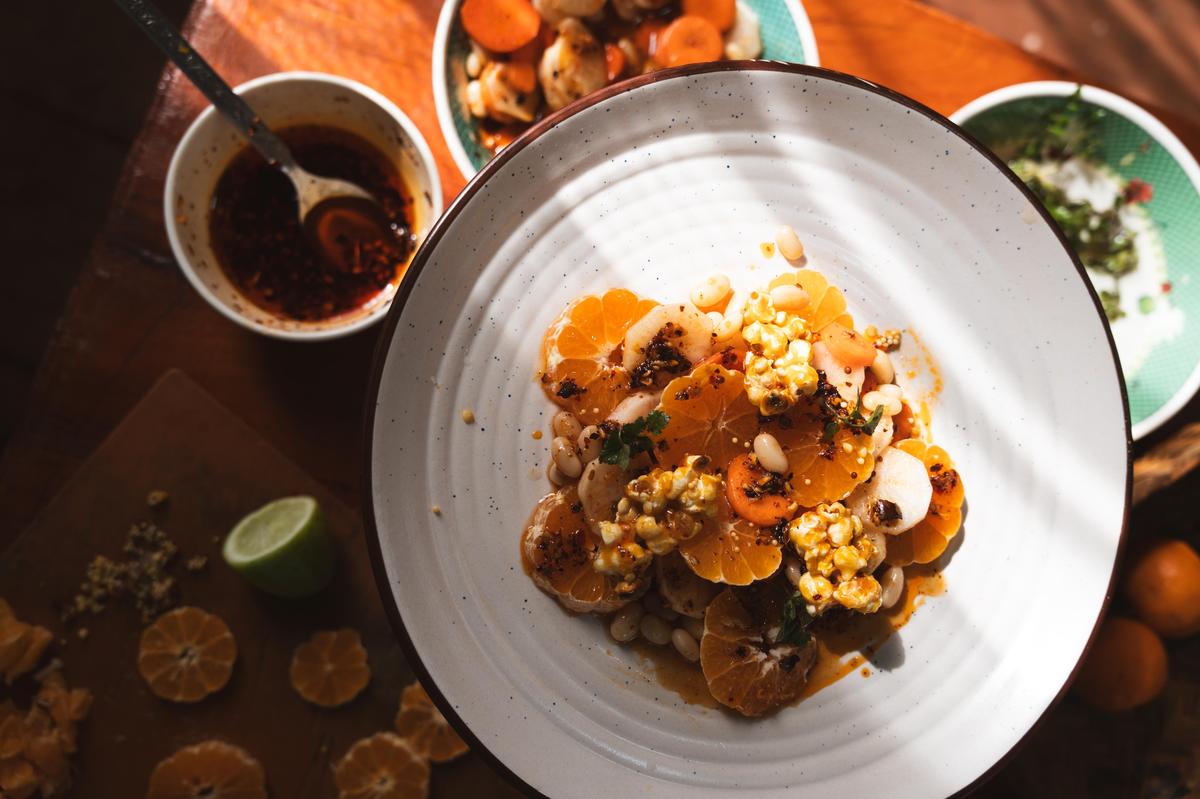
When told oranges grow in abundance and often go waste, Farah taught the women to include oranges into salads with other fresh fruits and vegetables and also make jam and marmalade. Given the popularity of momos, she introduced a healthier version with homegrown millets.
“The produce is very rich, and I experimented before we created a seven-course seasonal menu with traditional and contemporary recipes,” says Farah.
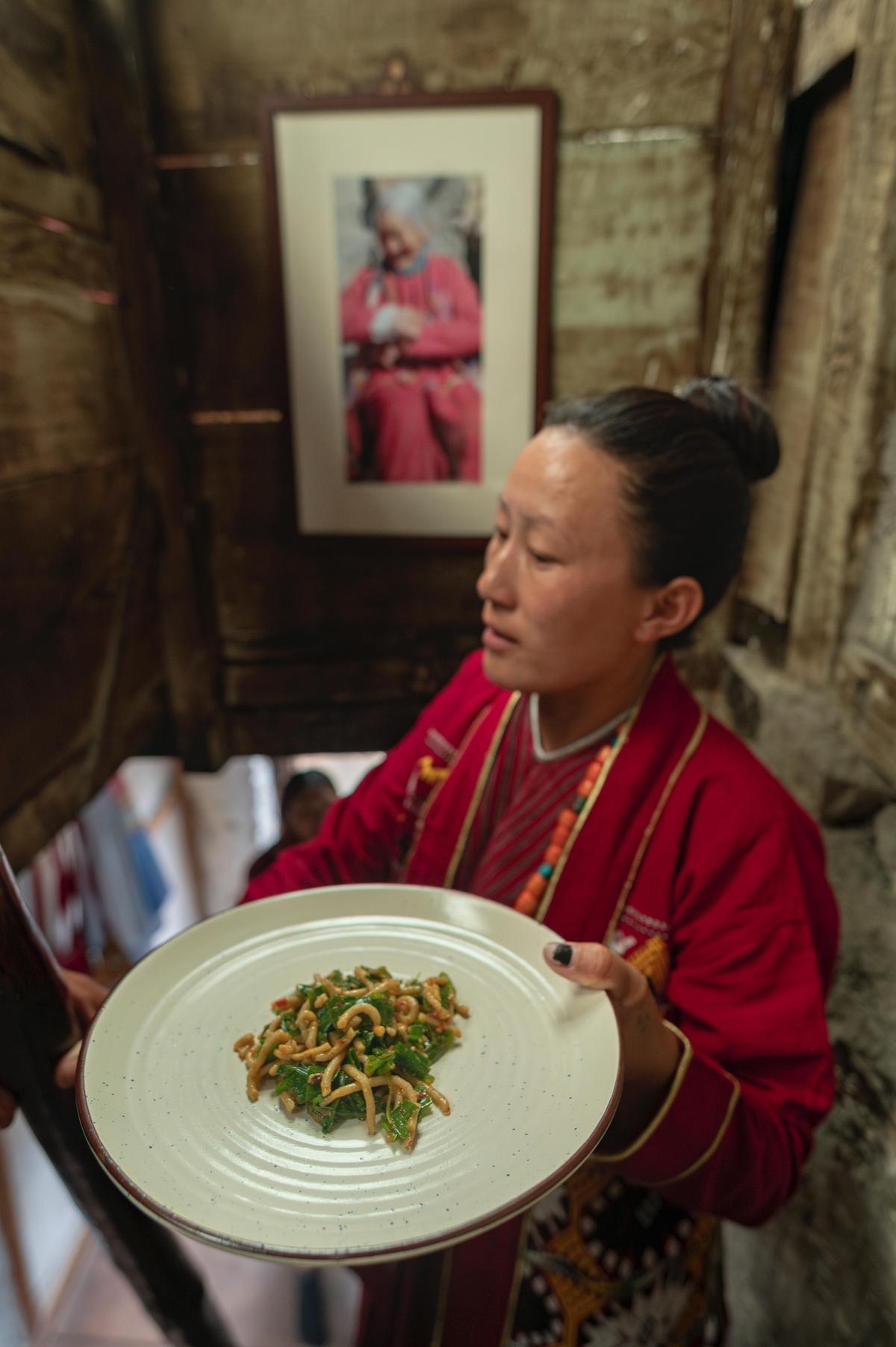
At the pop-up events, Dorjee Lhamu, Leiki Chomu, Tsering Lhamu along with Rinchin – all dressed in traditional maroon shinka tuthung — whipped up some of the dishes offered at Damu’s and served the guests explaining every item on the plate. “The idea was to give the team the exposure and help them grow their business,” says Nishant.
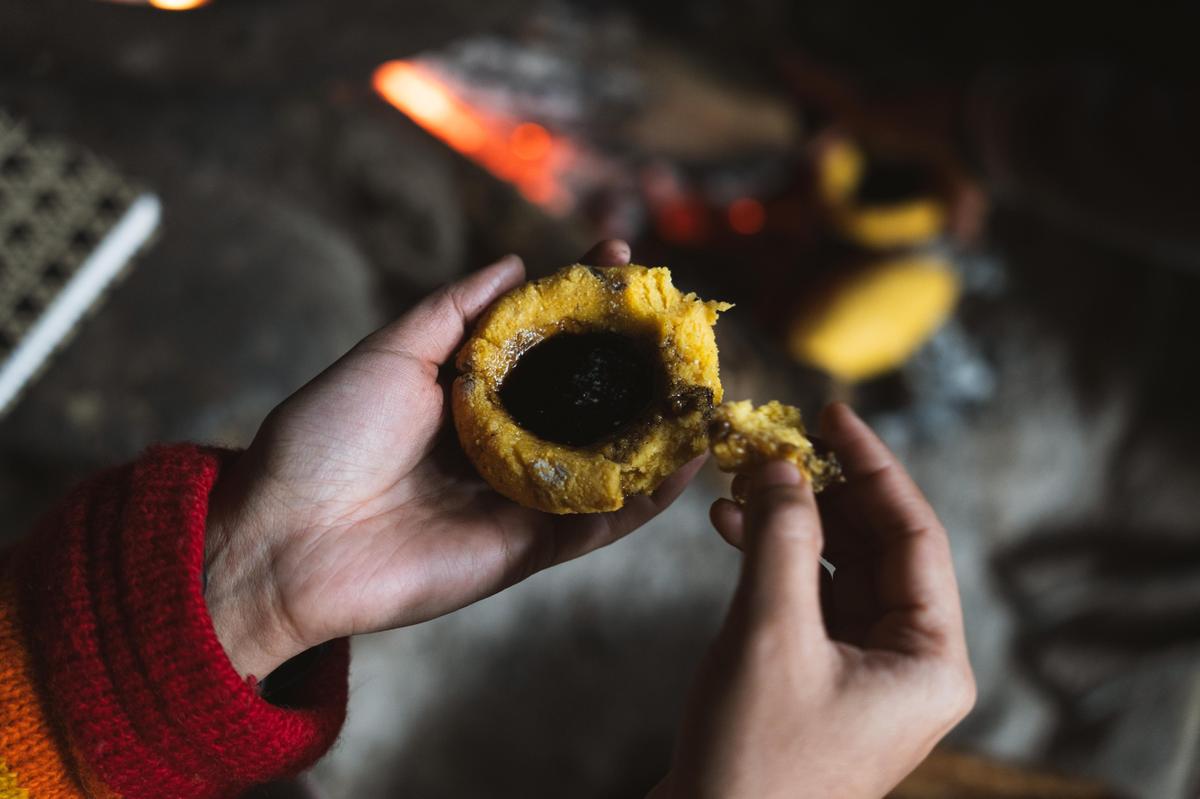
The journey started with the signature phurshing gombu, a cornflour tart filled with resins from the Chinese lacquer tree and slow roasted with yak ghee on a bed of coal. The story is there is only one person in Chug village, who is skilled to extract the resin from the tree sap which causes an allergic reaction.
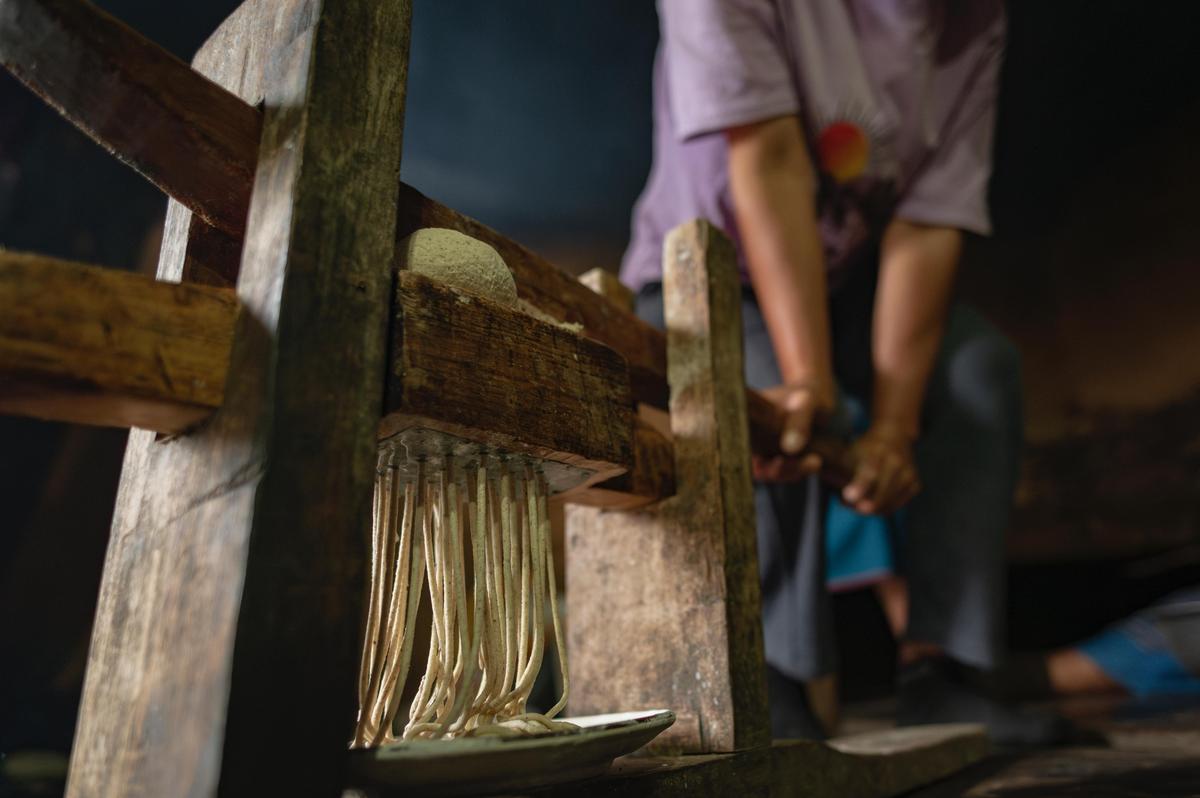
Orange-pickled radish salad dressed with Monpamirchi oil and sprinkled with popcorn came next followed by takto khazi (bucket wheat noodles) seasoned with maan (garlic) and dangoma (water celery) and mixed with chamin (a chutney made with walnut or soybean paste and churra (fermented yak cheese, shanyul). Pumpkin soup was accompanied with millet momos stuffed with either potato or chicken. The women during their stay learnt to bake the Japanese shokupan bread and made a special sandwich with a Monpa-style filling of mushrooms, tomato, and herbs. For dessert there was the sweet khabsey (deep-fried Tibetan cookies).
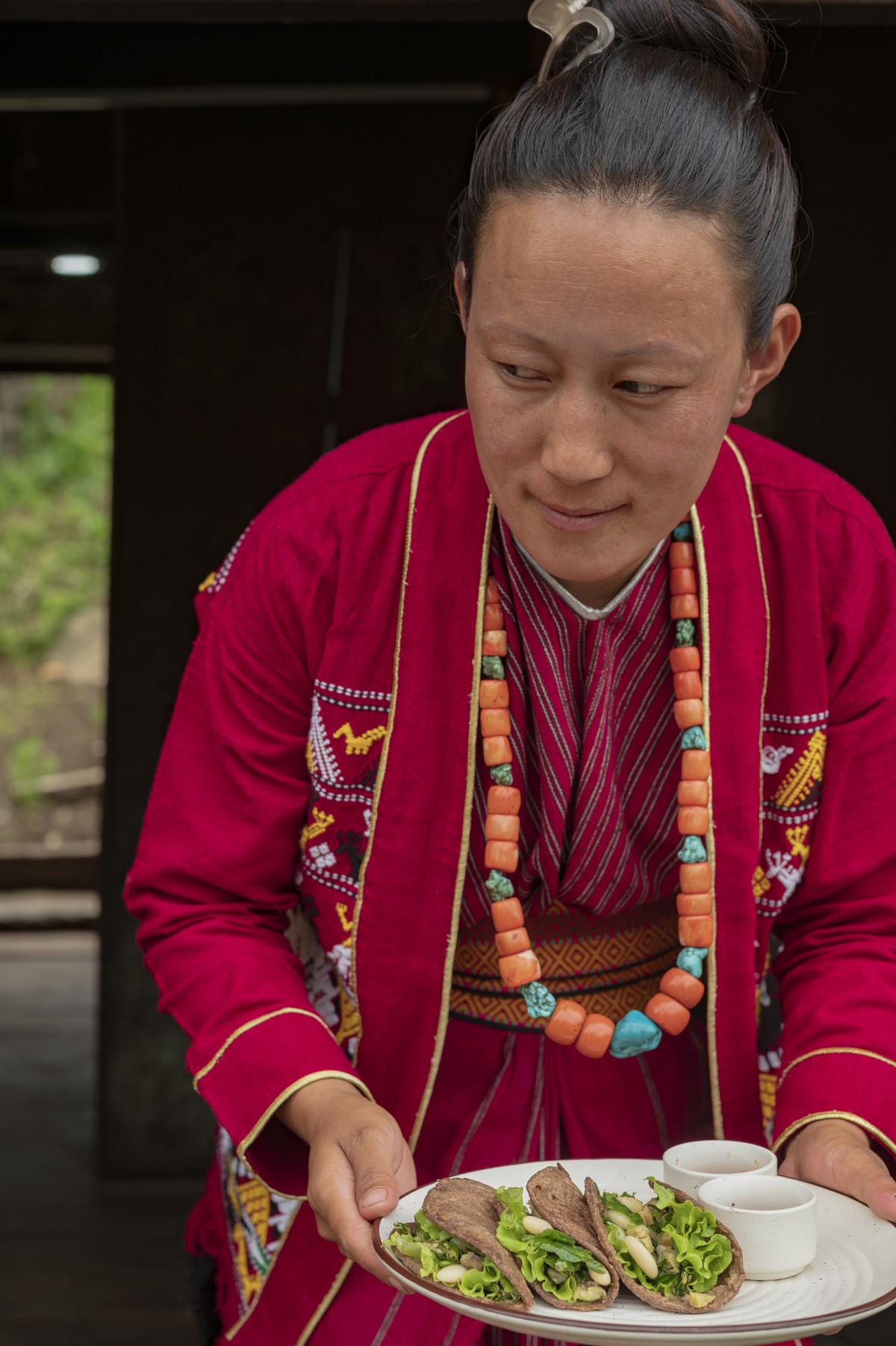
“Every item we served was from our Monpa harvest. The pop-up was only a glimpse into our culinary heritage. We couldn’t carry much of our homegrown ingredients on flight. Visit us in Chug for the complete experience,” smiles Leiki.
Visitors left happy with the buzz Damu’s created. “It shows preserving heritage can be scaled up, replicated and made economically viable,” says Gayathri Sreedharan, an anthropologist, who worked in Chug as an ethnographer.
Damu’s Heritage Dine, Chug, Arunachal Pradesh; Open 12pm to 2pm; Tables have to be booked a day in advance. The seven-course meal costs ₹1,500 per person.
Published – November 21, 2025 11:24 am IST