




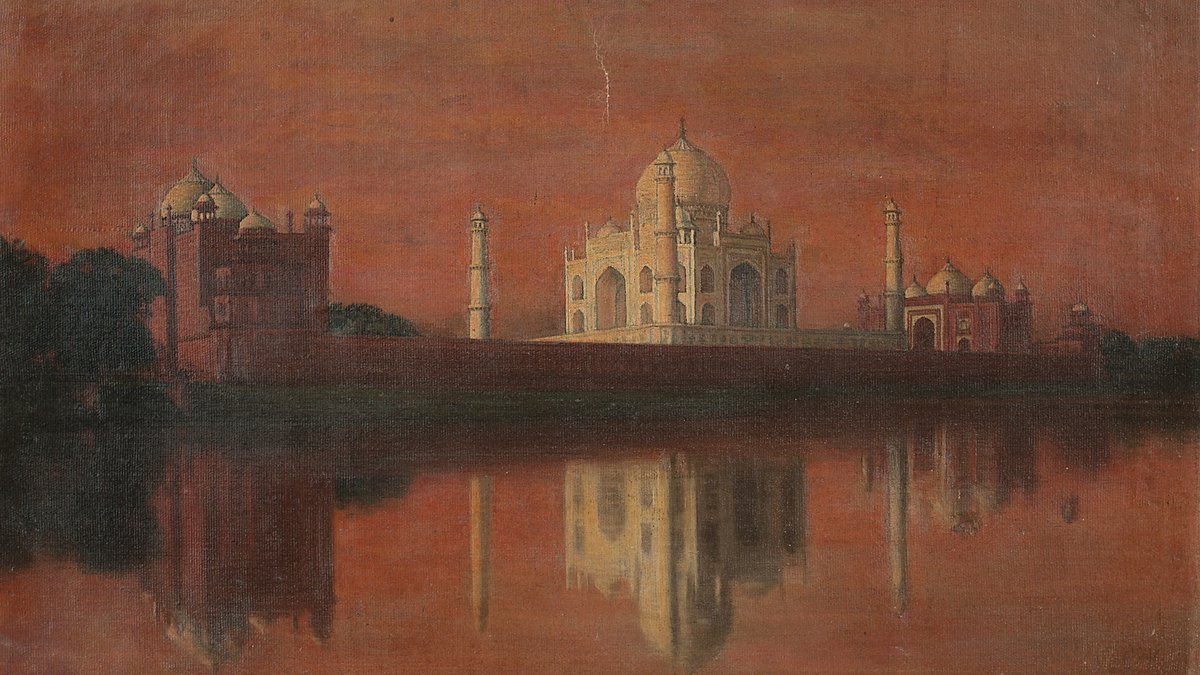

The first unobstructed view of the Taj Mahal from the Darwaza-i-Rauza (grand entranceway) is one of the most recognised images from India. However, the image would have looked strikingly different had Mughal emperor Shah Jahan’s original vision endured.
The manicured lawns of today, that follow the Char Bagh design, had in the original layout featured abundant fruit trees and flowering beds to create a lush garden based on the Quranic vision of paradise. It was Lord Curzon who, during his tenure as Viceroy of India, got the trees cut to cater to more European sensibilities.
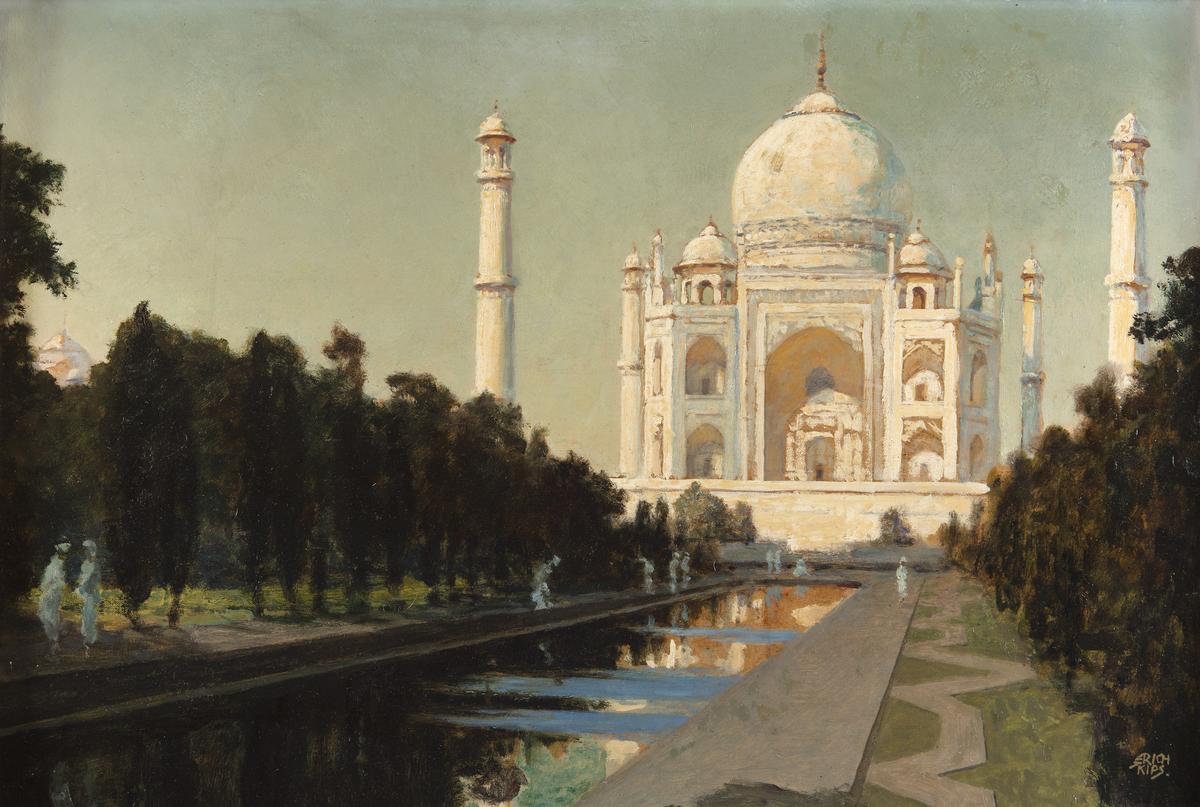
Erich Kips’ Taj Mahal
| Photo Credit:
Courtesy DAG
While you can still read about the Mughal emperor’s paradisiacal garden in textual accounts from that period, DAG has put together a visual narrative — through over 200 photographs, paintings and postcards spanning from the 18th to mid 20th century. Curated by historian Rana Safvi, the collection of Company School paintings alongside works by foreign and modern Indian artists takes viewers through the Taj Mahal and its complex over the years.
Titled The Mute Eloquence of the Taj Mahal, it tells the story of the mausoleum by sometimes zooming into the language of the flowers expressed through the beautiful pietra dura inlay work on the cenotaph or taking a macro view of how the Taj cast its shadow over Agra. The exhibition positions the Taj as ‘speaking’ to the visitors, offering them an immersive look at its stunning architecture, its history of imperial ambition, and its enduring love story — all while staying a mute sentinel.
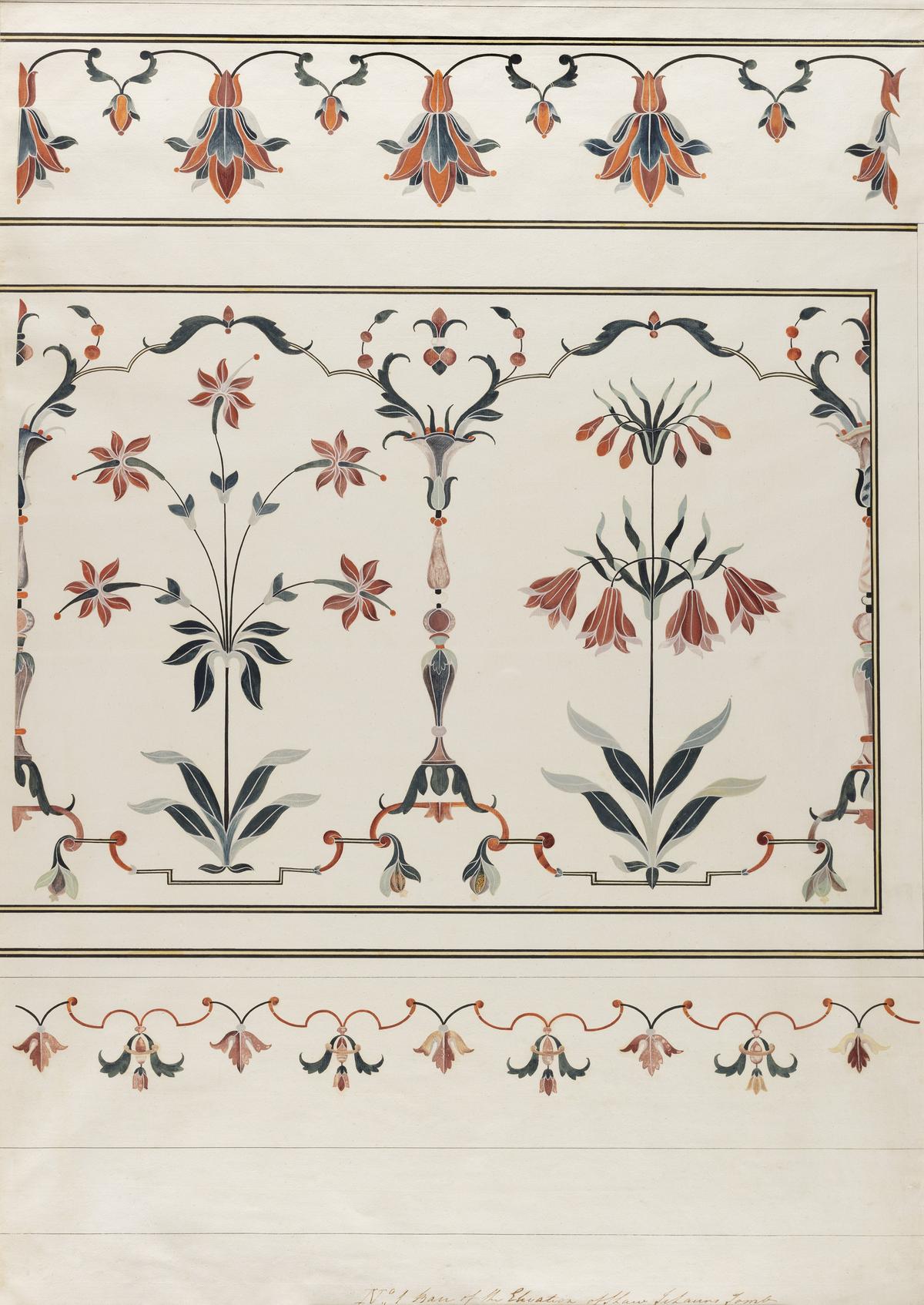
Detail of pietra dura work on the cenotaph of Shah Jahan at the Taj Mahal by Agra artist (Company School)
| Photo Credit:
Courtesy DAG
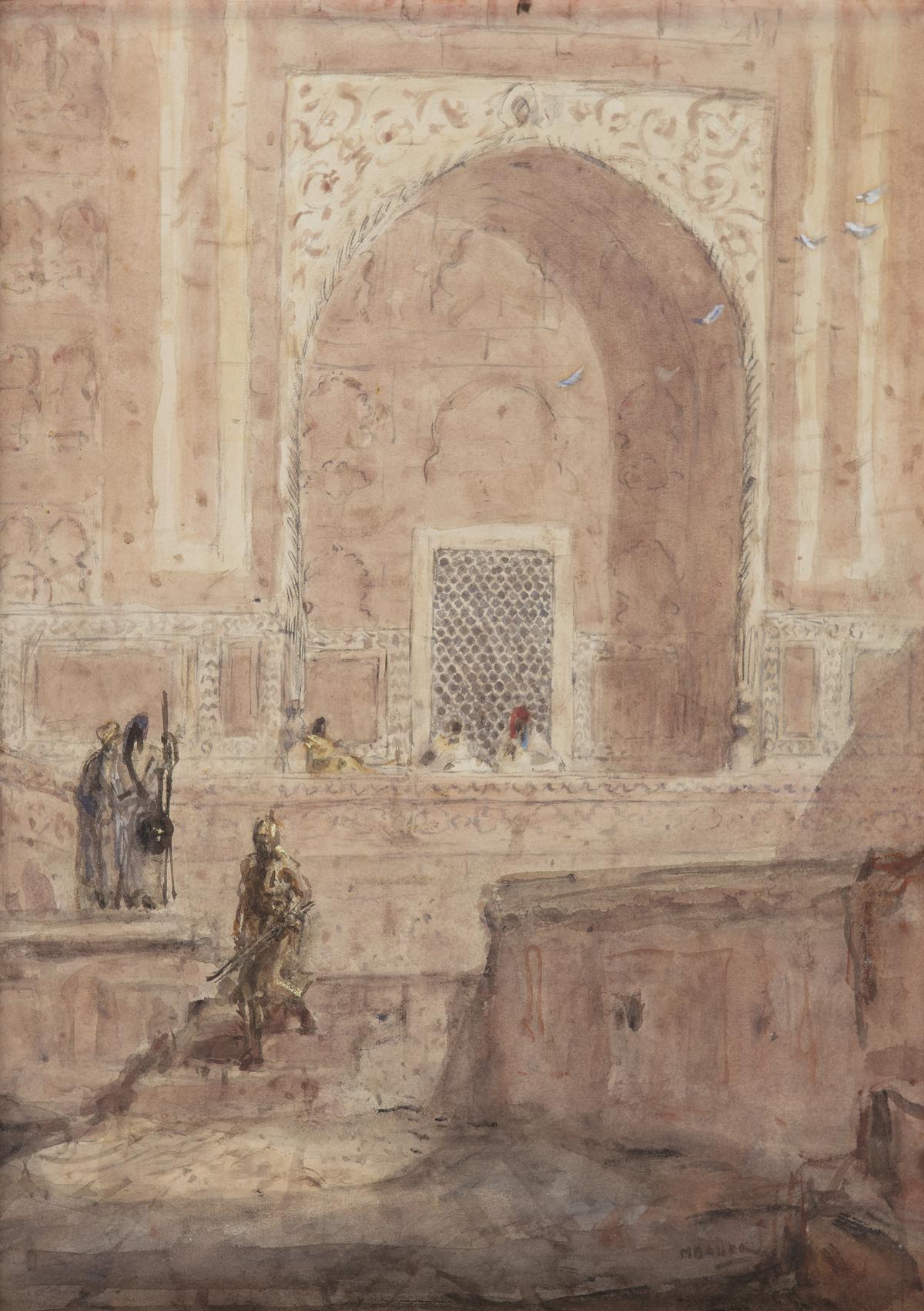
Marius Bauer’s Indisch Paleis (Indian Palace | The Gateway of the Taj Mahal)
| Photo Credit:
Courtesy DAG
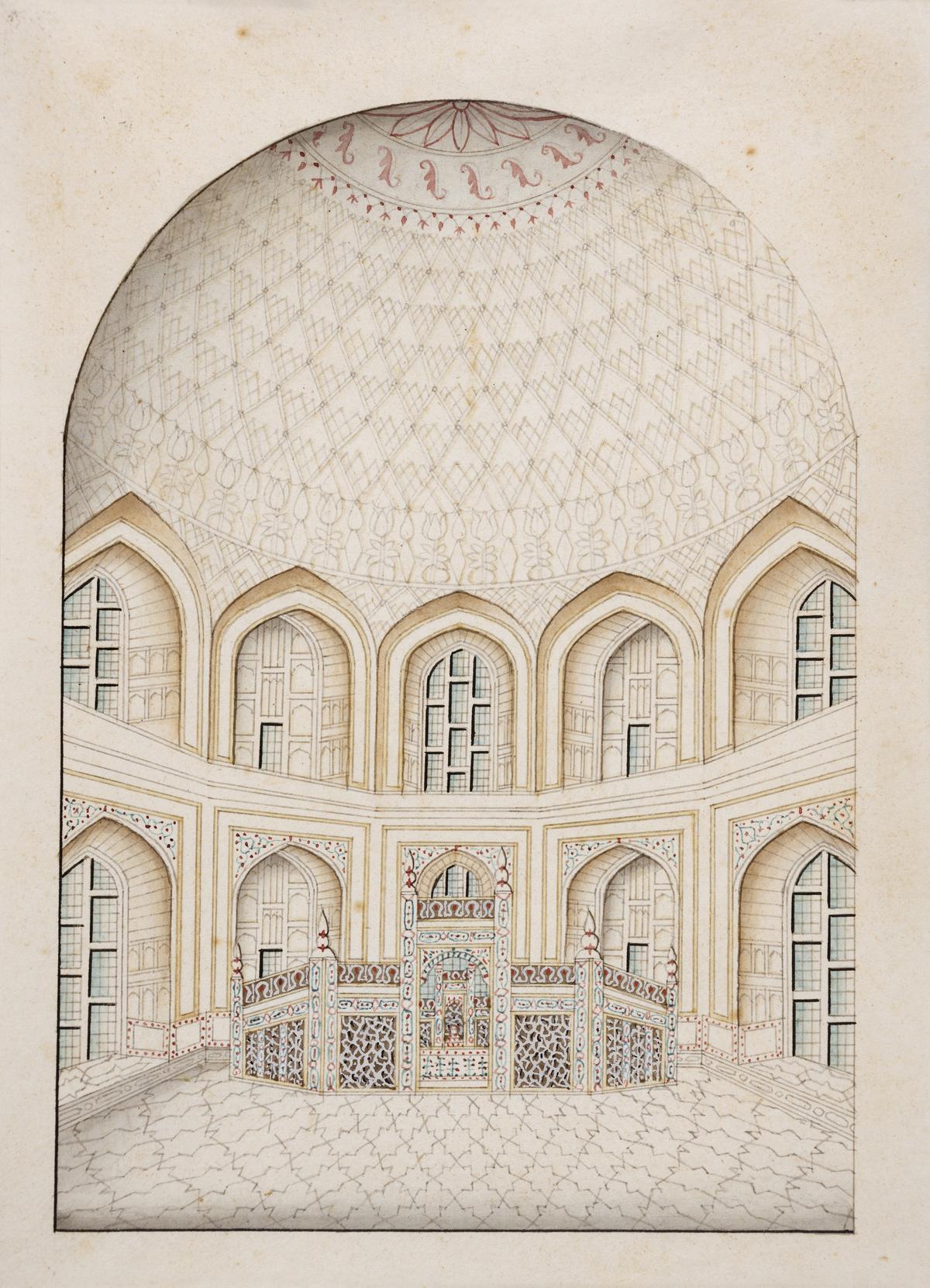
Interior of the Taj Mahal by an Agra artist (Company School)
| Photo Credit:
Courtesy DAG
Design speak
Rana says she took a cue from Shah Jahan’s court chronicler Abdul Hamid Lahori, who spoke of the ‘mute eloquence’ of what he called the ‘Rauza-i Munawwara’ (the illumined tomb), to curate the show. She shows how the tomb’s design and details, such as the careful selection of quotations from the Quran and the decorative flowers that adorn it, like the reverse tulip used to depict gloom, tell us of the beliefs and aspirations of the people who built the 7th Wonder of the World.
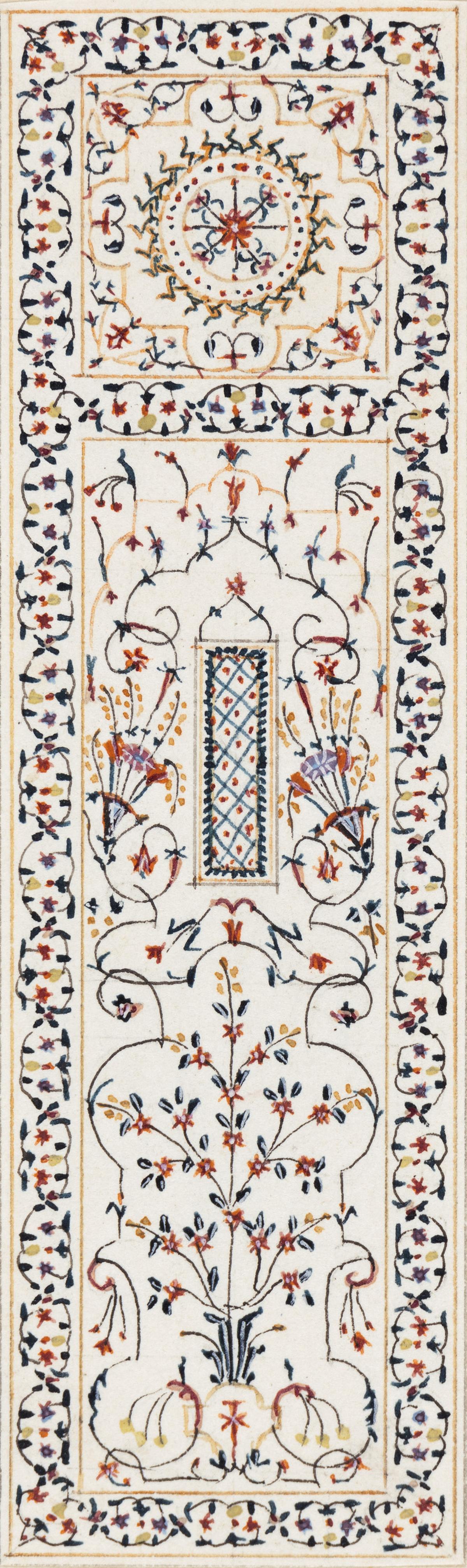
The top of the cenotaph of Shah Jahan by an Agra artist (Company School)
| Photo Credit:
Courtesy DAG
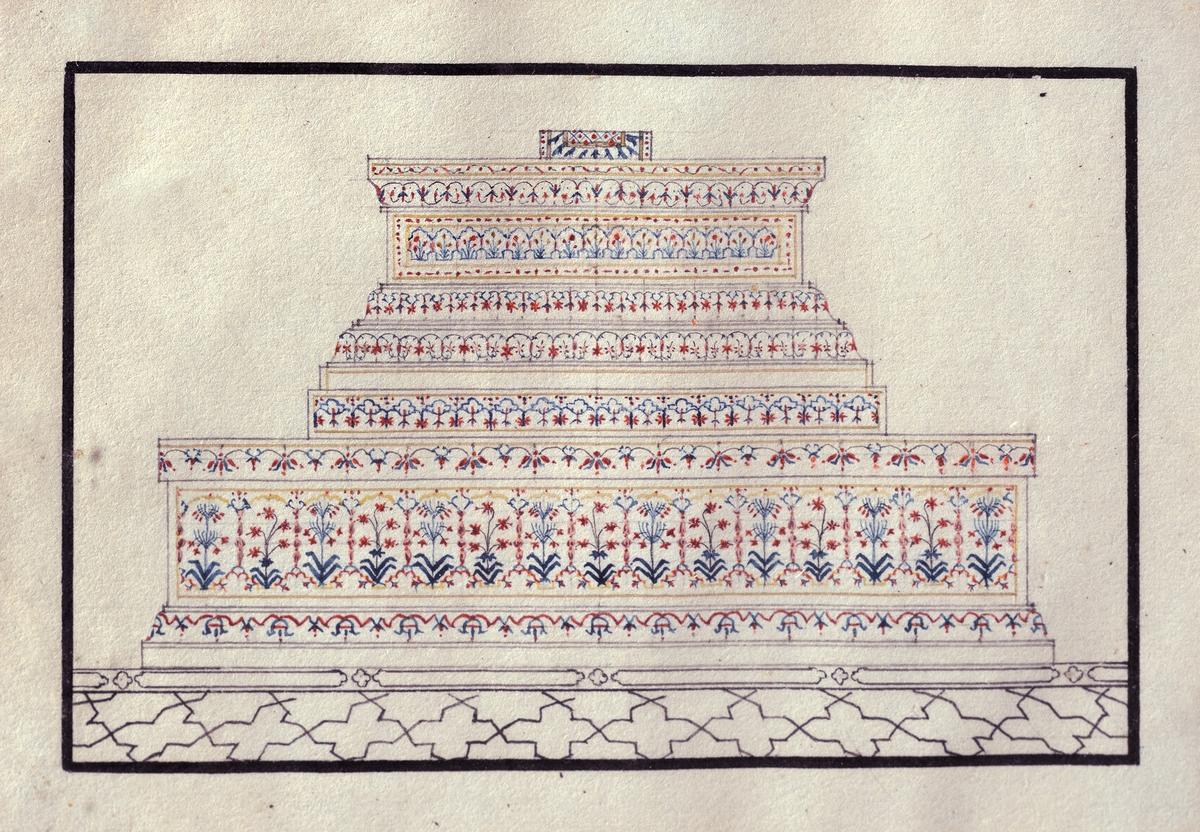
The Tomb of Shah Jahan by an Agra artist (Company School)
| Photo Credit:
Courtesy DAG
Having studied the Taj Mahal as a student, it was when Rana was studying sufisim (and learning Shah Jahan had been trained as a Sufi, which gives immense importance to life after death) that she once more started reading and researching it. “The Taj Mahal’s design is based on the theme of morality, resurrection and divine harmony of the Islamic vision of jannat [paradise]. Shah Jahan, who at that time controlled almost a quarter of the world’s GDP, set about to build a veritable ‘paradise on earth’ as a resting place for Mumtaz Mahal,” she says, explaining that the exhibition takes one through the monument’s conception, construction, and evolution (as envisioned by the emperor), to the Taj that we know today as a symbol of romance.
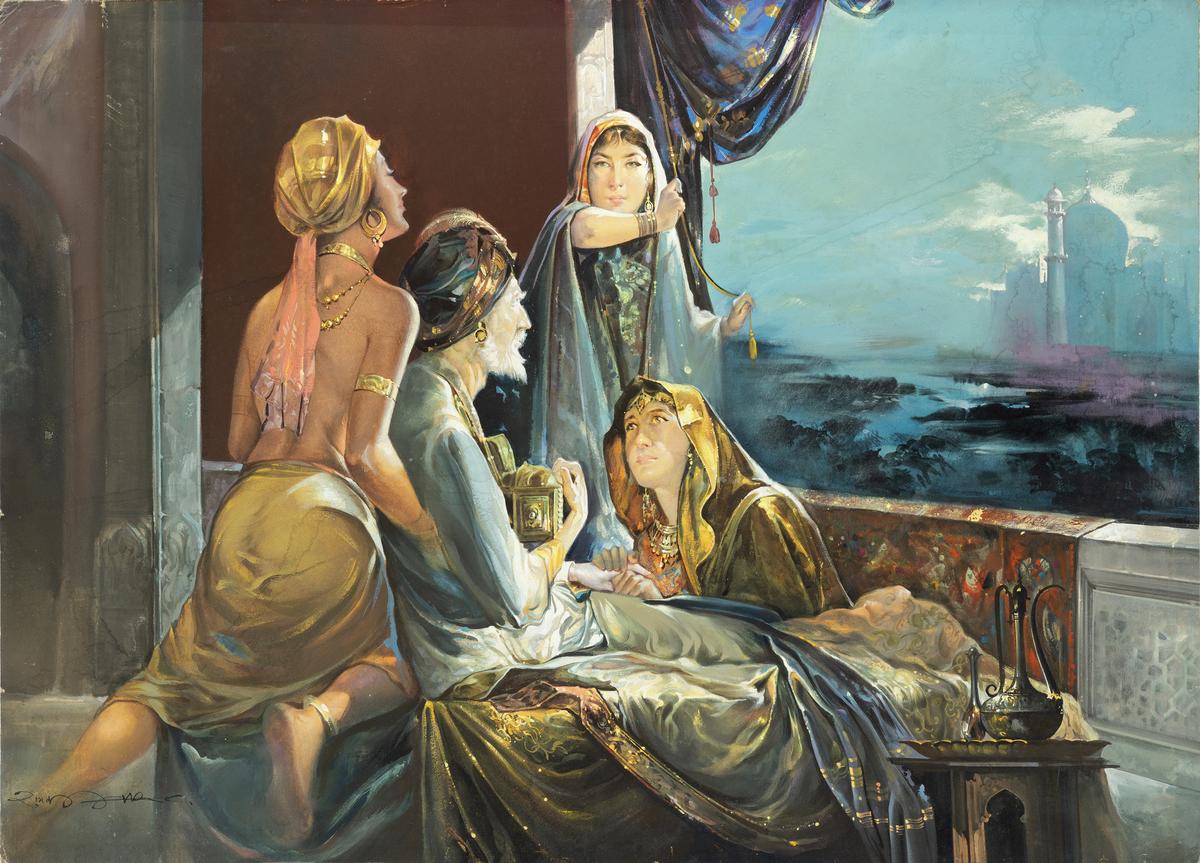
Untitled (The Last Days of Shah Jahan) by an unidentified artist (after Cecil Burns)
| Photo Credit:
Courtesy DAG
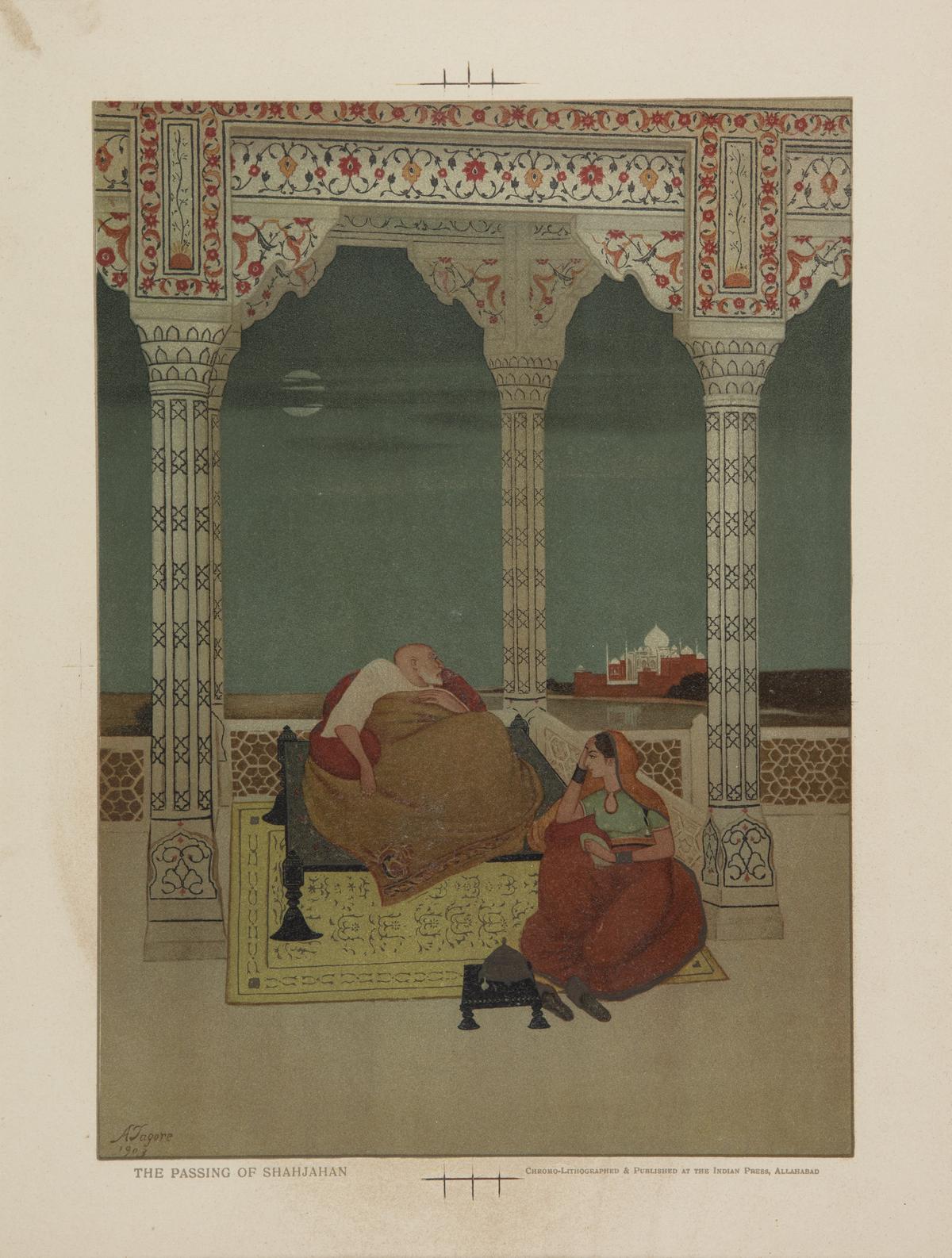
The Passing of Shahjahan by Abanindranath Tagore
| Photo Credit:
Courtesy DAG
Debunking ‘The Taj Story’
Incidentally, the exhibition coincides with the release of The Taj Story. The film stars Paresh Rawal, and draws on writer P.N. Oak’s book that makes an argument that the tomb was originally a Shiva temple. “Taj Mahal is not a symbol of love but a symbol of atrocity and genocide,” goes a line in the film, and it has sparked discussions on the monument — its Hindu motifs, such as the kalash, and the PILs filed in the Allahabad High Court on the 22 rooms that remain out of public view in the basement of the monument — despite the ASI releasing photographs in 2022 debunking claims.

Poster of The Taj Story starring Paresh Rawal
| Photo Credit:
Special arrangement
At a time of historical revisionism and heritage politics, when chapters on Mughal history are being deleted from the Class VII NCERT textbooks, cities are being renamed to “restore” their ancient identity, and even the Taj has become contested territory, the exhibition is a form of public scholarship. “My style is never to contradict or fight with anybody. I just state facts,” says Safvi, commenting on the release of the film and the controversy surrounding it. “The court poets of the Mughals were very meticulous about record keeping and their works contain detailed descriptions of the Taj Mahal, the land it sits on, and why the particular site was chosen.” She also states that the mausoleum is a culmination of Indo-Islamic architecture and, therefore features like the kalash are a part of its design.
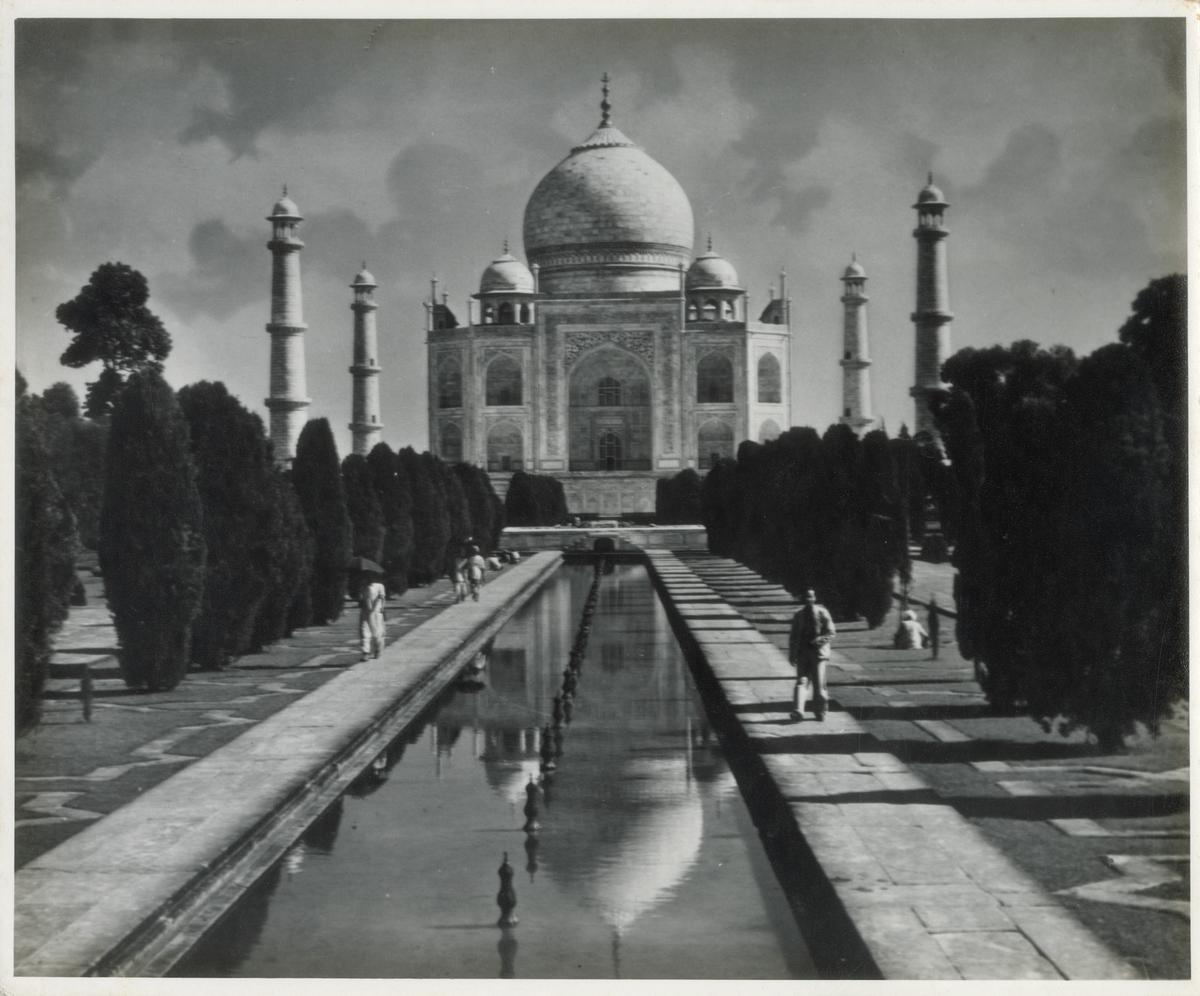
The Taj Mahal, Agra (unidentified photographer)
| Photo Credit:
Courtesy DAG
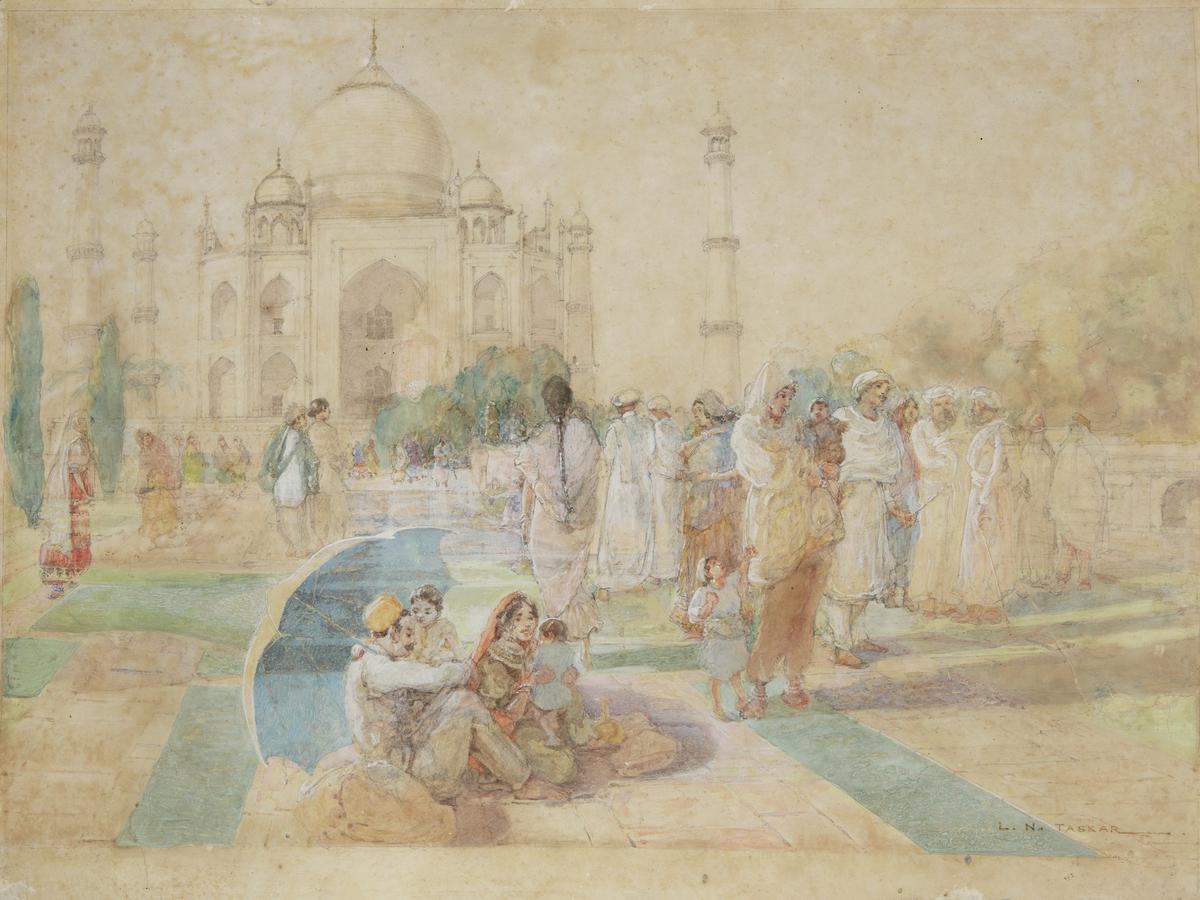
L.N. Taskar’s Untitled (Taj Mahal)
| Photo Credit:
Courtesy DAG
So, while the 400-year-old monument remains a mute narrator and spectator, perhaps we should look at the exhibition and make up our own minds.
‘The Mute Eloquence of the Taj Mahal’ is on at the DAG till December 6.
Published – November 07, 2025 07:17 am IST