



Hong Kong has always lived between worlds. At a meeting on November 17, 2025, in the city, of the China-United States Exchange Foundation (CUSEF), titled Circles for Peace, it became clear that this liminal geography is now a metaphor for the wider planetary condition. The U.S. and China remain locked in a tense, mistrustful relationship — yet, they are also tied together more tightly than either side likes to admit. And in that uneasy middle space, Hong Kong offered a vantage point from which to imagine a way forward.
The complexities of today’s rivalry
The discussions at the 6th U.S.-China Hong Kong Forum showed that trust has thinned, and both the U.S. and China now operate as if expecting sudden shocks. Participants spoke with candour, with a sense of fatigue. Old frameworks — engagement, “guardrails”, managed competition — no longer feel adequate for today’s complex rivalry.
A persistent theme was the shrinking room for nuance. Strategic anxieties that once belonged to specialists have entered the public sphere, shaping domestic politics and narrowing the range of acceptable positions. This has seeped into the human dimension of the relationship. American student numbers in China are far below pre- COVID-19 pandemic levels. Chinese student enrolments in the U.S., once well above three lakh, have also declined. The deeper loss is familiarity: younger generations are encountering each other through narratives shaped by fear rather than through lived experience. Participants agreed that while the two Presidents, of the U.S. and China, can anchor the relationship, personality-driven diplomacy is not enough.
Technology, and artificial intelligence (AI) in particular, threaded through many conversations. Several participants observed that AI now resembles an international public good — too consequential to be monopolised or monetised by any single country. A credible governance regime, they said, must rest on equity, transparency and accountability.
This linked to broader concerns about the overlap between civilian innovation and defence applications, especially in parts of the private sector. One American participant suggested the eventual need for an international governance mechanism for AI, and possibly for space (“the galaxy”) as well. The question was straightforward: if competition moves beyond the earth, who determines the rules?
The wider diplomatic climate also featured in the discussions. A speaker described the Busan summit, on October 30, 2025, as a “tactical retreat”, not on technology but on foreign policy more broadly. The Taiwan question surfaced often. A Chinese participant argued that the discussion has become overwhelmingly militarised — and warned that American policy appeared to be drifting toward what Beijing views as a “one China, one Taiwan” posture. He called for new mechanisms and a new vocabulary before the situation hardens into confrontation by default.
One question was whether the U.S. and China are prepared for another EP-3 incident (in 2001) — an accidental collision at sea or in the air that could escalate before political systems can respond. The region obviously needs a crisis-prevention mechanism insulated from political swings.
Singapore’s former Defence Minister Ng Eng Hen offered the broadest frame. He described this period as a “dialectic moment”, when competing pressures reshape the global order but outcomes remain uncertain. The U.S., Europe and China will inevitably influence the emerging structure, he said, but the rest of the world should not allow the global commons to become collateral damage in major-power rivalry. One seasoned participant argued that a “new approach should be crafted”; the world does not need another hegemon, it needs powers capable of co-organising the future.
Hong Kong has a role to play
Throughout the forum, Hong Kong was in focus. One speaker invoked Richard Hughes’s “borrowed place, borrowed time”, while another reached for Graham Greene’s phrase “improvised bravado”. Both images still fit — but Hong Kong today is also becoming more China-centric, even as it tries to remain globally fluent. Its future depends on preserving its cosmopolitan function: the transparency, connectivity, and cultural hybridity that allow ideas to cross borders even when politics cannot. Hong Kong reminded one that the world’s middle spaces still matter, revealing pathways that pure geopolitics often misses.
People-to-people ties emerged as a gentle theme of hope. Participants noted that official relations may be strained, but human contact remains the ballast that prevents larger relationships from capsizing. Hong Kong, despite the pressures of recent years, continues to make such exchanges possible.
Lessons for India
The forum conversations were a reminder that great-power relations may determine the climate of the world, but the weather is shaped by everyone else. India cannot control the forces buffeting the U.S.-China relationship, but we can decide how to navigate them, and how to ensure that our own future is not written by default. Rigid binaries are unsustainable. India’s task is not to imitate U.S. rhetoric nor to accept Chinese narratives at face value. It is to build the domestic strength — technological, economic and institutional — to navigate a fractured world without losing strategic autonomy. The forum’s emphasis on youth, cultural ties and the social contract around technology offered reminders that relationships are not made or unmade by summits alone. They are shaped by steady habits of engagement.
The shape of a new order
The clearest insight from the Forum was that the U.S.-China relationship will not be restored to its old shape. The economic models diverge. The technology race is structural. And the political atmospherics will remain turbulent. But the alternative to managed rivalry is not victory; it is a world of cascading risks — climate stress, pandemics, fragile supply chains, and polarised societies.
One participant put it simply that this was “A story we have to write together”. The phrasing carries weight. It shifts the conversation from competition to stewardship, from ideology to survival. The next order, if it emerges at all, will depend less on grand bargains and more on practical cooperation on energy, health, finance, and AI governance.
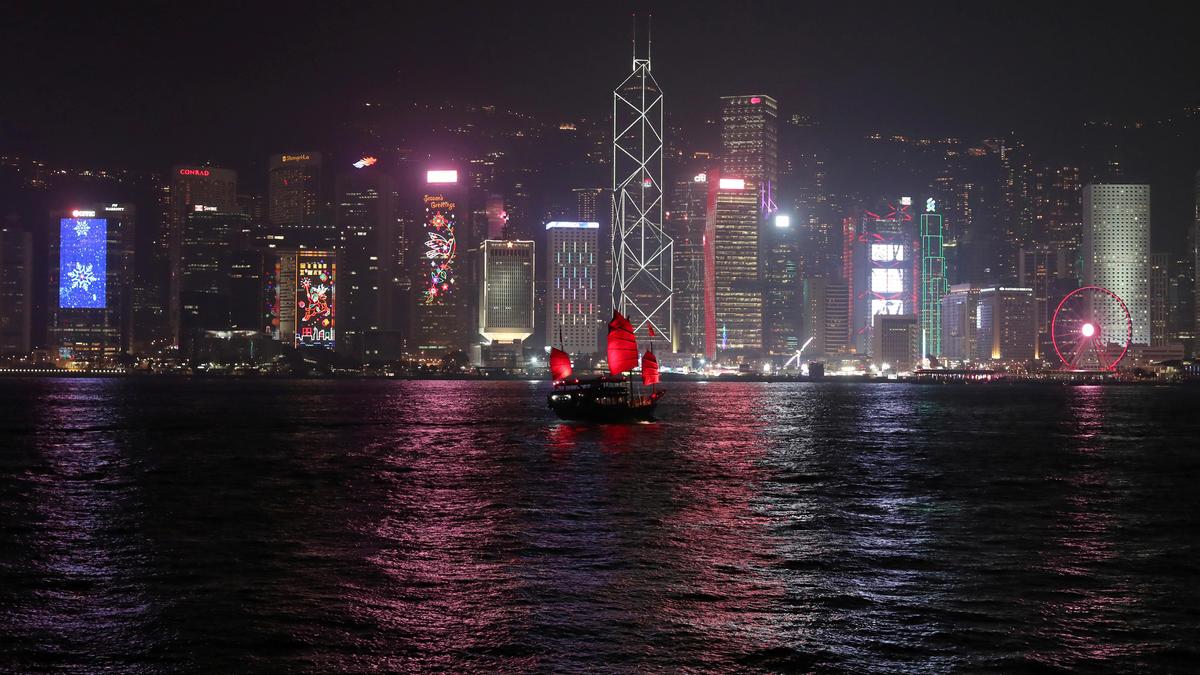
As the forum ended and one stepped out into the evening, the view from the conference venue stayed, of a South China Sea almost motionless, and meditative, in quiet contrast to the anxieties that shape the region — a reminder of how places, like people, survive by embracing complexity and allowing themselves room to rethink. The U.S. and China will continue to compete, sometimes fiercely. The future needs steady hands to shape it.
India has its own long arc with China, marked by caution and conviction. Yet, in this moment of global uncertainty, the challenge for all three countries is the same: to choose responsibility over reflex, and to widen the narrow spaces where dialogue is still possible.
Hong Kong, in its imperfect, resilient way, showed that those spaces still exist.
Nirupama Rao is Foreign Secretary (retired) and Founder-Trustee, The South Asian Symphony Foundation.
Published – November 27, 2025 08:30 am IST