


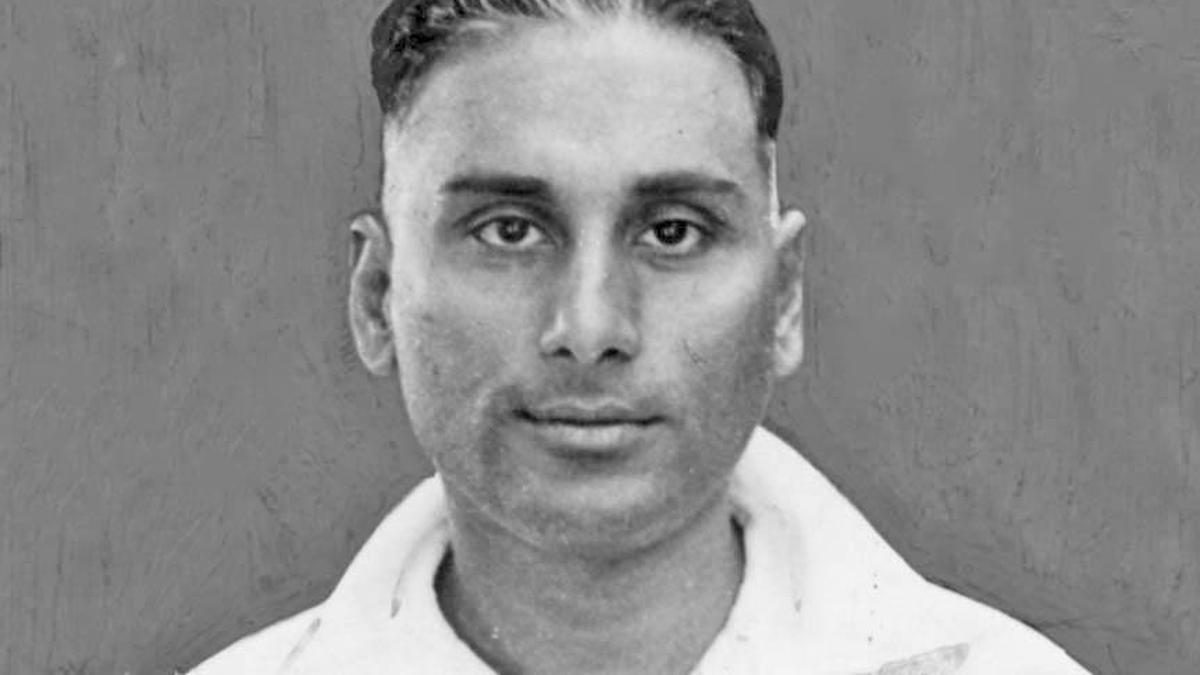

October 15, 2025, marked 40 years since ace cricketer and tennis player Cotah Ramaswami walked out of his home in Chennai, never to return. On that day in 1985, at 89 years, he left behind his children and a wide circle of relatives, all wondering what could have prompted him to renounce worldly life so abruptly and inexplicably.
It took seven long years for the authorities to officially declare him “assumed dead.” The disappearance of Ramaswami, a former double international, remains a tragic mystery that has never been fully explained.
During the seven years between his disappearance in 1985 and 1992, numerous rumours circulated about Ramaswami — some as far-fetched as claims that he had taken up hermitage in the Himalayas or at Kasi. His immediate family spent considerable time and money trying to trace him, pursuing every seemingly promising lead, only to have their hopes repeatedly dashed. They visited several ashrams in search of the distinguished nonagenarian, but each journey ended in disappointment. Eventually, exhausted and disheartened, the family gave up their search.
One theory suggested that Ramaswami may have walked into the ocean to leave the world behind. According to The Hindu archives, he had, on more than one occasion, confided in a grandnephew — also a former cricketer — that he often dreamed vividly of walking into the sea.
Illustrious life and career
Ramaswami grew up in the sprawling Luz House, a mansion in Mylapore, as the third son of Buchi Babu Nayudu — revered as the ‘Father of Madras Cricket’ for laying the foundation of the Presidency cricket matches between Europeans and Indians during Pongal, a tradition that began in 1916 and continued until 1952.

Ramaswami played in the Old Trafford and The Oval Tests of 1936, scoring 40, 60, 29, and an unbeaten 41. He topped the Indian batting averages in that series — a remarkable feat, given that the team included prolific scorers like Vijay Merchant and Mushtaq Ali, both of whom hit centuries in the very Test where Ramaswami made his debut.
‘A strict disciplinarian’
“At 89, this six-footer stood tall and straight, defying age — he never needed reading glasses or hearing aids, never smoked, drank, or chewed pan. A strict disciplinarian, sometimes perhaps unreasonably stern with his friends and children, he remained an Englishman at heart, yet was a true patriot and an ardent admirer of Nehru and Mahatma Gandhi,” recalled one of his relatives.
His academic achievements took him to Cambridge University and on his return, he accepted a highly responsible post in the Madras Agricultural Services. In the midst of his various activities, Ramaswami found the time to lay bare his outstanding sporting qualities.
Tennis triumphs
In 1919, Ramaswami left for Cambridge, where he studied agriculture at Pembroke College. He reached Cambridge during the winter, which made him gravitate towards tennis. He impressed everybody with his brand of power tennis, and was selected in the elite Combined Universities (Oxford and Cambridge) team in their 1923 tour of the U.S. to play against the combined Harvard-Yale team.
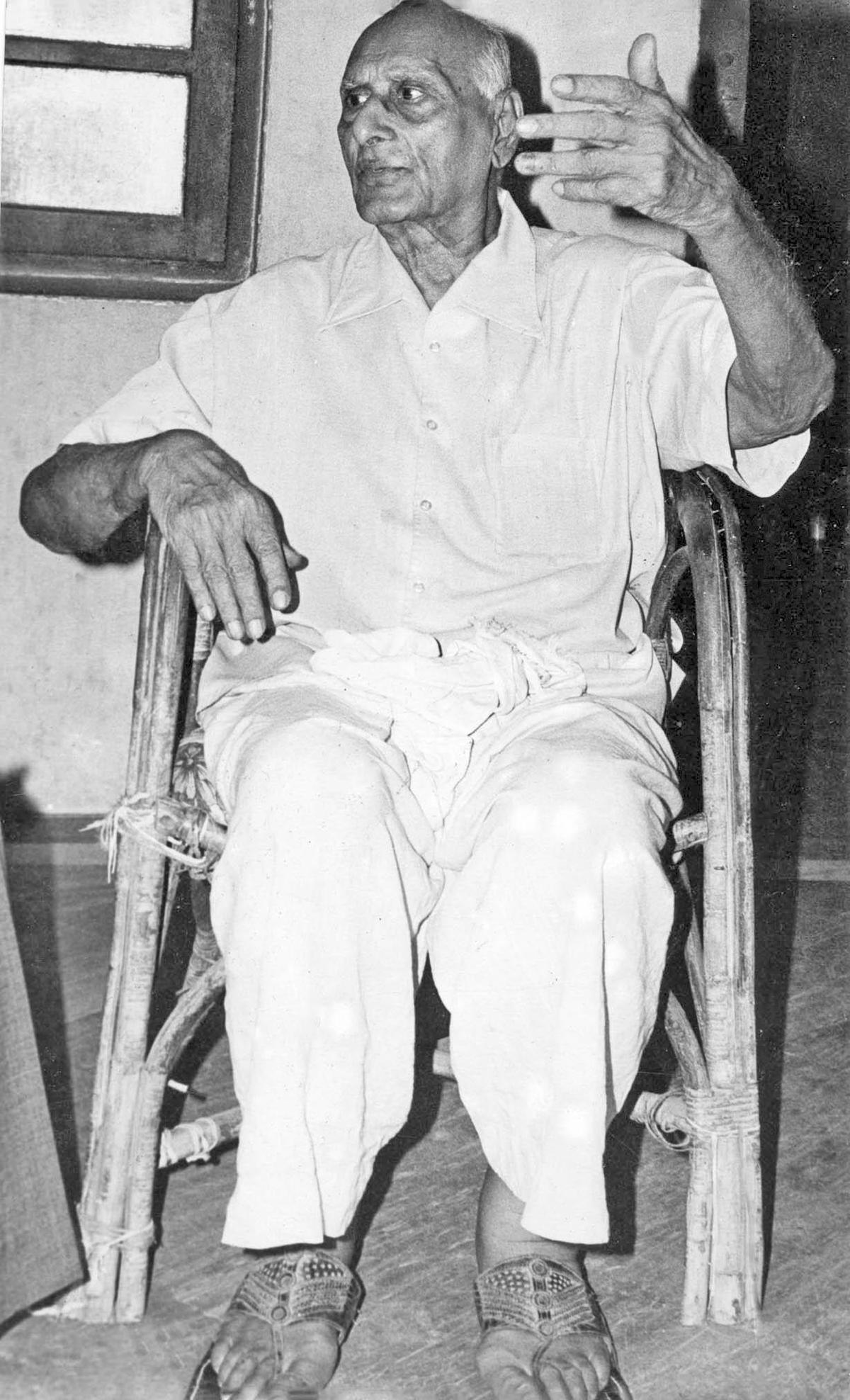
Cotah Ramaswami during an interview on September 25, 1984
| Photo Credit:
The Hindu Archives
At Cambridge, he was denied a chance to appear in the cricket trials.
In 1922, Ramaswami represented India in the Davis Cup in England. Ramaswami also had a couple of famous tennis triumphs there. In his final year at college, he bunked class to win the South of England Championships at Eastbourne, a tournament that he entered under the name A. Rabbit to avoid being caught by college authorities. He defeated England Davis Cup player Sir Gordon Lowe in the final and is the only Indian player to win the tournament. He also won the doubles title of the prestigious Queen’s Club tournament in 1923 partnering Oxford’s Kingsley.
After returning to India in 1924, Ramaswami worked as the Assistant Director of Agriculture. In the sporting sphere, he switched back to cricket, churning out brilliant performances in the Presidency matches and the Ranji Trophy.
Ramaswami’s solid knock of 60 for Madras against the visiting squad from England led by Arthur Gilligan in 1927 emphasised his international credentials. He hammered 83 against Jack Ryder’s visiting team from Australia in 1936.
These performances ensured Ramaswami’s selection for the 1936 England tour, which is notorious in the annals of Indian cricket for its factionalism, intrigues, and controversies. At the age of 41, Ramaswami made his Test debut, and with scores of 40 and 60 at Old Trafford and 29 and 41 (not out) at The Oval, he stood second in the Indian batting averages with 56.67.
Ramaswami served as a nation selector for eight years before resigning in protest at the rampant factionalism in the Board. In 1960, he retired from the public sphere to follow sport from the sidelines.
‘Inexplicable disappearance’
P. Ramesh Naidu, his relative and a former cricketer, said, “He simply walked out of the house one day and vanished. After that, we were never able to trace him. Both his sons and several others searched extensively. At the time he went missing, he was hale and hearty, with no age-related ailments. Just four days before his disappearance, I had met him at Gandhi Nagar. We filed a police complaint, and the police conducted searches, as did the family on their own. Some said he walked into the sea — but that is all hearsay. The only fact is that one fine morning, he walked out and never returned.”
“After a few years, we received a non-traceable certificate. He was a double international and even played cricket in his forties. It remains a great mystery — we searched everywhere, from the Ramana Maharishi Ashram in Thiruvannamalai to several other religious places, but nothing ever came of it,” he added.
Published – November 07, 2025 09:08 pm IST