


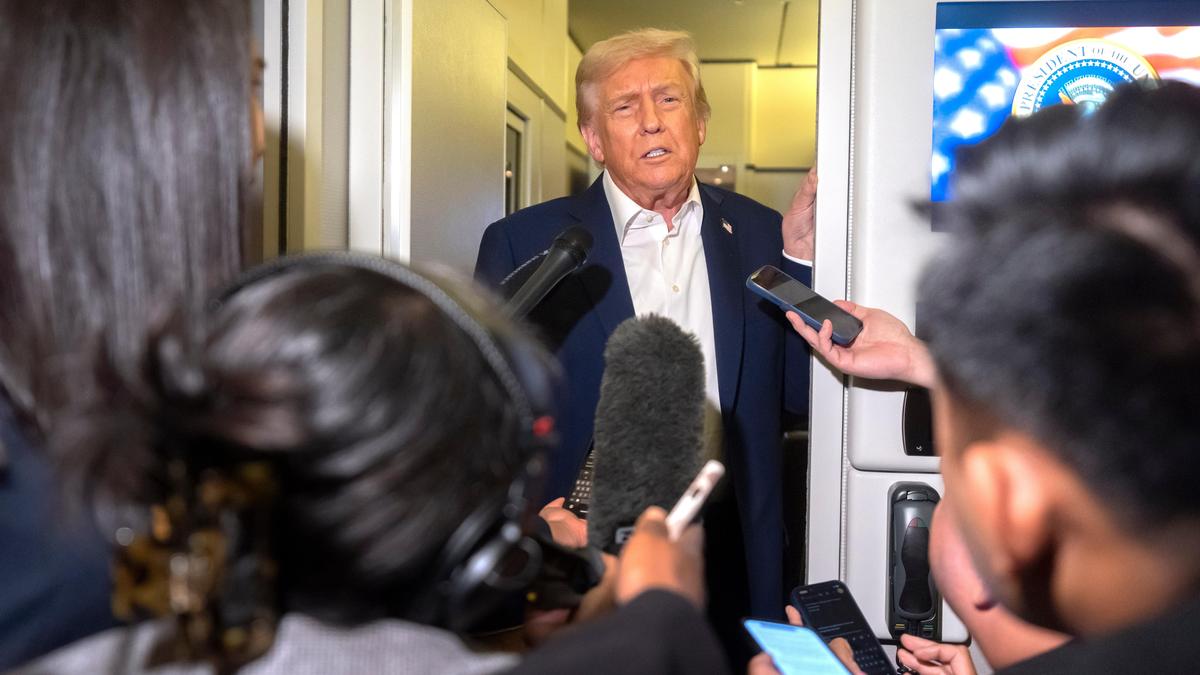

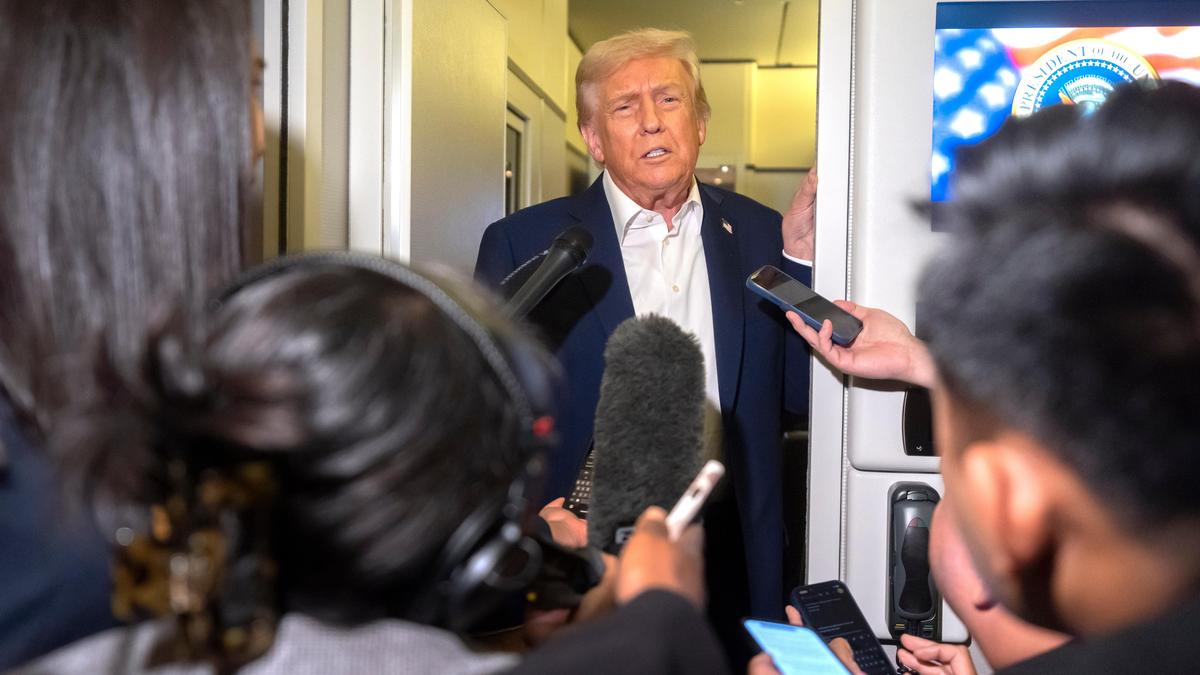
President Donald Trump speaks to reporters aboard Air Force One en route to Asia, Friday, Oct. 24, 2025. (AP Photo/Mark Schiefelbein)
| Photo Credit: Mark Schiefelbein
(This article is part of the View From India newsletter curated by The Hindu’s foreign affairs experts. To get the newsletter in your inbox every Monday, subscribe here.)
Last week, U.S. President Donald Trump hit Russia’s two biggest oil companies with sanctions in his latest policy shift on Moscow’s war in Ukraine. The move, which sparked an instant rise in global oil prices, is apparently aimed at draining Russian resources funding Russia’s war on Ukraine, which continues for over three-and-a-half years now. The U.S. sanctions target oil giants Rosneft and Lukoil, which together account for over 5% of the world’s oil output.
According to a report of news agency Reuters, Mr. Trump also reiterated his claim that India has agreed to “stop” buying oil from Russia and would bring its oil purchases down to “almost nothing” by the end of the year, and said he would persuade China to do the same. India and China are the two biggest buyers of Russian oil. Indian refiners — including Reliance, the top Indian buyer of Russian crude — are poised to sharply curtail imports of Russian oil to comply with the new U.S. sanctions, industry sources have said.
State refineries in India are yet to respond, and Reliance Industries Ltd., which has a long-term contract with Rosneft, has also not spelt out its current position or future course so far. Hours after President Trump reiterated his claim that India will cut down its imports of Russian oil “completely”, the Congress criticised Prime Minister Narendra Modi, saying his “hugplomacy” was not visible at the ASEAN summit in Kuala Lumpur.
Meanwhile, Russian President Vladimir Putin has said Russia will never bow to US pressure, but has admitted new sanctions could cause some economic pain, especially since China and India have reportedly decided to scale down Russian oil imports. “At least four major state-owned Chinese oil companies have suspended purchases from Russia, and at least one private and three state-owned Indian refinery companies are planning for “recalibration of Russian oil imports” including the possibility of a “massive cut” over time,” The Hindu editorial pointed out. Contending that it is premature to laud the sanctions, the editorial said: “Ultimately, whether sanctions have teeth or not depends on the consistency of their enforcement, including shutting down the inevitable loopholes and workarounds that Moscow will seek to exploit to continue selling oil abroad, possibly at even sharper discounts.”
In Japan, a change at the helm
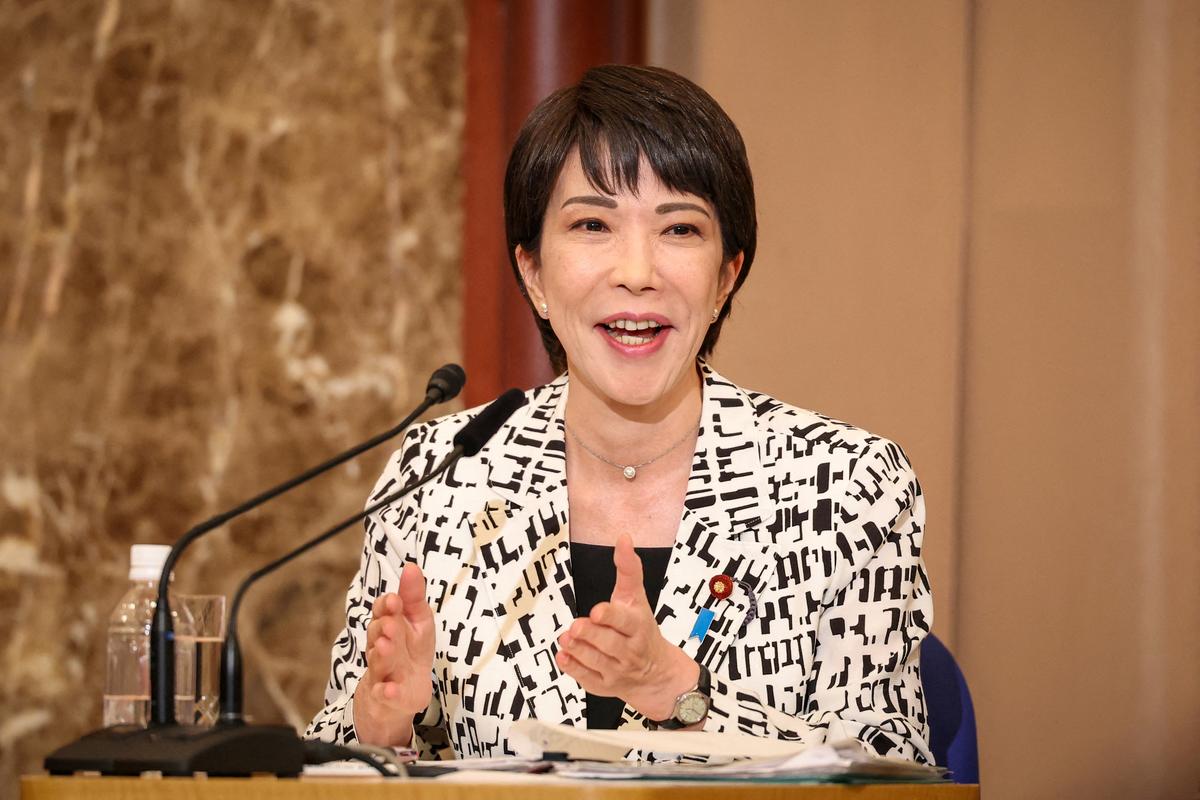
FILE PHOTO: Japanese Economic Security Minister Sanae Takaichi speaks during a debate in Tokyo, Japan, Sept. 14, 2024. Takashi Aoyama/Pool via REUTERS/File Photo
| Photo Credit:
Takashi Aoyama
Japan elected its first female Prime Minister last week, marking a major milestone in its political history. In a dramatic announcement three days after she was sworn in, the new Japanese Prime Minister Sanae Takaichi said her government will ensure that Japan’s defence spending would increase to 2% of its GDP by March 2026, two years ahead of schedule, even as she pledged support for “security partnerships” like the Quad, which includes India.
Our Diplomatic Affairs Editor Suhasini Haidar was in Tokyo to report on the crucial development, and its implications for India-Japan ties. “India is very unique because India is the leader of the global south and the third world. In order to promote the main pillar of the Japanese diplomacy, a Free and Open Indo Pacific, India is a crucial partner. Prime Minister Takaichi is fully committed to promote further cooperation with India,” government spokesperson and Assistant Minister Toshihiro Kitamura told The Hindu in this interview.
The governments in New Delhi and Tokyo may be committed to stronger ties across sectors, but people-to-people ties between the two countries appear to be lagging. Suhasini Haidar also visited the iconic Hiroshima memorial and wrote that while crowds still throng the peace memorial, Japan’s defence posture may be changing.
Top 5 stories we are reading this week:
- Noor Wali Mehsud | Pakistan’s most wanted jihadist – Stanly Johny writes on the TTP leader, who sees the Afghan Taliban’s return to power as ‘a victory for the entire Muslim people’.
- Amir Khan Muttaqi: Taliban’s diplomatic front – Kallol Bhattacherjee writes on the acting Foreign Minister of Afghanistan, who survived the many conflicts of the country over the years, and is seeking legitimacy for the regime even as repression continues at home
M.K. Narayanan writes on India’s travails in negotiating a friendless world
- Najeeb Jung writes on the perils of engaging with the Taliban. While the immediate gains may lie in intelligence access and regional influence, there may be deeper costs, he contends
- Winding up the clock of India-Nepal economic ties. The Reserve Bank of India’s moves, especially on Indian rupee lending, can reshape ties, write Manjeev Singh Puri and Atul K. Thak
Published – October 27, 2025 03:18 pm IST