


(This article is part of the View From India newsletter curated by The Hindu’s foreign affairs experts. To get the newsletter in your inbox every Monday, subscribe here.)
U.S. President Donald Trump’s 28-point peace plan has triggered a volley of diplomatic parleys involving the U.S., Russia, Ukraine and Europe. The Trump plan, which we explained in this peace late last month, was criticised for being pro-Russian. According to the plan, Ukraine should cede territory in Donbas, renounce its NATO ambitions, put a cap on its armed forces and accept de facto Russian control of the territories it has captured. In return, Russia would promise not to attack its neighbouring countries. Russia would also be reintegrated into the global economy. Ukraine’s leaders met their European counterparts in Geneva after receiving the draft Trump plan and offered an alternative proposal. They later travelled to Florida to meet U.S. Secretary of State Marco Rubio, Mr. Trump’s son-in-law Jared Kushner and special envoy Steve Witkoff to discuss the plan. Ukrainian officials said talks were not easy and that they were looking forward to the next round of U.S.-Russia talks. In the words of Mr. Rubio,“The end goal, obviously, is not just the end of the war. It’s also about securing an end to the war that leaves Ukraine sovereign and independent and with an opportunity at real prosperity.”
On December 2, Mr. Witkoff and Mr. Kushner met Russian leader Vladimir Putin in Moscow for a four-hour discussion. Just before the meeting, Mr. Putin accused Europe of trying to undermine the peace efforts, in a clear rejection of the counter proposal made by Ukraine and Europe. “They are on the side of war,” Mr. Putin said of the European powers. “We can clearly see that all these changes are aimed at only one thing: to block the entire peace process altogether, to make such demands which are absolutely unacceptable to Russia,” he added. He also said Russia did not want war with Europe, but if Europe wants one “we are ready”. Meanwhile, Mr. Zelenskyy, in a social media post, said, “What matters is… nothing is decided without Ukraine — about us, about our future.”
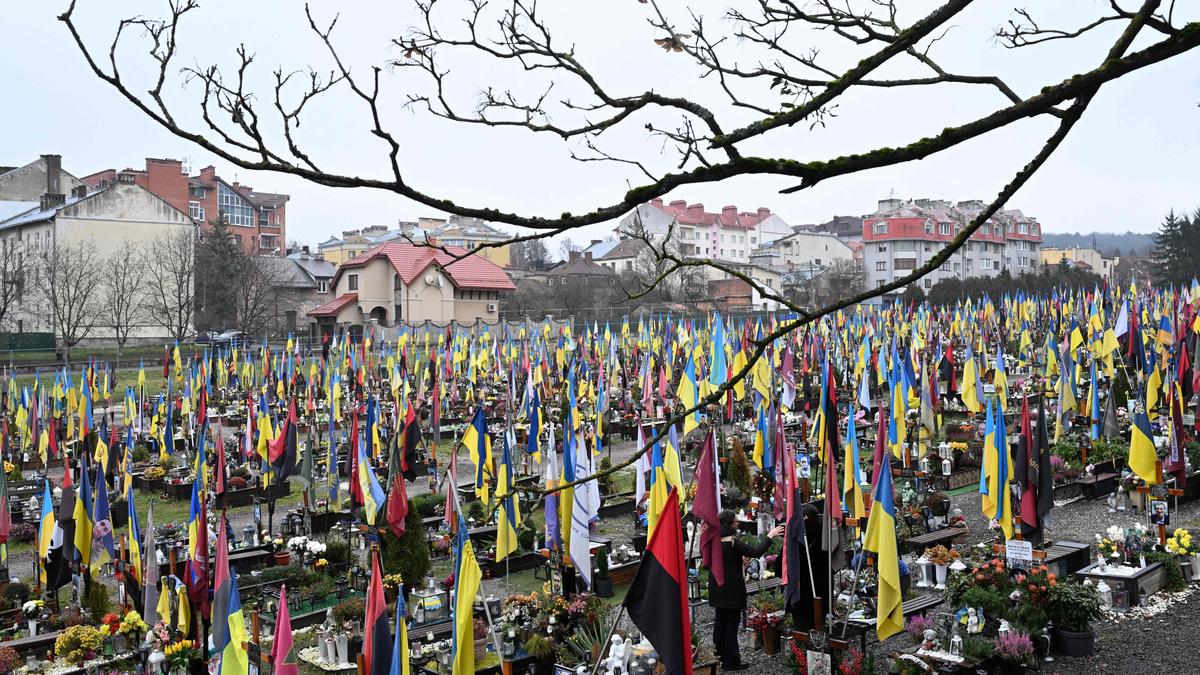
While the details about the Putin-Witkoff meet are still not revealed, it is evident that there is deep mistrust between Russia and Europe-Ukraine, which makes it impossible for any deal to take shape quickly. Under the Biden administration, the U.S. stood firmly with Ukraine-Europe, saying it would support Ukraine “as long as it takes”. Not any more. Mr. Trump has a different take on the war. And he has already shifted the burden of supporting Ukraine to Europe. Mr. Trump wants to end the war and open a new chapter in U.S.-Russia relations. But Europe believes that if the war is brought to an end according to the Trump plan, it would amount to conceding victory to Russia. Europe thinks a victorious, resurgent Russia would seek to alter the security equilibrium in the continent, posing it long-term security challenges. But Europe doesn’t have the capacity to continue to back Ukraine if the U.S. leaves the alliance architecture. This leaves the situation in Europe in flux. Ukraine is stuck in the middle of this great power rivalry. In this article, we look at the positions of each side, battlefield realities and the dilemma Ukraine is facing, explaining why there is no peace.
Devastation in Sri Lanka
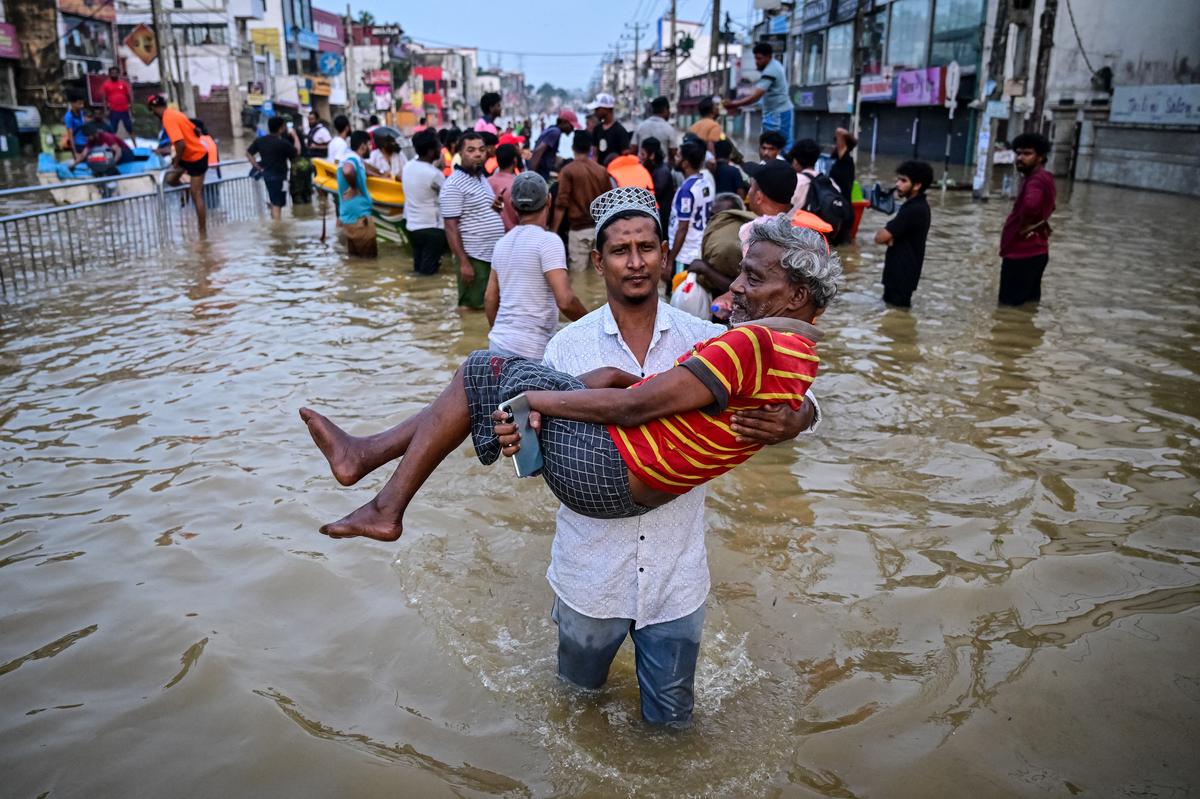
A youth carries an elderly man as they wade through a flooded street after heavy rainfall in Wellampitiya on the outskirts of Colombo on November 30, 2025. The death toll from floods and landslides triggered by Cyclone Ditwah has risen to at least 334 people across Sri Lanka, with nearly 400 still missing, the Disaster Management Centre said on November 30. (Photo by Ishara S. KODIKARA / AFP)
| Photo Credit:
ISHARA S. KODIKARA
More than 400 people were killed as Cyclone Ditwah devastated the island nation over the past few days. More than 11 lakh people have been affected and nearly 2 lakh displaced and housed in safety centres, the Disaster Management Centre said November 30. Cyclone Ditwah brought record rainfall to several districts and triggered multiple landslides in Sri Lanka, reports Meera Srinivasan from Colombo. According to an initial assessment of the UN’s relief coordination office, over 15,000 homes have been destroyed, more than 200 roads remain inaccessible, several bridges damaged, and sections of the rail network and national power grid have been affected. Access to clean water has emerged a serious concern, with many areas reporting little or no supply. In his televised address to the nation on Sunday, President Anura Kumara Dissanayake expressed confidence about mobilising “a substantial amount of funds” required to rebuild the country. “We are working very closely with friendly nations to secure their assistance,” he said. Prime Minister Narendra Modi held a telephone conversation with Mr. Dissanayake on December 1 and assured India’s continued support under Operation Sagar Bandhu that was launched to help the island nation.
The Top Five
1. How Pakistan’s judiciary is being undermined | Explained
Why has the 27th amendment created a new Federal Constitutional Court? Does it curtail the role and powers of Pakistan’s Supreme Court? What did the 26th amendment mandate? Has the judiciary and the executive faced off before? What is the way forward? writes D. Suba Chandran.
2. The Durand Line: Fragile frontier
The colonial-era boundary, which Afghanistan doesn’t recognise today, remains a source of contention between Kabul and Islamabad, writes Sruthi Darbhamulla.
3. Trump-MbS summit — $1 trillion among friends
The exceptional amity heralds new domains of strategic cooperation, with the potential to anchor bilateral, regional and global developments in a more consequential manner, writes Mahesh Sachdev.
4. Why did Wikipedia lock the ‘Gaza Genocide’ page?
Wikipedia’s co-founder criticised the use of the word ‘genocide’ to refer to Israel’s actions in Gaza, further igniting a debate about political neutrality on Wikipedia, writes Sahana Venugopal.
5. War clouds: On the U.S. and Venezuela
The U.S. seems unwilling to learn from its past mistakes. It invaded Afghanistan in 2001 only to leave 20 years later after cutting a deal with the Taliban. America’s 2003 invasion of Iraq turned out to be one of the worst humanitarian catastrophes. Mr. Trump, who claims credit for ending many wars, must step back from the brink, and seek to resolve differences with Venezuela through dialogue, writes The Hindu in this editorial.
Published – December 03, 2025 04:52 pm IST