



Is innovation a threat to tradition? But then, doesn’t tradition gather dust without innovation? And, if innovation is inherent, to what extent should it be accepted?
Much water has flown since Natyashastra, the treatise on Indian classical dance traditions, was scripted about 2,000 years ago, and became the principal referral point for Indian classical dance practitioners. However, with a major shift from the age-old guru-sishya parampara to institutionalisation of dance education, with globalisation and market forces often overruling the dancers’ profession over passion, a dialogue among the various stakeholders of dance has been long overdue to deliberate the issue of tradition in transition.
Against this backdrop, ‘Echoes of Tradition-Innovation in Indian Dance Forms’, a two-day seminar-cum-performance was held in Mumbai recently by two major institutions of the city — Odissi exponent Daksha Mashruwala’s Kaishiki Nrityabhasa and Sangit Mahabharati Pandit Nikhil Ghosh Centre for the Performing Arts — to engage dancers, choreographers, scholars, critics, curators and connoisseurs in an intensive deliberation.
Six well-known names of Indian classical dance — Uma Dogra (Kathak), Mandakini Trivedi (Mohiniattam), Madhavi Mudgal, Aruna Mohanty, Ratikant Mohapatra (all from Odissi) and Vaibhav Arekar (Bharatanatyam) — presented their choreographies on day one. The next day, they deliberated at the seminar with moderators — dance historian Ashish Mohan Khokar and Kathak dancer Gauri Sharma Tripathy. A number of dancers of the city, including legendary Manipuri exponent Darshana Jhaveri, participated in this initiative.
“The new generation of dancers face several challenges. There is a greater demand for innovation in their presentations. Therefore, I put together this seminar,” said Daksha, a disciple of Odissi legend Kelucharan Mohapatra.
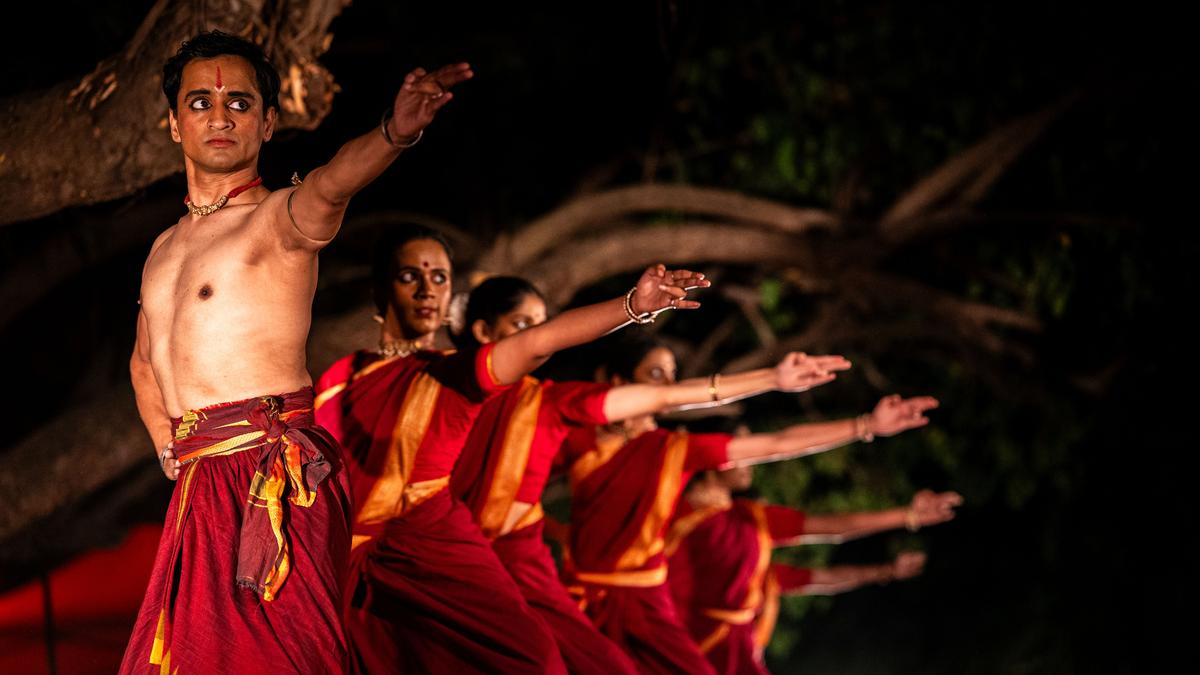
The performances showcased a combination of traditional and experimental elements of choreography, set the tone for the event. Thus, there was Bharatanatyam set to Bengali poem and soliloquy; Hindi lyrics and Hindustani music adapted to Mohiniattam; Jayadeva’s ashtapadi replacing traditional thumri in Kathak; modern Odia poetry and plenty of unfamiliar movement patterns used in Odissi or the line of demarcation between dance and theatre appearing hazier, and so on.
“The soul of dance lives in the tradition, and it is important to stay tuned to it. Let’s create, but not dilute in the name of innovation,” emphasised Uma Dogra, Mumbai-based Kathak exponent and former chairperson of Kathak Kendra, New Delhi. “We are not setting healthy examples for the nextgeneration in Kathak. Unique elements of a particular gharana should not be mixed with another and confusions should not be created with misleading terminologies such as Bollywood Kathak or Sufi Kathak,” she warned. Uma, who trained briefly in Kathakali and Odissi under legends guru Gopinath and guru Kelucharan, respectively, harmoniously blended certain elements of these two dance forms in her Kathak presentation.
Admitting that it was her maiden experimentation with the use of Hindi lyrics and Hindustani music in Mohiniattam, Mumbai-based Mandakini Trivedi said: “What’s innovation today might become the tradition tomorrow, while what is tradition today might be forgotten tomorrow. At times, tradition gathers dust too,” she pointed out. Innovations happen unconsciously; conscious innovation is a strategy, she observed.
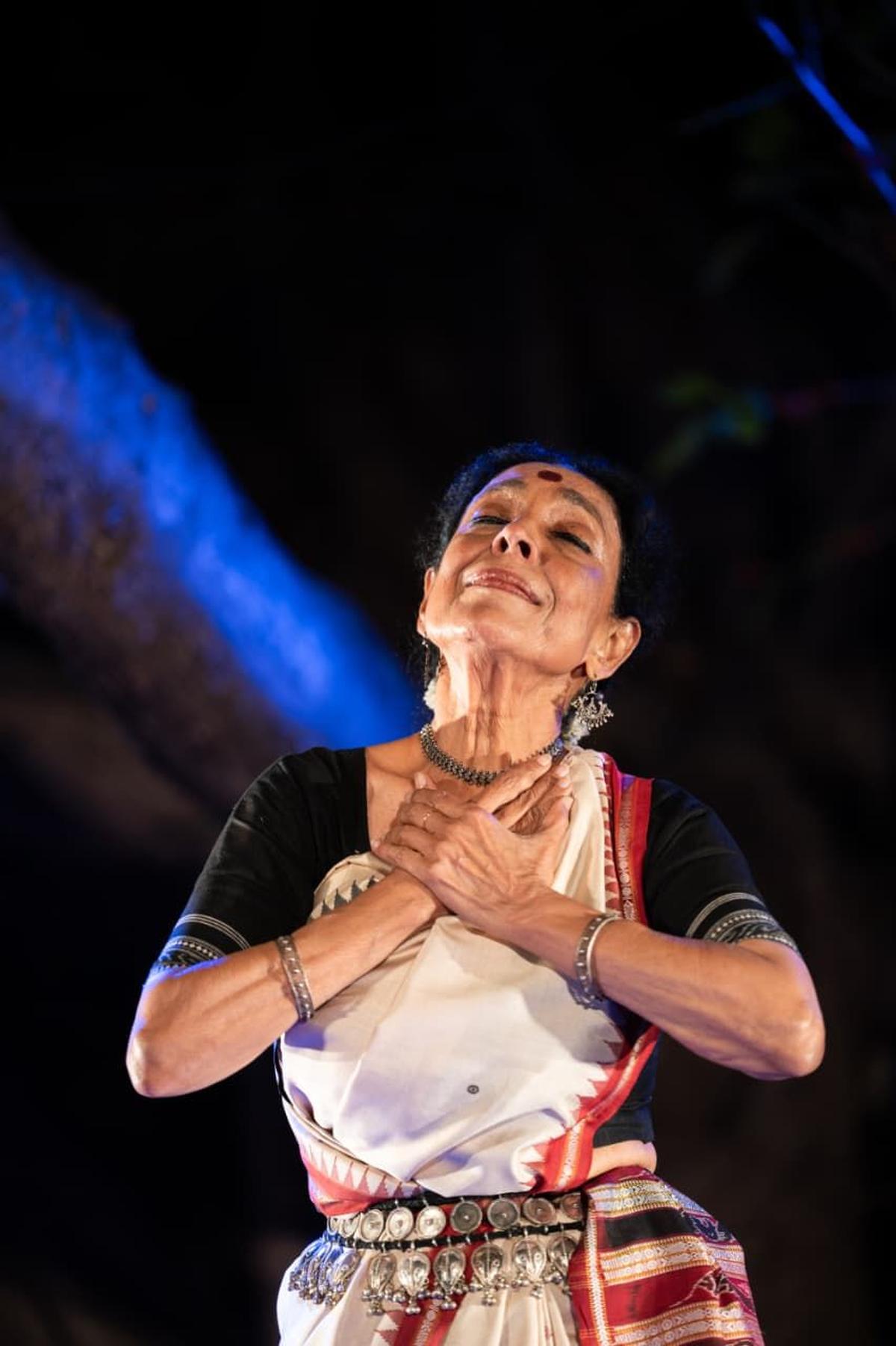
Dancer Madhavi Mudgal was also a part of the seminar
Bhubaneswar-based Ratikant Mohapatra, son of guru Kelucharan, said that as a choreographer, he cares more for the masses than the classes. “I was with my father and guru for almost 40 years and observed that 80 per cent of the audience didn’t follow what we performed. I wish to reach out to the majority through my work,” added Ratikant, who is Ratikant, who is fond of abstract and unusual themes for his choreography. Some of his works include Biswas (faith), Mrutya (death) and Allah. “Speed and theme matter to me the most,” he emphasised.
For Aruna Mohanty from Bhubaneswar, who is known for her successful exploration of modern Odia literature and the allied arts traditions of Odisha, “Innovation is not an eraser but a process through which memory and imagination come together in taking the tradition further”. She presented She ‘Pratinayak’, where the theme is drawn from mythology while the treatment has elements of Prahlad Natak, Sahijata and Jatra traditions of Odisha — an example of innovation within the tradition.
Delhi-based Madhavi Mudgal emphasised on ‘conviction’ than ‘courage’ to take up classical dance as a career. The veteran dancer-guru-choreographer screened excerpts from her works to explain how space and light design are important components in her creations. “I studied architecture. Thus, I am more concerned about space in my choreography.” Her performance showed how her background in Kathak and Hindustani music has expanded her repertoire.
The youngest among the participants was Mumbai-based Bharatanatyam artiste Vaibhav Arekar. He was the most radical in his presentation, while offering glimpses of his strength in the traditional representation of the form. His ‘Debotar Grash’ was choreographed on a Bengali prose-poem by Rabindranath Tagore with monologues in Bengali and theatrical representation, while ‘Greeshma’ followed the Bharatanatyam format. “I am singing songs of the past in the voice of the present and for the future,” stated Vaibhav in the seminar. Theatre, literature and paintings have been feeders for his creativity, he shared.
The lively interaction session with the audience featured some thought-provoking questions from young dancers. Which aspect of Indian classical dance traditions should never be tampered with? How much are we borrowing from other art forms and to what extent has this worked out? Should a dance form use a music tradition followed by another dance tradition? Should classical dance be an inner calling or a career?
In his concluding remarks, moderator Ashish touched upon this. “Dance is not a product. It’s a process,” he said.
Published – December 08, 2025 10:58 am IST