



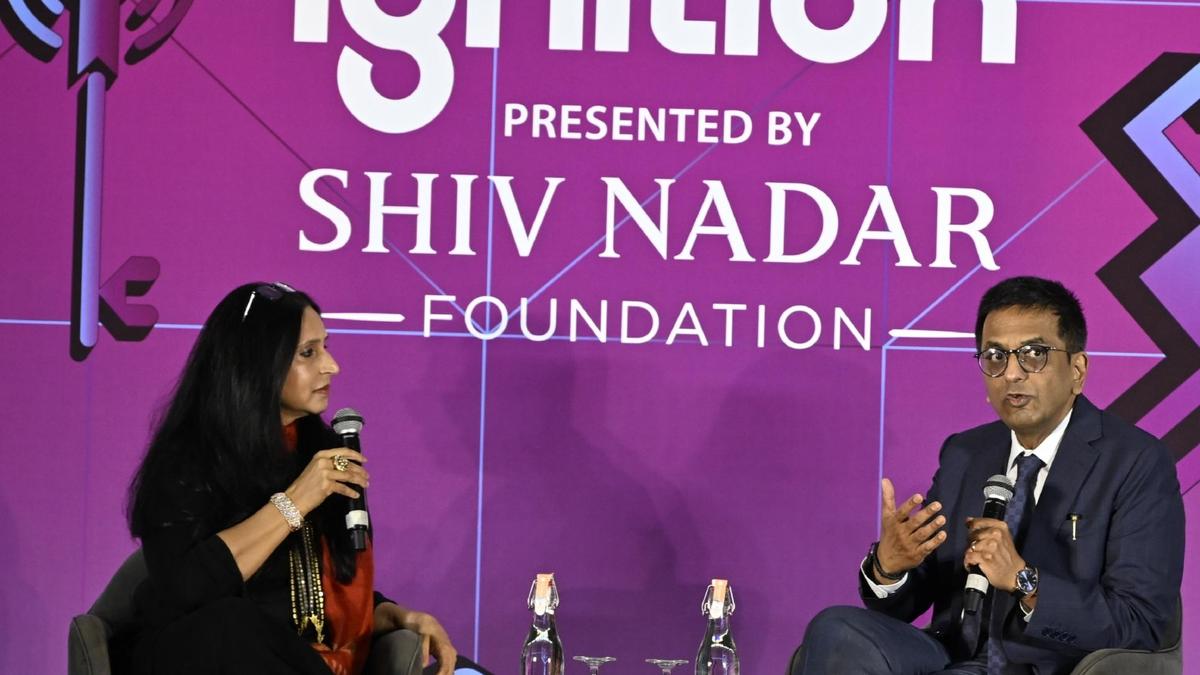

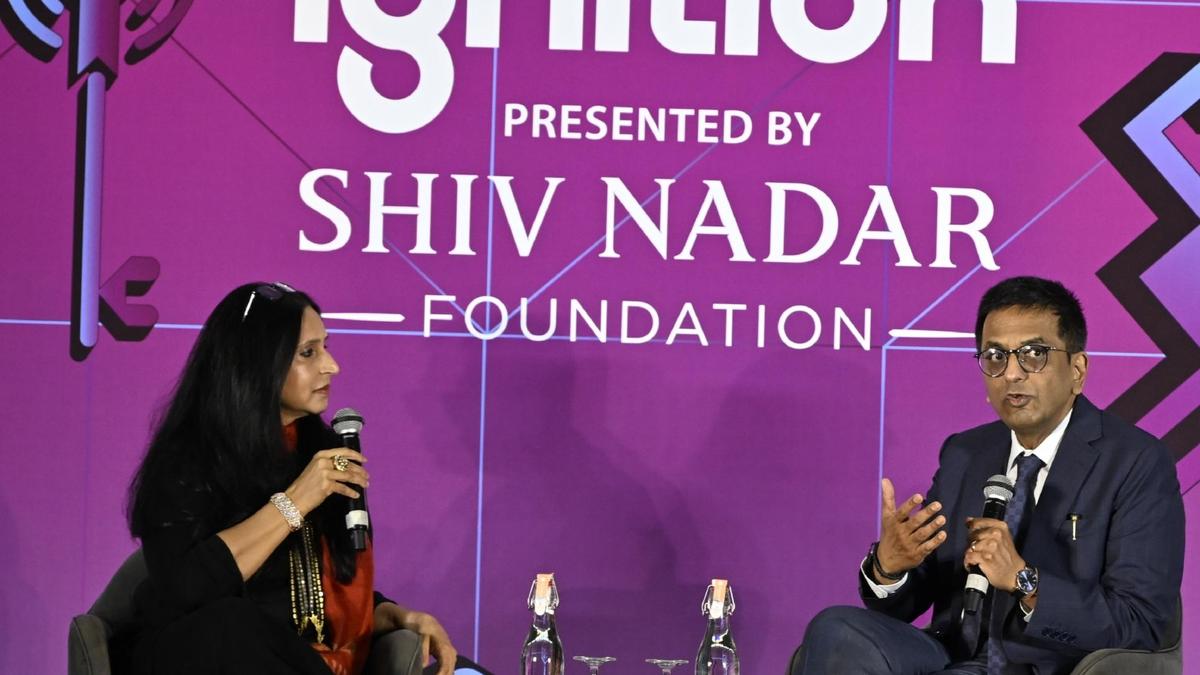
Former Chief Justice of India D.Y. Chandrachud in conversation with Shoma Chaudhury, journalist, at a function organised by Shiv Nadar Foundation on Thursday
| Photo Credit: R. Ragu
An endemic issue confronting the Indian judiciary was the inability of the prosecution to expedite trials, leading to long incarceration of the accused without bail, and the problem lay in inadequate funding of the judiciary, former Chief Justice of India D.Y. Chandrachud said in Chennai on Thursday (October 30, 2025).
“I think the lack of expedition in the disposal of trials poses a grave threat to personal liberty, because if a person incarcerated for two years, or a year, is ultimately acquitted, it means that the person should not have been in jail even for a single day,” Justice Chandrachud stated in a conversation with Shoma Chaudhury, journalist and founder of Lucid Lines Productions.
“The answer to the problem is not just with the judiciary, because budgeting and infrastructure are not in the hands of the judiciary. The government has to fund the judiciary for infrastructure with better budgeting, and budgets for the Indian judiciary are woefully inadequate,” he remarked. The event was part of Ignition, a conversation series organised by the Shiv Nadar Foundation.
“We have to have adequate funding for the courts – more judges, better-trained public prosecutors – which will ensure that these cases are taken up early,” he observed.
To a question on the five-year-long incarceration of former JNU student leader Umar Khalid in the Delhi riots case, Justice Chandrachud said the general principle of law, which must apply across the board, was that ‘bail was the norm and jail was the exception’. The courts, he said, did not decide cases based on what is written in the newspapers or social media. “You have to, at the end of it, look at the record of the particular case.”
Parrying questions on the Supreme Court’s judgment on the Ayodhya dispute, Justice Chandrachud said that it was a judgment that applied principles of civil procedure and basic principles of law that evolved over the past 100 years or more. “You may criticise the view, that is everybody’s right. Or, you may agree with the view, that is your right again. But to say that it is faith which has been the basis of the decision is not plainly correct because that is not how the judgment reads.”
Manu Joseph, journalist and author, and T.V. Mohandas Pai, former Infosys CFO, also spoke.
Published – October 31, 2025 03:59 pm IST