



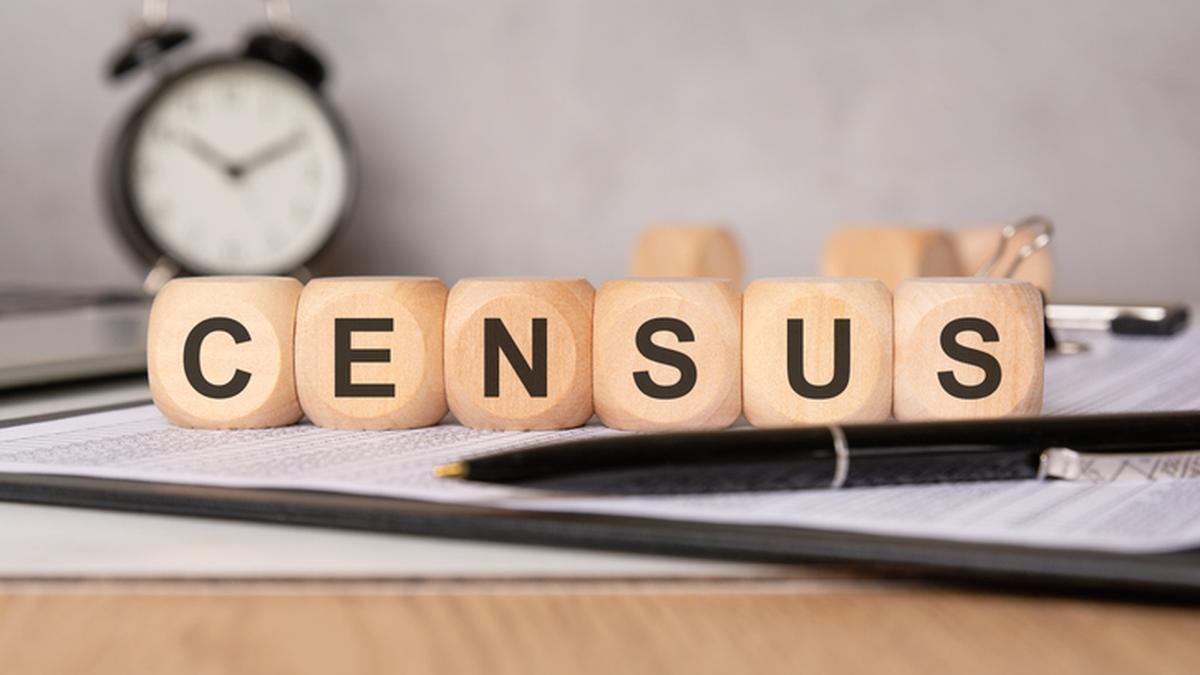

The efficacy of the self-enumeration module for the first phase of Population Census 2027 will be tested from Saturday (November 1, 2025) with enumerators visiting the homes of prominent citizens in their areas and helping them fill the details on a website, a senior government official told The Hindu. This will be the first digital Census, and the first to enumerate caste in independent India.
The details of the self-enumeration website and the mobile application prepared for the pre-test of the Houselisting and Housing Census (HLO) is not being publicised or shared in the public domain as its usability will be checked from November 1-10 and November 10-30 respectively in select areas.

As many as 30 questions on household particulars such as building number, Census house number, predominant material of the roof, floor of the house, name and sex of the head of the household, number of persons residing in the household, main source of drinking water, main source of lighting, access to toilet, main fuel used for cooking, access to radio, TV, laptop, computer, car, main cereal consumed and mobile number are likely to be asked during the pre-test.

On October 16, the Registrar General and Census Commissioner of India (RG&CCI) notified that the pre-test for HLO, the first phase of Population Census 2027, will be conducted from November 10-30 in selected sample areas of all States and Union Territories and the option to self-enumerate will be available from November 1-7. Pre-test is required to test the efficacy of the entire exercise that will be held in two phases – HLO and Population Enumeration from April 1, 2026, to February 28, 2027.
“The enumerator will visit select citizens in select areas from November 1-7 and will share with them the address of the portal where they can fill the questionnaire. Once that is done, they will visit the same households again and also the remaining homes in the select areas between November 10-30,” said the official.
The official added that the enumerators will be given a digital district layout map. “On the second visit between November 10-30, the enumerators are expected to find the details of those who self-enumerated on an app developed for the HLO phase. It will save the time of the enumerators. The details of other households in the ward not covered during the self-enumeration module will be collected separately on the app,” the official added.
Both the modules will be linked to the Census Management and Monitoring System developed by the RGI for the ongoing Census.
Census 2021 that was postponed indefinitely initially due to COVID-19 pandemic is now being known as Population Census 2027; as the population headcount, the second and the final phase will be done by February 28, 2027.
Under the 2021 Census, enrolment under the National Population Register (NPR) was made compulsory if citizens wanted to exercise the right to fill the Census form on their own rather than through government enumerators. The RGI had designed a ‘Self- Enumeration’ portal in English for the exercise and Aadhaar or mobile number were to be mandatorily collected.
On July 29, the government informed the Lok Sabha that no decision has been taken to update NPR, which has the details of 119 crore residents and was updated in 2015-16, during the forthcoming Population Census 2027 exercise.
The NPR is the first step for the creation of a National Register of Citizens (NRC), according to the Citizenship Rules, 2003 under the Citizenship Act, 1955. The NPR was first created in 2010 and data was collected simultaneously during the first phase of the 2011 Census.
With NPR not being updated during the ongoing Census exercise, a portal has been developed for the exercise.
The October 16 notification implied that since the methodology on caste enumeration has not been finalised, unlike the previous instances, the pre-test for only the first phase – HLO – was notified.
In 2019, the questions to be asked in both the phases – HLO, PE and NPR – were tested in succession from August 12 to September 30.
The pre-test for the planned 2021 Census took place in 2019, covering more than 26 lakh people in 76 districts of 36 States and Union Territories. Around 6,000 enumerators and 1,100 supervisors from State governments were engaged in 2019.
Published – October 31, 2025 10:24 pm IST