



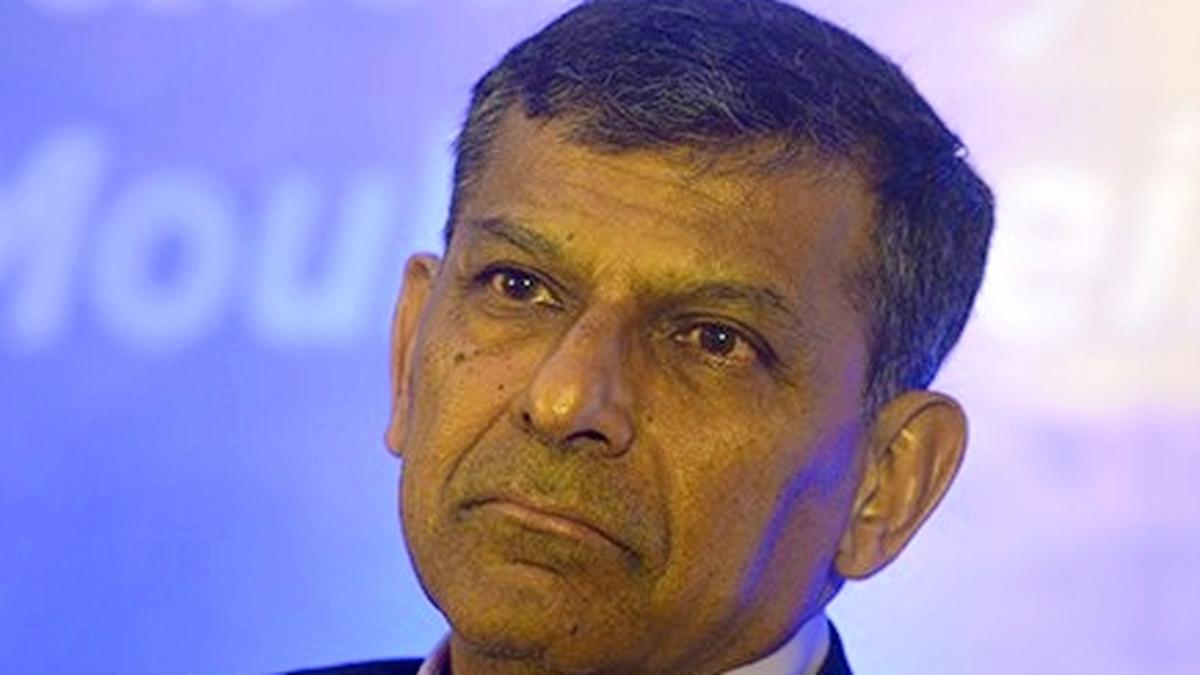

Former Reserve Bank of India (RBI) Governor Raghuram Rajan on Wednesday (January 28, 2026) suggested that the upcoming Budget should be integrated with a longer-term vision to make the Indian economy more resilient and independent, while accelerating growth, as the world is passing through an ‘extremely dangerous time’.
In an interview with PTI Videos, Mr. Rajan said that earlier, India had five-year plans, but even then, the country’s Budget was not well integrated with them.
“I think it (Union Budget for 2026-27) should be integrated with a longer-term vision. How do we become more resilient, more independent as an economy, but also fast growing, so that everybody else wants to be friends with India, that requires a fair amount of work, and I am hopeful that Finance Minister Nirmala Sitharaman’s next Budget will take us there,” he said.
Ms. Sitharaman will present the Union Budget on February 1, 2026, expected to include reform measures to shore up economic growth amid a volatile geopolitical situation.

Mr. Rajan said this is an ‘extremely dangerous time’ for both the global and the Indian economy, even as ‘we are seeing lots of positive opportunities from the tremendous investment in Artificial Intelligence (AI)’.
“But there is also a lot of danger from becoming too reliant on entities that can squeeze us and make us vulnerable because we do not have a natural market which is nearby, which is rich, that we can supply to other than our own,” he said.
Mr. Rajan, currently the Katherine Dusak Miller Distinguished Service Professor of Finance at Chicago Booth, emphasised that he understands the forthcoming Budget may cut some tariff rates that keep India from being well integrated into the supply chain.

“And of course, the States are also helping by creating policies that are friendly towards investment. But we need more of that,” he said.
While noting that India is the fastest-growing large economy, and that needs to be celebrated, Mr. Rajan said, “We also need to make as many sorts of relationships as we can, including with our neighbours, Bangladesh, Sri Lanka, Nepal.”
Asked if trade tensions with the U.S. escalate further, then what mix of domestic reform and external positioning would help India absorb this stock, he said the most important aspect for India is to shut out the outside for a while, because there is a lot of noise that will be created, and instead introspect as to what it needs to do to up the rate of growth.
“We had a whole range of very big reforms through the 1990s into the early 2000s, then for a while we did not have very much. I think it is time to start that process again,” he said.
Observing that the Narendra Modi government has recently implemented reforms, Mr. Rajan said it is time to focus more on what it will take to add, maybe, a couple of percentage points to India’s economic growth.
“I think what we have right now is an opportunity created by the uncertainties of policy from the two big superpowers, an opportunity to re-insert ourselves in global supply chains,” he said.
Mr. Rajan pointed out that India is not naturally part of any global supply chain because it is not near any major economy, except China, with which it has a border dispute.
“It would be important for India going forward to diversify across the supply chains that it has access to, including with China, but also importantly, with Europe, with Australia, with Canada, with the Middle East, as also with the East Asian countries,” he said.
Mr. Rajan said that, given all the uncertainties the superpowers have created, India has got a fresh opportunity to catch the bus that it may have missed.
“It is not just manufacturing, it is services, and it is all kinds of services. Can we start thinking about how we can do that?” he asked.
According to him, if India can offer a set of reforms, it will not only attract a lot more interest and foreign direct investment, but will also be integrated into global supply chains.
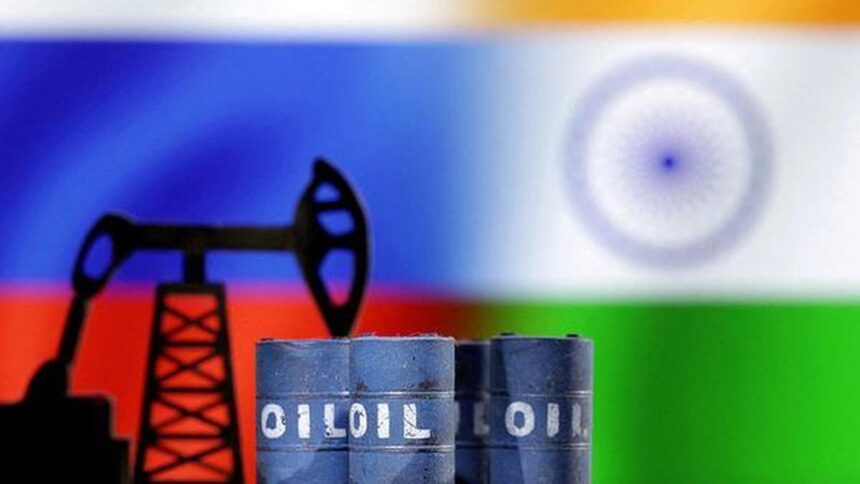
United States President Donald Trump has imposed 50% tariffs on India, including 25% for its purchases of Russian oil, leading to a strain in the bilateral ties between the two countries.
Asked if India can aspire to grow at 8-9% on a sustained basis, like China and East Asian countries, which grew at higher rates for more than 30 years, Mr. Rajan said India does not need to grow at that helter-skelter pace that China grew.
“Some of that was unsustainable, and we are seeing the problems the Chinese property market is facing now, and you know, it will take a number of years for it to get fixed,” he said. Mr. Rajan observes that even in India, some of the infrastructure build-out is getting worrisome.
“Every city seems to want a metro, but not every city has the ability to put metro stations in the right place, and some of that investment may be hard to recover over time, and clearly, we should not build public infrastructure that people can not use,” he opined.
Mr. Rajan emphasised that India will have to be careful in creating growth that is temporary and not sustainable. “It includes housing, as not all housing, even if we are a poor country with a lot of people without housing, can be utilised effectively, and so we have to be careful about helter-skelter growth,” he noted.
Published – January 28, 2026 12:12 pm IST