




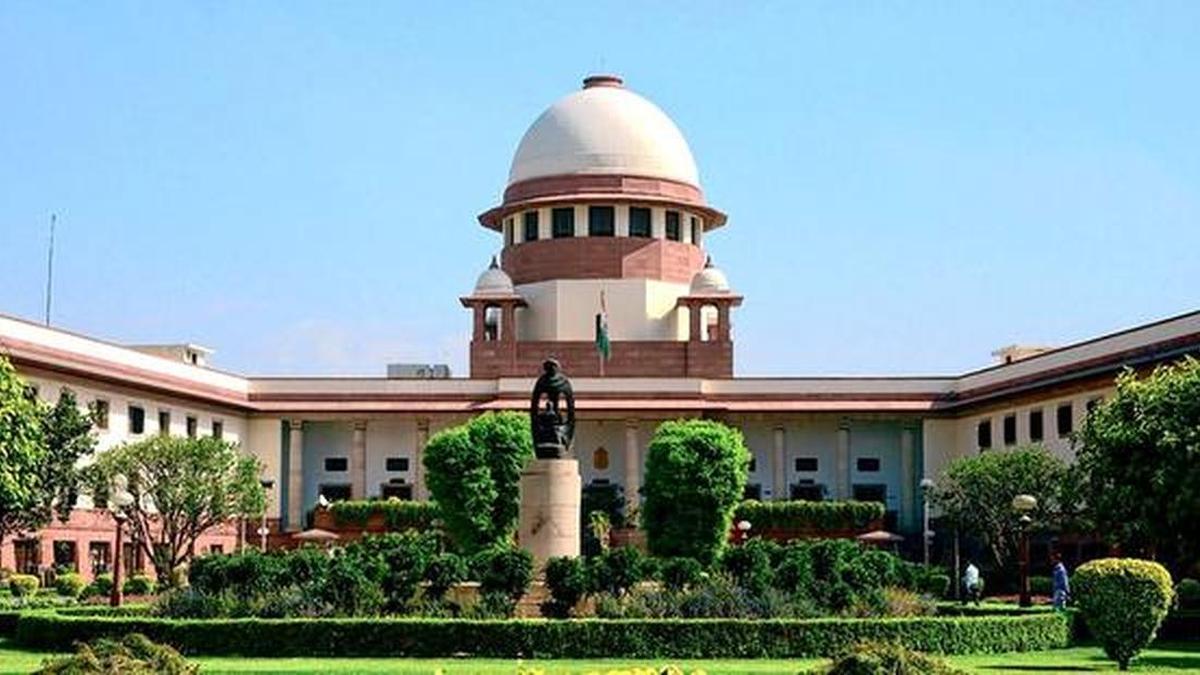

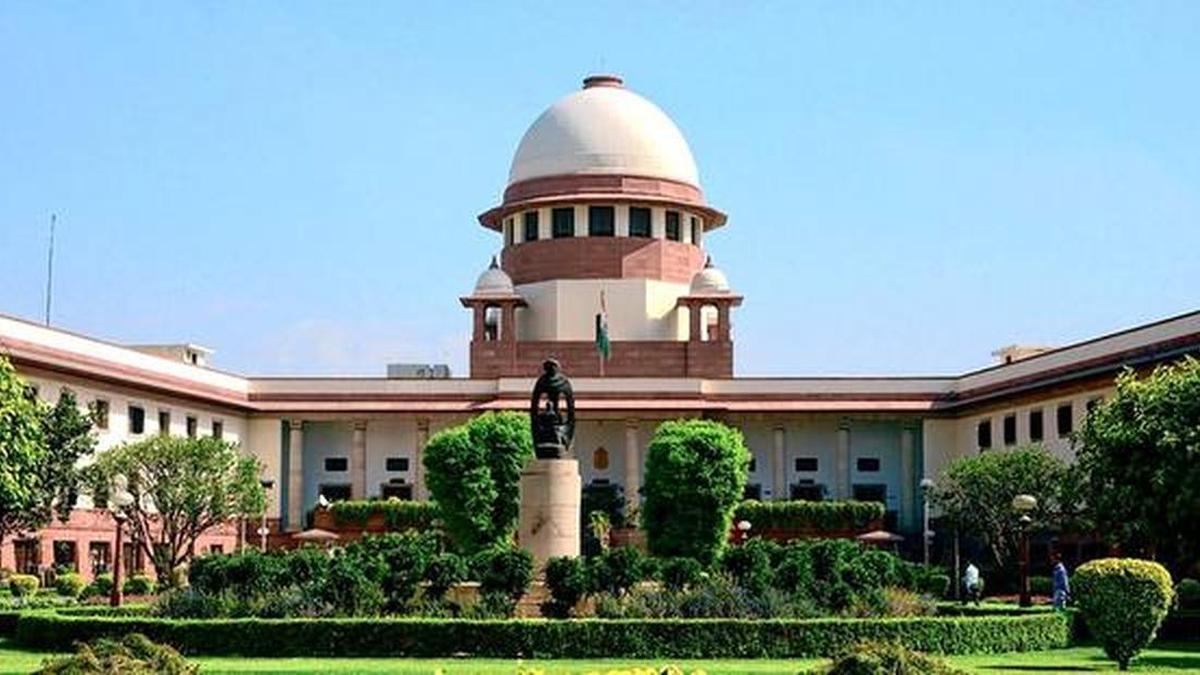
The Supreme Court of India.
The recent controversy over the alleged contemptuous and derogatory remarks against the Chief Justice of India and the Supreme Court has not only raised eyebrows, but can also be considered an act of diminishing the ‘authority’ of India’s top court. Moreover, such remarks being spread through media and social media may also be seen as an act of interfering and obstructing the administration of justice, thereby directly damaging the edifice of constitutional morality. This has been the basis for the demand to initiate contempt proceedings.
Understanding contempt
The phrase ‘contempt of court’ is used in Article 19(2) as one of the grounds for imposing reasonable restriction on fundamental freedoms yet the Constitution does not give guidelines on how to initiate such proceedings. In India, the Supreme Court and High Court have been designated as courts of record under Article 129 and 215 respectively. A court of record is one whose decisions are kept in reserve for future references and inherently it also has the power to punish for its contempt. This implicit constitutional provision is explained in the Contempt of Court Act, 1971.
The Act classifies contempt into civil and criminal. Section 2(b) of the Act defines civil contempt as wilful disobedience to any judgment, decree, direction, order, writ or other process of a court or wilful breach of an undertaking given to a court. On the other hand, criminal contempt is defined in Section 2(c) of the Act, as the publication (whether by words spoken or written or by signs or by visible representations or otherwise) of any matter or the doing of any act which — (i) scandalises or lowers the authority of any court; or (ii) prejudices or interferes or tends to interfere with, the due course of any judicial proceeding; or (iii) interferes or tends to interfere with the administration of justice in any other manner. This makes it clear that contempt is different from mere disrespect. It is beyond just covering disobedience and disruption in the working of the justice system. The Act further states that the High Court or Supreme Court may initiate contempt proceedings suo moto. It may also be initiated by a third party provided the petition has consent from the Attorney General or Advocate General for the Supreme Court and High Court respectively.
The mode of criticism
It is now a settled principle that fair criticism of a decided case is not contempt, but criticism that transgresses the limits of fair commentary may be considered contemptuous as held in Ashwini Kumar Ghosh versus Arabinda Bose (1952). Further, in Anil Ratan Sarkar versus Hirak Ghosh (2002), it was held that the power to punish for contempt must be exercised with caution and shall only be exercised when there is a clear violation of an order. One of the landmark cases is of M. V. Jayarajan versus High Court of Kerala (2015) in which the top court upheld a contempt finding against an individual for using abusive language in a public speech while criticising a High Court order, establishing that such actions could be considered criminal contempt for undermining the judiciary’s authority and disrupting the administration of justice. The top Court recently in Shanmugam @ Lakshminarayanan vs. High Court of Madras (2025) has held that the very purpose to punish for contempt is to ensure administration of justice.
Criticising the Courts’ action democratically is not wrong; however, one needs to consider that the judiciary is playing a crucial role by contributing to setting the priorities for the state so that the sanctity of administration of justice is maintained. Both the state and the citizens need to understand that any kind of misrepresentation would not only amount to contempt, it would also be detrimental to democratic principles, affecting the delivery of substantive justice (elimination of injustices).
The author is President, Centre for Applied Research in Governance, Delhi.
Published – November 06, 2025 08:30 am IST