


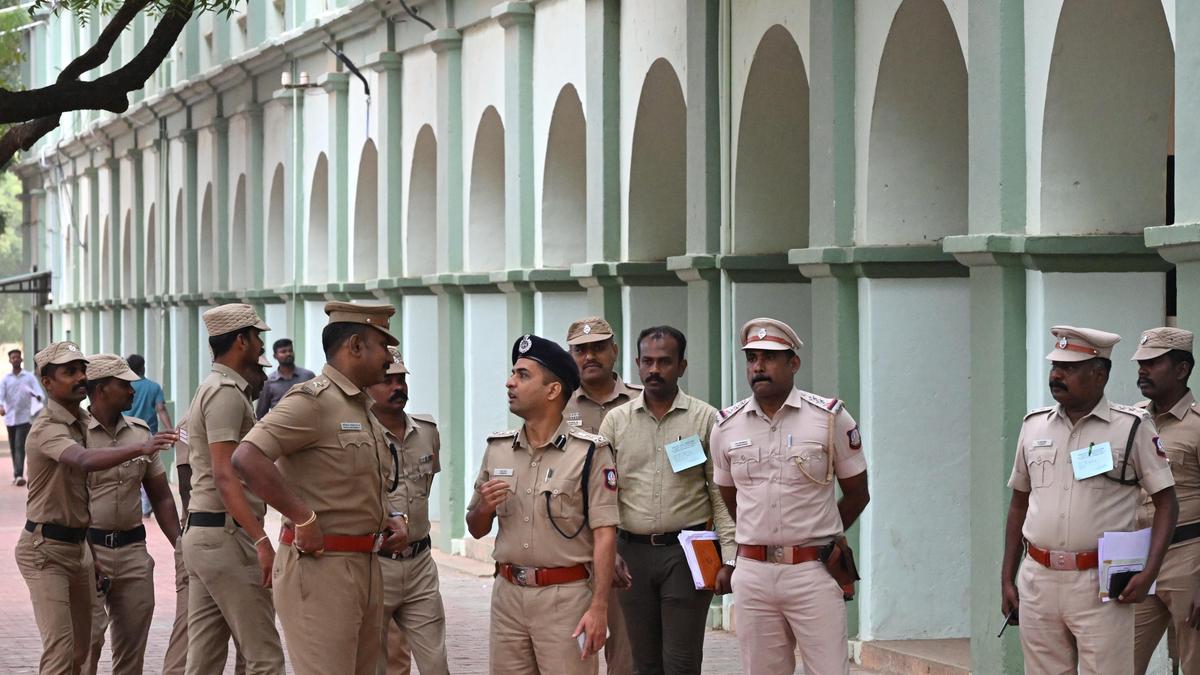

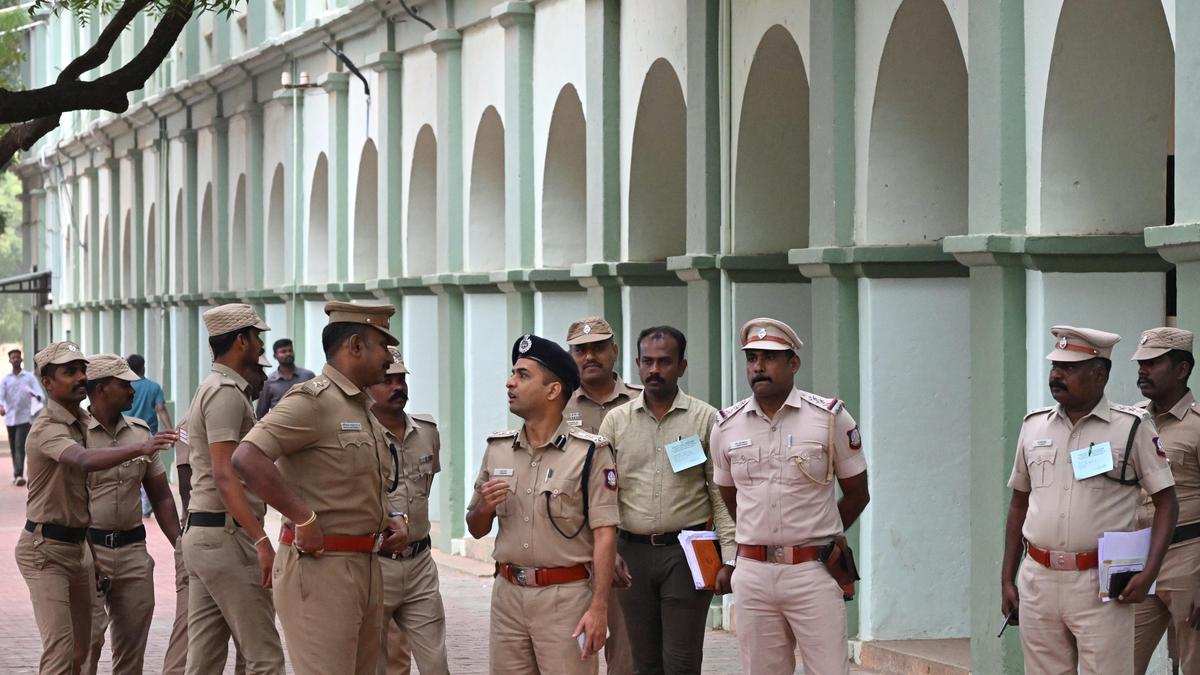
Tamil Nadu Law Minister S. Regupathy issued a statement accusing the Centre and the UPSC of disregarding the State’s views and selecting officers of their choice.
| Photo Credit: SHAIKMOHIDEEN. A
The story so far: Tamil Nadu has found itself in the middle of a controversy over the appointment of a regular Director-General of Police/Head of Police Force (DGP/HoPF). For the first time in recent years, the State was unable to appoint a regular police chief in time to succeed the outgoing DGP. G. Venkatraman, a 1994-batch IPS officer ranked sixth in seniority, has been appointed as the in-charge DGP.
What has the government said?
Although the Union Public Service Commission (UPSC) had finalised a panel of three senior DGP-rank officers from the list forwarded by the State, the Tamil Nadu government rejected the panel, stating that the shortlisted officers were “not acceptable”. Tamil Nadu Law Minister S. Regupathy issued a statement accusing the Centre and the UPSC of disregarding the State’s views and selecting officers of their choice. Meanwhile, two contempt petitions have been filed against Chief Secretary N. Muruganandam for allegedly violating the Supreme Court’s guidelines.
What are the SC guidelines?
In Prakash Singh versus Union of India (2006), the Supreme Court laid down detailed guidelines for the selection of State DGPs/HoPF. The Court mandated that, “The DGP of the State shall be selected by the State Government from amongst the three seniormost officers of the department who have been empanelled for promotion to that rank by the UPSC, on the basis of their length of service, very good record, and range of experience for heading the police force.” It further ruled that the selected officer must be granted a minimum tenure of two years, irrespective of their date of superannuation. State governments are required to send proposals to the UPSC at least three months before the anticipated vacancy of the DGP, outlining the eligible officers to be considered for the post. However, Tamil Nadu did not follow this timeline. The then incumbent DGP, Shankar Jiwal, retired on August 30, 2025, which meant the State should have forwarded its list by June. Instead, the proposal was submitted to the UPSC only on August 29, 2025.
What is the contempt plea about?
After advocate Henri Tiphagne moved the top Court alleging that the State Government had committed contempt by appointing an in-charge DGP, the Chief Secretary informed the Court that a regular appointment was delayed because one of the eligible officers had approached the Central Administrative Tribunal (CAT) seeking inclusion of his name in the panel. The CAT dismissed his application on April 30, 2025. While disposing of the contempt plea, a Bench headed by the Chief Justice of India requested the UPSC to consider the matter “expeditiously” and directed that, once the UPSC’s recommendations were received, the State Government must take steps “forthwith” to appoint a DGP.
Following this direction, the UPSC convened an Empanelment Committee Meeting on September 26, 2025, with the Tamil Nadu Chief Secretary. It emerged through reliable sources that the State had withdrawn the integrity certificate of one officer and expressed its unwillingness to empanel three other officers for undisclosed reasons. Despite this, the UPSC shortlisted the senior-most DGP-rank officers, and forwarded its recommendations to the State. However, Tamil Nadu raised objections by writing to the UPSC to express its concerns about the inclusion of officers it deemed “unacceptable” and indicating a preference for another meeting. The UPSC responded swiftly, stating that its earlier decision would stand.
What is the current status?
Petitioner Kishore Krishnaswamy filed a case against the State, alleging wilful contempt for appointing an in-charge DGP and withholding the appointment of a candidate from the panel of three IPS officers. The top Court has sought the State’s response within three weeks.
Published – November 26, 2025 08:30 am IST