




On Valentines Day in 1998, L.K. Advani, then BJP president, was scheduled to address a Lok Sabha election rally in Coimbatore. Before he could make a pitch for winning the hearts of the people, 13 bombs exploded at 11 places killing 46 persons and injuring over 200 others. The textile city was already communally tense with the killing of 18 Muslims in the wake of the murder of a police constable, Selvaraj, nearly three months earlier in November 1997. The Al-Umma, an Islamic fundamentalist outfit, had masterminded and executed the bomb explosions.
The maimed, bleeding victims were being rushed to hospitals and Mr. Advani was escorted to safety. Amid the tension in the air, attention shifted parallelly to East Lokmanya Road, R.S. Puram, a crowded residential locality in the city, where a car was found abandoned.
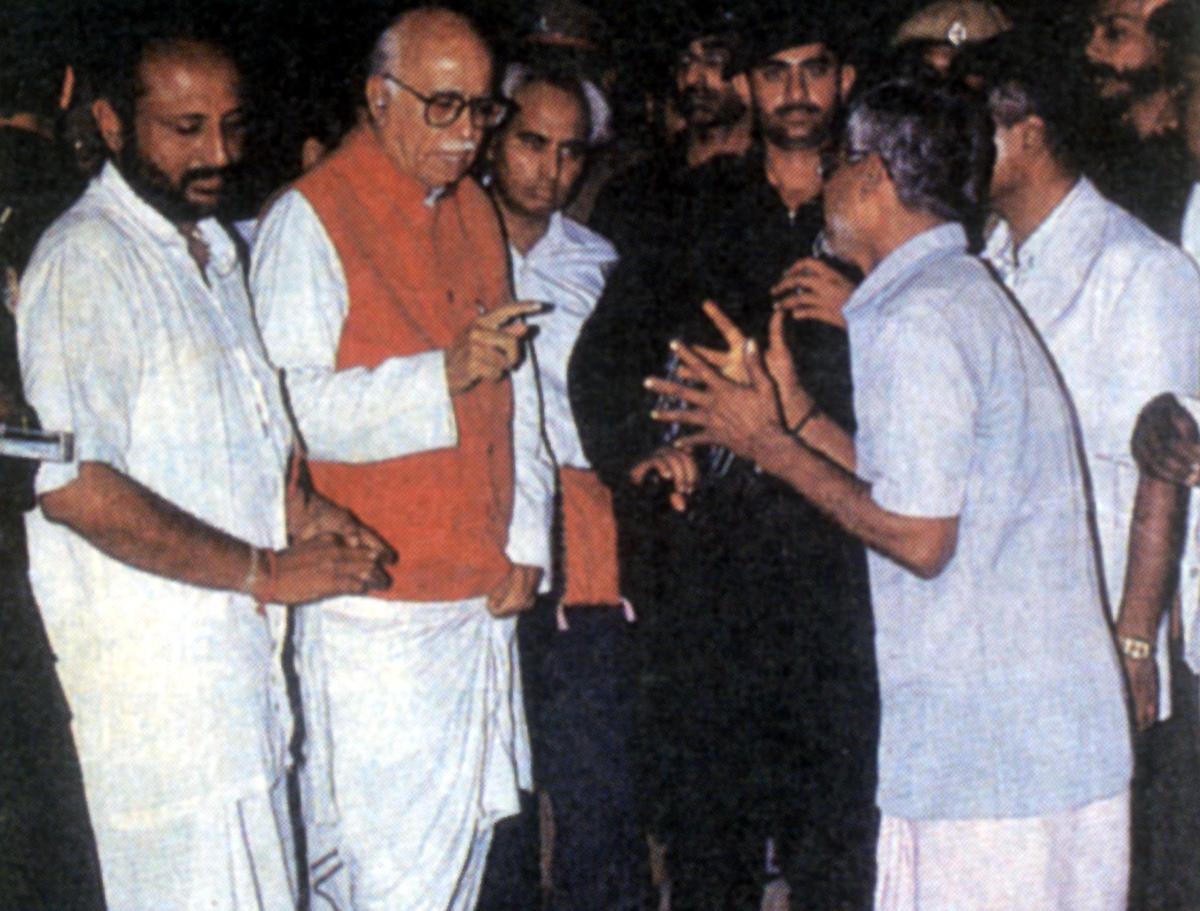
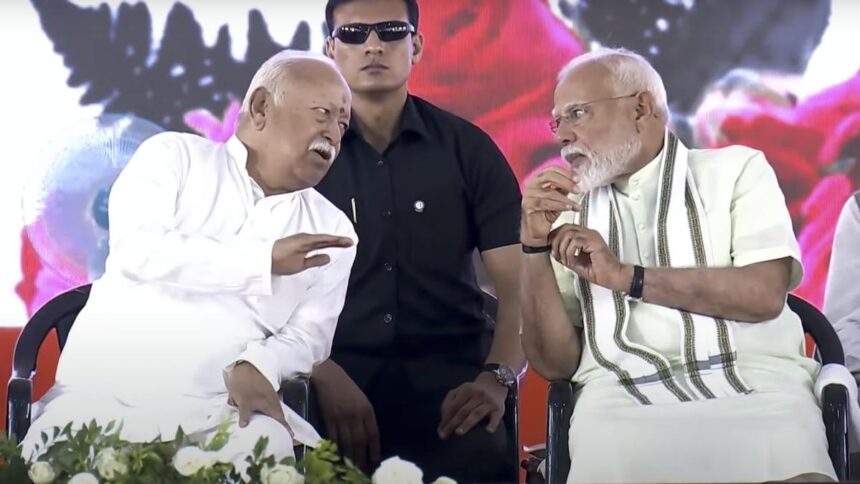
L.K. Advani consoles a bereaved family member after the Coimbatore serial blasts in February 1998
| Photo Credit:
The Hindu Archives
Explosive-laden car
All four doors of the car were locked. Sun control films on the windows and rear wind-shield blocked the inside view. The policemen peered through the front wind-shield and noticed several motorcycle side-boxes stacked inside. It did not take long to conclude they were laden with explosives. The police realised it would be risky to attempt to open the car. They did not want a 14th explosion on February 14, to rip apart and snuff out more lives in Coimbatore.
The clock was ticking. Bomb disposal experts swiftly moved in. Residents of the locality were all moved out. In a coordinated operation, the Army, the CRPF, the RAF and the police cordoned off the bomb zone.
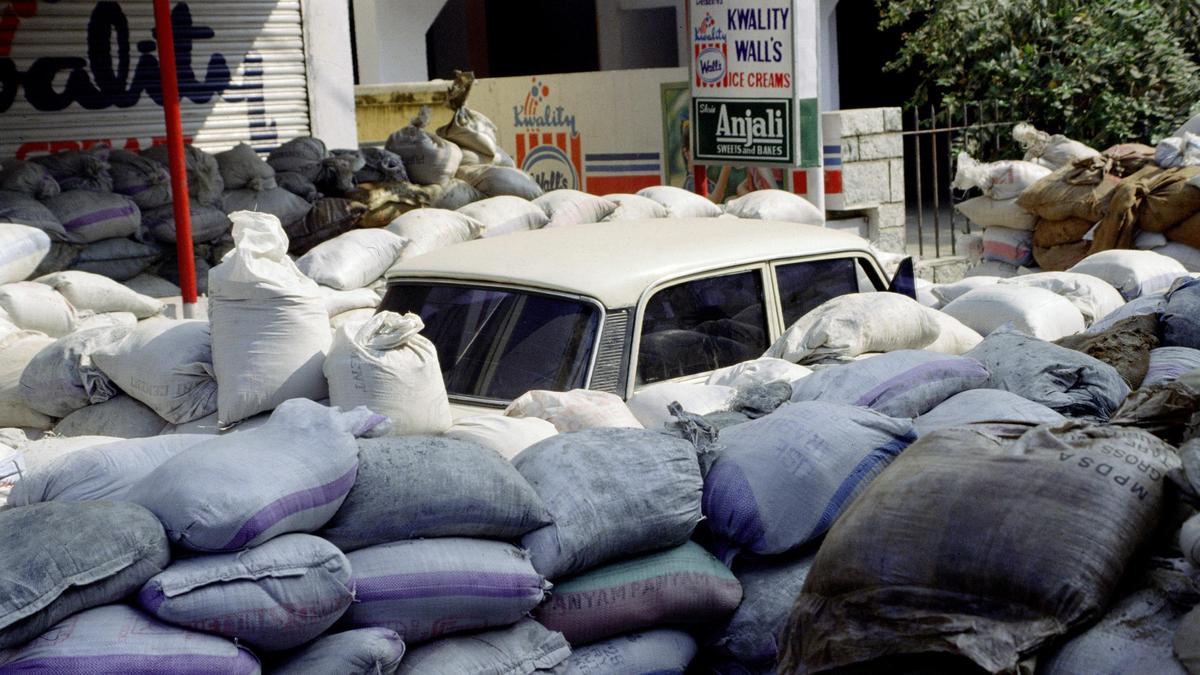
A sandbag buffer was built around the car to absorb the impact of likely explosion. Traffic was blocked in its vicinity. Fire tenders were positioned at vantage points. The only people around were personnel in khaki and military fatigues. And of course, journalists and photographers at a safe distance.
Joint mission
Removing the explosive boxes proved a daunting task. Experts from the National Security Guards (NSG), Army’s Bombay Engineering Group (BEG), Pune, and the Tamil Nadu Commando School (TNCS) joined the operation. Hours passed by. Inspector General of Police (Operations) Jagan M. Seshadri was coordinating the high-risk mission. He held “several rounds of crisis-management discussions” with Major Ivor Goldsmith of the NSG, Captain Sanjay Chawla of the BEG and officers of the TNCS, trying to carry out the nerve-wracking mission with precision.
The first major breakthrough came on February 18. Commandos of the NSG and the BEG opened the doors, bonnet and the boot of the car. They found a deadly payload of gelatin explosives. The bomb squad experts disconnected the car battery before severing the maze of inter-connecting wires under the bonnet. A day earlier, experts had managed to snap one of the wires leading to the six side-boxes.
Remote-controlled removal
“As the commandos gingerly extracted the bombs, using a remote pulley system, and stacked them onto a truck (in which they were later taken to the Madukkarai Shooting Range and detonated), a big cheer went up; the newspersons, policemen and fire-fighters who had been eyewitnesses to the drama rushed to greet the commandos,” reported the Frontline, a sister publication of The Hindu, in its fortnightly issue of March 7, 1998.
The bomb squad removed the six side-boxes of explosives each weighting 10 kg. “In a carefully coordinated operation, where one faulty move could have spelt disaster, the experts used remote-controlled equipment to remove the explosives from the car in which they had been fixed,” said The Hindu dated February 19, 1998.

Each of these boxes was then loaded on to a truck laden with sandbags and shifted to the Madukkarai Shooting Range, about 13 kms from Lokmanya Road. The truck was escorted by Fire Service and police vehicles. “It took three trips to transport all the bombs from Lokmanya Road to the shooting range,” said a report.
The following day, the explosives’ experts dismantled the “masterbox” of the car bomb. “At the Madukkarai shooting range, bomb squad members rigged up a cable-and-pulley system, operated from behind the shelter of a rock, and began the risky manoeuvre of opening the lid of the box without setting off the 15 kg of explosives inside.
Bomb disposal
The masterbox had 13 detonators. Powered by 15 nine-volt batteries, the gadget could have been switched on from the driver’s seat of the car in which it had been hidden. Four of the boxes of the explosives found in the car had been wired to the masterbox. The two other bombs were apparently meant to be transported elsewhere,” reported The Hindu.
Seshadri was relieved. “If the 60 kg of explosives had gone off, there would have been a crater eight feet deep and 30 feet across,” he noted. Approaching the vehicle itself had been a risk – as the bomb could have been set off by remote control or sometimes explosives are timed to go off after a delay of even two or three days.
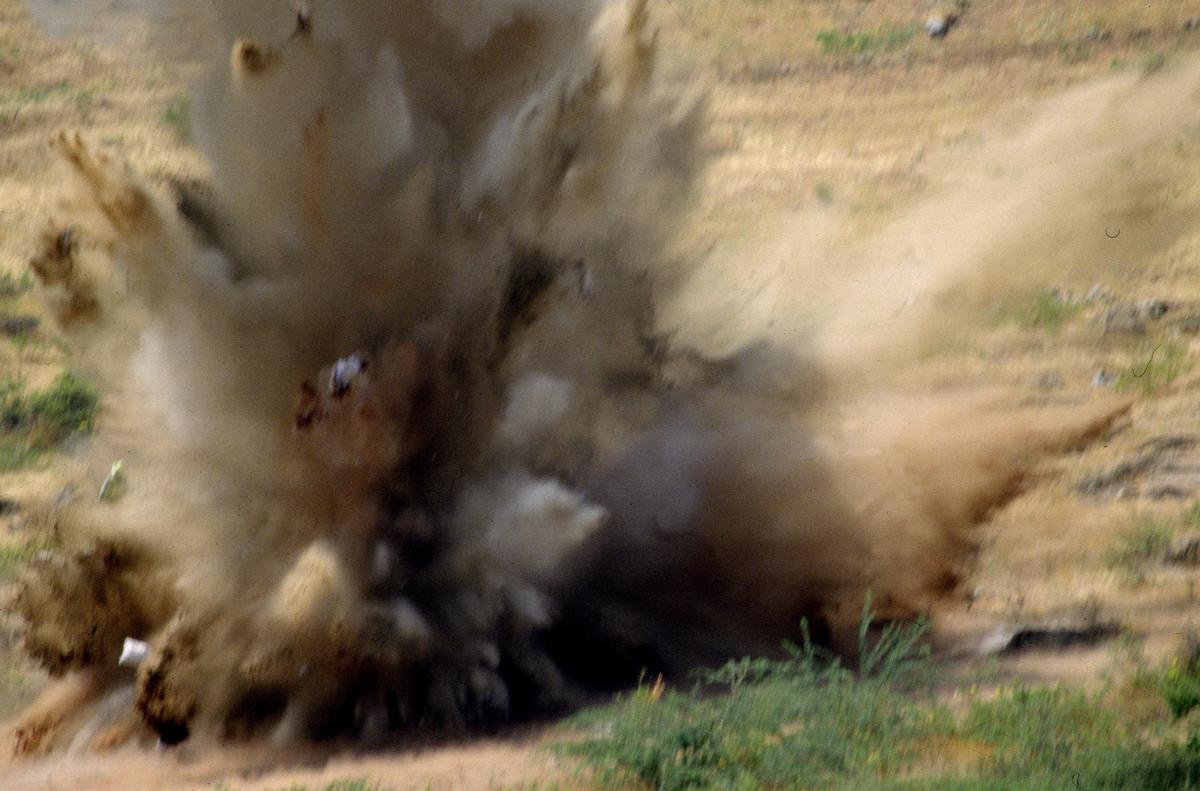
Detonation of the car bomb at Madukkarai Shooting Range in Coimbatore in February 1998
| Photo Credit:
The Hindu Archives
The bombs had been assembled with expertise. The bomb disposal squad had in fact tested the unexploded bomb using a pulley mechanism to examine if it would explode if dropped or tossed.
Seshadri described the four-day operation “the most challenging, tension-packed and talked-about bomb disposal operation of its kind.”
It was time to celebrate. “Coimbatore breathed easy once again. Jubilant residents of R.S. Puram bore on their shoulders the commandos who had fearlessly carried out the high-risk dismantling operation and treated them to a victory parade that would have done war heroes proud,” said the Frontline report.
Published – November 12, 2025 05:30 am IST