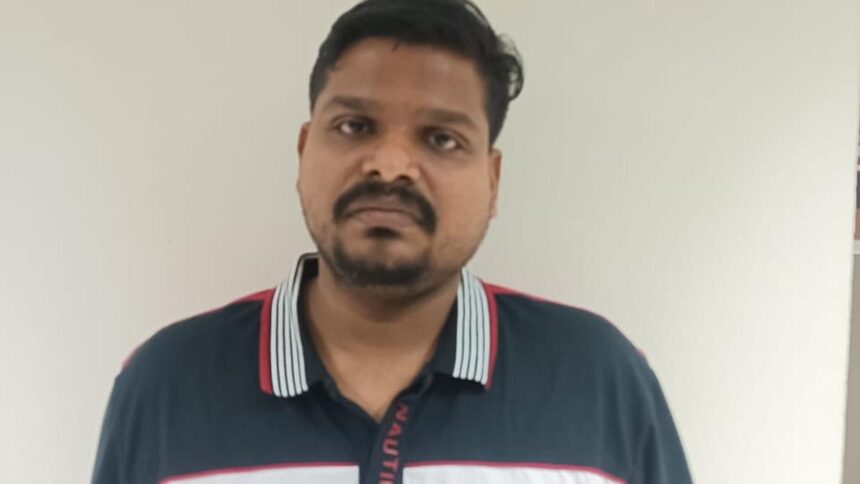





The year is 2017. Activist and Viduthalai Chiruthaigal Katchi (VCK) functionary M. Muthalagu had been leading a series of protests in Madurai against a Tasmac shop located in his area. He had the support of the people, particularly women who opposed the shop being situated close to their residences. As an activist, he had also supported and facilitated several inter-caste marriages.
This had irked a section of a dominant intermediate caste group in the area. In an act of cold, calculated revenge, he was hacked to death. A First Information Report (FIR) was registered that year, but the chargesheet was filed only after much delay. The trial is yet to commence, his wife P. Arulmozhi tells The Hindu.
The accused are out free, lording it over the same locality, she adds, and feels that the longer it takes to hold the trial, the greater the chances that the witnesses will turn hostile.
Similar delays have affected other survivors of caste-based crimes across Tamil Nadu. In 2023, P. Paraman, a construction worker, was talking to his grandchild over the mobile phone and addressed her as his ‘queen’. This natural term of endearment for a child apparently provoked a Caste Hindu family that overheard the conversation. Earlier, they had asked him to run errands, but he had refused. Not only did they abuse him with casteist slurs, but they also physically attacked him. Both an FIR and a counter-FIR were registered. Paraman had to approach the court for anticipatory bail. He says that two witnesses in the case have already died. The trial in his case, too, has yet to commence, but he still hopes for a speedy verdict.

M. Prabhakaran, from the neighbouring Sivaganga district, recounts that his father, a former panchayat president, was hacked to death by members of a dominant intermediate caste. There was a threat to his father’s life previosuly; however, the gun licence granted to him had been cancelled. The entire family has now had to leave the area and move to Madurai.
Delays are reported even in cases where the State has assured monetary relief and rehabilitation. V. Kalaiselvan, brother of Gokulraj from Namakkal district – a Scheduled Caste youth who was murdered by a caste outfit for being friends with a young woman from their community – claims monetary relief is being provided to the family, but there is a delay in disbursing the pension, which is provided as part of rehabilitation measures under the Scheduled Castes and the Scheduled Tribes (Prevention of Atrocities) Act and its Rules.
Women survivors face a different set of pressures. A 25-year-old woman from Theni district was in a relationship with a Caste Hindu man of the same age. He took her to a secluded place and sexually assaulted her. Two separate cases were registered after she continued to face threats from him and his family members. She says that from the lodging of the FIR to the stage of the trial, she and her mother, a single parent, were under immense pressure to back off.
She says that initially she was asked to make a “compromise”, but when she refused, the complaint was registered. The case is at the trial stage. However, she now claims that the special public prosecutor (SPP) has advised her to arrive at a settlement so that he could “negotiate” and obtain money from the accused.
The woman has moved the Madurai Bench of the Madras High Court seeking a direction to change the SPP in the case. She continues to receive threats from the accused person’s family, she says.

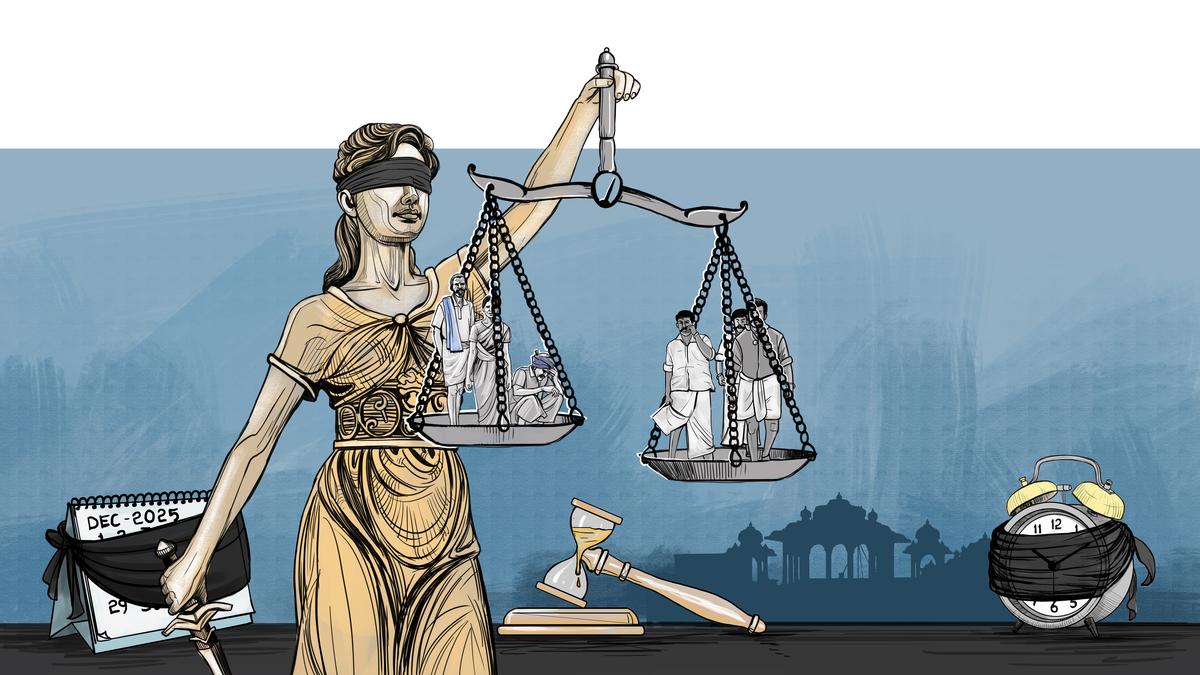
Together, these cases highlight serious systemic lapses in enforcing the SC/ST (Prevention of Atrocities) Act and its Rules. Activists and advocates have called for a continuous monitoring mechanism at all stages – from lodging a complaint and registering an FIR to filing the chargesheet, conducting the trial, and implementing rehabilitation measures.
Crime and punishment
The National Crime Records Bureau (NCRB) data for 2023 show an increase in crimes against the Scheduled Castes and the Scheduled Tribes. The data also point to a low conviction rate. A recent study conducted by Evidence, a Madurai-based NGO, revealed a rise in crimes against women, particularly those belonging to the Scheduled Castes and the Scheduled Tribes.
Executive Director of People’s Watch Henri Tiphagne points out that even relief measures that are to be provided at various stages, as mandated by the law, are being delayed. The statutes make socio-economic rehabilitation a key component of the contingency plan, which includes the allotment of agricultural land, house sites, rehabilitation packages, employment, fully supported education for children up to graduation, and pensions to strengthen socio-economic conditions. In reality, these rehabilitation measures have not been meticulously followed up, he said.
Executive Director of Evidence A. Kathir said Article 17 of the Constitution abolished the practice of untouchability, making it a punishable offence. The Untouchability (Offences) Act was enacted in 1955. This later became the Protection of Civil Rights (PCR) Act, 1976.

To take effective measures to prevent atrocities, the SC/ST (Prevention of Atrocities) Act, 1989, was enacted, along with subsequent amendments and the Rules. The primary objective of the Act and the Rules is to prevent atrocities against members of these communities; along with it came provisions for rehabilitation measures.
The Act and the Rules are clear: an FIR must be registered immediately, and the chargesheet should be filed within 60 days. However, these mandatory provisions are seldom followed.
There is, however, a misconception that cases under the Act are being registered at the drop of a hat. In reality, there is often immense pressure just to get things moving. The number of heinous crimes against the Scheduled Castes and the Scheduled Tribes has gone up, Mr. Kathir says.
He alleges that in cases of heinous crimes, a government job and monetary relief are first given to the family to “keep them quiet.” Other mandated measures are delayed or sometimes never provided.
Poor implementation
Senior advocate T. Lajapathi Roy says the legislation is spot-on; it is the implementation that is lacking. There is not enough awareness about its provisions even among government officials.
Section 10 of the Act deals with externment (the removal of a person likely to commit an offence). As per this provision, when the Special Court is satisfied – upon a complaint or a police report – that a person is likely to commit an offence under the Act in any area included in the ‘Scheduled Areas’ or ‘tribal areas’ – it may direct that person to remove himself or herself beyond the limits of such area.

Mr. Roy refers to one of the earliest cases registered under the Act in Madurai district, the 1992 Sennagarampatti double murder case, which occurred five years before the 1997 Melavalavu massacre, wherein six Scheduled Caste men, including a panchayat president, were hacked to death. Sennagarampatti is about two kilometres from Melavalavu.
Around nine acres of HR&CE land here had been auctioned for lease for agriculture. Usually, Caste Hindus would take the land on lease and engage Scheduled Caste persons for agricultural work. But in 1992, two Scheduled Caste men took the land on lease themselves. Irked by this, the Caste Hindus burnt down the entire harvest and subsequently hacked the two men to death. The trial had to be transferred to Karur. Following the incident, the land has been left fallow.
In most cases, the common complaint is that members of the Scheduled Castes and Scheduled Tribes face threats from oppressors belonging to dominant castes.
‘Peace’ meetings
Advocate Seeni Syed Amma says that in cases of atrocities, the authorities, instead of directly registering an FIR based on the complaint, first try to conduct “peace meetings.”
“There is no legal provision for conducting peace committee meetings,” she adds, referring to a case in Tirunelveli where, after such a meeting, the oppressors hacked to death a Scheduled Caste youth complainant.
Former Madras High Court Judge Justice D. Hariparanthaman said that the casteist mindset continues to dominate society even today. He added that both the Centre and the State governments have a significant role to play in bringing about change.

However, the entire system is biased, he adds. In some cases, the State does not even file an appeal against acquittals. There should be pressure on the government to ensure a higher rate of convictions.
Way forward
Social activist and advocate P. Rathinam, who has represented several victims of atrocities, says that it takes collective effort to fight such cases, as there is pressure from all sides. When the victimsand witnesses are under threat to life and limb, the State needs to instil confidence in them and provide proper protection, he adds.
Mr. Kathir said that Section 4 of the Act deals with the punishment for neglect of duties. When a public servant wilfully neglects duties required under the Act and the Rules, they can be punished with imprisonment for a term of not less than six months, which may be extended up to one year. “I don’t think anyone has been punished for neglect of duties. This provision should be strictly enforced to serve as a deterrent,” he claims.
He insists that there is a need for a robust mechanism to regulate the performance of officials, whether they are investigating officers, special public prosecutors, or magistrates. Although there is a State-level committee headed by the Chief Minister and district-level committees, he says, these meetings have yielded no results.
Instead, Mr. Kathir advocates setting up a special monitoring committee comprising high-level officials from key departments to monitor violations at every level. Mr. Roy adds that officials should receive special training to address such issues effectively. There is a pressing need to create greater awareness of the provisions of these laws.

Mr. Tiphagne says the Act provides for special and exclusive courts to ensure speedy trials, and it is the duty of the State government to establish them. It also mandates that each special court appoint an SPP and an exclusive public prosecutor. However, there are a large number of vacancies in these positions across the country.
He says there are instances where an Additional District Judge holds additional charge of both POCSO cases and Special Courts for SC/ST cases. Vacancies and such extra responsibilities hinder the effective implementation of the law, he adds.
Further, he calls for an efficient monitoring mechanism in which the bench handling SC/ST cases at the High Court, in its administrative and supervisory capacity, obtains periodic reports from the Special Courts and Exclusive Special Courts to monitor compliance and issue necessary clarifications.
P.B. Prince Gajendra Babu, general secretary, State Platform for Common School System-Tamil Nadu, says these issues should be addressed at the grassroots level. That was why the platform developed the ‘Manual for Social Democracy’, a book containing lessons on equality and equity. Its main objective is to help cultivate social consciousness among students and instil a sense of fraternity. “Only this can lead to true social reformation,” he adds.