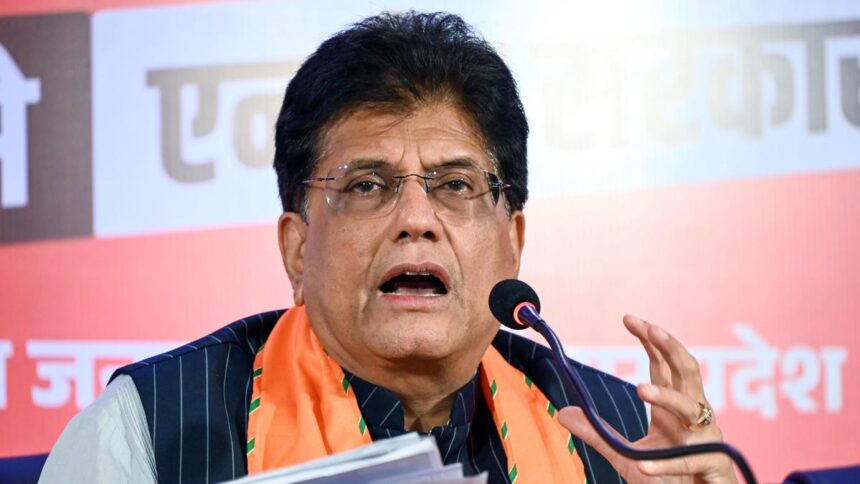







Joel Mokyr who won the 2025 Nobel economics prize alongside Peter Howitt of Brown University and Philippe Aghion of the College de France, INSEAD.
| Photo Credit: REUTERS
The current Nobel Prize in Economics has been given to three economists — Joel Mokyr, Philippe Aghion, and Peter Howitt — who have studied the role of technological change and creative destruction in economic growth. While the work of the latter two would be more readily recognisable to the modern economist, Mokyr adopts a historical lens to study the relationship between knowledge, ideas and economic growth.
What was Mokyr’s model?
Mokyr’s model makes a distinction between two kinds of knowledge: propositional and prescriptive. The former is knowledge about scientific phenomena and principles, while the latter concerns knowledge about techniques. Economic growth occurs with an increase in both kinds of knowledge, where societies possess not just scientific or theoretical knowledge, but also the knowledge of techniques to put them into use. What is important to understand is that it is not enough for society to merely possess knowledge; what matters is that a majority of members are able to access this knowledge, and that social norms promote the sharing of knowledge and free exchange of ideas. Technological progress is not merely an economic process, but a social and cultural outcome regulating the spread and sharing of knowledge amongst society.
Mokyr tells us the importance not just of generating new ideas, but of sharing and communicating these ideas. Free markets do not automatically guarantee growth, and state intervention does not ensure negative growth prospects. Instead, anything that restricts the free flow of information directly hampers innovation and growth. In that respect, one can point to certain social institutions in India that have hampered growth — such as caste — while being aware of the potentially negative effects of job polarisation and automation in restricting the spread of knowledge amongst theorists and practitioners.
Does the caste system stop growth?
The social institution of caste in India has ensured that knowledge was the preserve of an elite minority, with violence being used to restrict access. Following Independence, policy proposals such as reservations have been introduced to rectify this balance. However, access to high quality education still remains out of reach for many, while the slow retreat of the public sector ensures quality education once again remains the preserve of the elite.
Mokyr’s work shows us the dangers of not ensuring universal access to quality knowledge. What matters is not just the extent of knowledge accumulated by a society, but whether enough individuals have access to it in order to use it to tinker, experiment, and devise new techniques to introduce economic innovations. The existence of knowledge but with no meaningful access to it is as good as a society that possesses no knowledge at all. The extreme fragmentation of caste implies that not only is education restricted, but rigid conventions that ensure communities do not meaningfully interact further restricts innovations.
In this regard, one can see the importance of breaking down caste barriers, and improving educational access as well as ensuring quality education for all. This is of relevance given the slow retreat of the state in education and the rise in private universities. Much of the population may be unable to access quality education owing to high fees and lack of reservations in private universities.
What about automation?
Current labour markets have been thrown into disarray and profound uncertainty with the introduction of automation driven by AI.
The threat of job displacement is serious, but there is another, deeper question: what happens to the sharing of practical knowledge about capital and techniques when fewer individuals have access to it? Automation brings with it the problem of job polarisation, where much of routine work is performed by machines and/or AI, with humans in either highly skilled tasks or performing service occupations, such as in restaurants. This could potentially reduce the share of workforce who actually have knowledge of modern techniques. The transmission of knowledge about techniques of production requires long periods of familiarising oneself with the methods of operation, through personal contact, training and hands-on experience. Automation can have significant productivity effects, and might even prove to raise growth over time. But what happens to the sharing of knowledge of techniques if much of the labour force does not even have access to these new techniques?
If inaccessible education and restrictive social institutions keep propositional knowledge restricted, and job polarisation and automation ensure prescriptive knowledge is out to reach, economy-wide innovation is bound to suffer. The transformation of knowledge into innovations and growth depends on the cultural and social norms determining the costs of access to knowledge. Democratisation of education, far from being inimical to economic efficiency, is actually an important condition to ensure faster growth.
Rahul Menon is associate professor at O.P. Jindal Global University.
Published – November 11, 2025 08:30 am IST