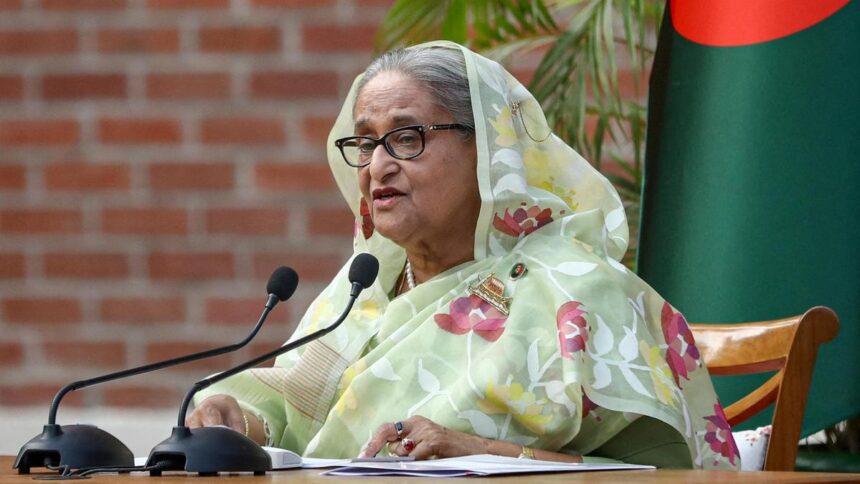





The story so far: The first-ever high-level conference addressing the Rohingya ethnic cleansing and refugee crisis was held at the U.N. General Assembly on September 30 at the proposal of Bangladesh. Muhammad Yunus, the Chief Adviser of Bangladesh’s interim government, proposed a seven-point plan for a sustainable solution to the crisis and pushed for the ‘expeditious repatriation’ of the refugees to the Rakhine State. Urging global action to prevent a ‘catastrophe’, he said, “The Rohingya crisis emanated from Myanmar. And the solution also lies there.”
Why does Bangladesh want to send Rohingya back?
Mr. Yunus flagged that the lack of international funding and humanitarian aid has been pushing the country to ‘its brink’ in hosting the Rohingya refugees, and repatriation has become its only option. “Bangladesh is a victim of the crisis. We are forced to bear huge financial, social and environmental costs,” he said.

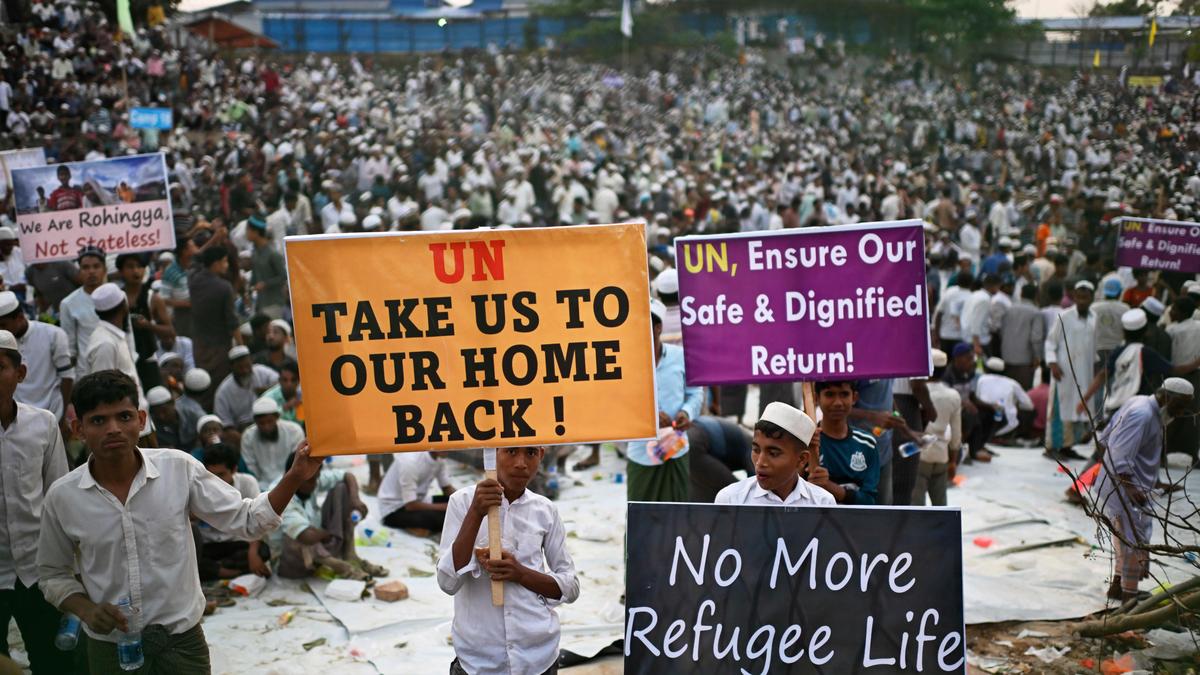
Since 2017, the military crackdown against Rohingya Muslims in Myanmar has led to a large number of them fleeing the State towards its neighbour, Bangladesh, seeking asylum, often through dangerous journeys by sea. According to the U.N. High Commissioner for Refugees (UNHCR), Bangladesh hosts 1.1 million Rohingya refugees. A majority of them live in Cox’s Bazaar, the world’s largest refugee camp, under precarious conditions with no legal rights. In July 2025, the U.N. refugee agency reported that 1.5 lakh refugees arrived at Cox’s Bazaar in the previous 18 months alone.
The functioning of the refugee camps has been severely impacted by the cuts to the U.S. Agency for International Development (USAID) by President Donald Trump, along with a reduction in aid from the EU. At the UNGA conference, it was highlighted that only 37% of the 2025 Joint Response Plan for the Rohingya has received funding, resulting in a shortfall of $592 million.
How bad is the situation in refugee camps?
Due to the reduction of funding, in Cox’s Bazaar, refugees often get just one meal a day with inadequate access to drinking water and healthcare, UNGA President Annalena Baerbock said at the conference. Mr. Yunus had said inadequate funding to the World Food Programme has led to monthly food rations being reduced from $12.50 to a meagre $6 per person in these camps. Lack of funding to UNICEF-supported learning centres has put lakhs of Rohingya children out of school.
The refugees have also reported abductions, gender-based violence and harassment by Bangladeshi security forces in these camps. There are restrictions placed on their movement and they do not have the right to work in the country, making them solely reliant on humanitarian aid. Bangladesh has also cited security concerns as gang violence, involving armed groups, has been on the rise in and around the camps.

How has Bangladesh addressed the Rohingya crisis earlier?
Over the years, Bangladesh has repatriated Rohingya refugees several times, often using force. In 1978, 200,000 Rohingyas arrived in Bangladesh, fleeing persecution. In 1979, through a bilateral agreement with Myanmar, a majority of them were sent back. A later assessment by the UNHCR said it was “highly questionable” that the repatriation was being done voluntarily. Reports emerged that attacks on the Rohingyas by Bangladesh’s security forces and government officials prompted their return. Food and other essential aid were also severely limited in these camps, leading to malnutrition and the death of over 10,000 refugees, leaving them no choice but to return to Myanmar.
Also Read: A nuanced and compassionate understanding of Rohingya’s flight is the need of the hour
Similarly, in the early 1990s, 2.5 lakh Rohingya refugees arrived in Bangladesh after a fresh wave of attacks. In August 1992, a plan was agreed upon by the two countries for the “safe and voluntary” return of the refugees with the involvement of UNHCR. However, the UNHCR pulled out of the repatriation operation after it found that Bangladeshi authorities were physically and psychologically harassing the refugees to return. The controversial operation continued, and only around 20,000 remained in the camps.

How is the Myanmar conflict affecting the Rohingyas?
Since the military coup in Myanmar in 2021, ethnic minorities, including the Rohingya, have been stuck in the middle of the conflict between the military and the Arakan Army, a militant group that controls major portions of the Rakhine State.
Rohingyas have been subjected to extrajudicial killings, torture, forced labour and arbitrary detention. The junta forces and the Arakan army have also been accused of attacking their schools, hospitals and places of worship. Moreover, the restrictions on humanitarian aid have led to famine and malnutrition among the 3.5 million Rohingya, a majority of whom are internally displaced in the country.

What are the solutions proposed?
In March 2025, during his visit to Cox’s Bazaar, U.N. Secretary General Antonio Guterres had proposed for a humanitarian aid corridor via Bangladesh to Myanmar. He noted that refugees were refusing to return due to “continued fighting” in Myanmar. “We need to intensify the humanitarian aid inside Myanmar to create a condition for that return to be successful,” Mr. Guterres said.
Bangladesh has also been pushing for the creation of a U.N.-designated “safe zone” within the Rakhine State. However, “safe zones” with U.N. peacekeeping forces have not guaranteed protection to the vulnerable communities in the past. Rofik Husson, Founder of the Arakan Youth Peace Network, said at the UNGA conference, “Repatriation will only be possible with genuine international protection.”
What does law say about repatriation?
According to international law, repatriation must be carried out voluntarily in a safe and dignified manner. Moreover, the refugees have a right to non-refoulement, i.e., the right not to be removed, in any manner whatsoever, by their host country to their country of origin, or any other country, where they are at risk of being seriously harmed.
Rights activists have also been demanding the inclusiveness and meaningful participation of the Rohingyas in addressing the crisis. Securing political and legal rights in Myanmar and in host countries becomes essential for them to lead a dignified life. The U.S. had asked Bangladesh to provide “livelihood opportunities” for the Rohingyas apart from the aid. However, Mr. Yunus said due to economic problems and developmental challenges, Bangladesh was not in a position to afford this measure.
Published – October 29, 2025 07:03 am IST