




Musical symbols wave on white background illustration Lyrics over Lectures
| Photo Credit: Freepik
Perfect pitch, or absolute pitch (AP), describes a person’s ability to identify a music note without any reference tone. It needn’t be just identifying the note from a musical instrument, one can just hear an Android alarm and say, “That’s an F sharp.” It can be very useful for learning music, tuning instruments, and even transcribing songs.
Is it genetics? Or is it musical training? Or is it both? Science is stuck between these two themes in researching perfect pitch. Let’s break it down.
Nurture: According to this theory, there is a very crucial period for acquiring period, usually childhood. Several studies point to musical training at a young age aiding in the development of AP.
Nature: Nature, on the other hand, states that AP is a genetic trait which you either inherit, or you don’t. Studies have found that nearly half of AP possessors have a first-degree relative who also has AP, compared to a much smaller percentage of non-AP possessors. Studies conducted on twins also show a high concordance rate (the percentage of twins that share a specific trait, given that at least one individual in the pair has it) in identical twins as compared to fraternal twins.
Chances are, it could also be a combination of both. While the genetic trait may exist, early musical training is almost essential for proper acquisition. Some don’t even acquire AP in spite of early musical training, suggesting that the genetic component is rather complex.
It might sound weird, but if you can speak languages like Punjabi, Chinese, or Korean, you are likely to have perfect pitch. That’s because these are tonal languages. Tonal languages are languages where the pitch of a syllable changes its meaning.
In 1999, a study was conducted by Diana Deutsch on 88 music students from the Eastman School of Music, Rochester, New York. The purpose was to find if learning a tonal language aided absolute pitch in students.
She found that native Chinese and Vietnamese speakers were more likely to have absolute pitch as opposed to English speakers. This was because they were tonal languages.
According to her, for people speaking a tonal language, absolute pitch was like a second language to them. For students who speak a non-tonal language such as English, however, absolute pitch is more like a first language. To sum up her findings, the percentage of Mandarin students with AP was higher than that of students.
Absolute pitch vs Relative pitch
Relative pitch is not to be confused with absolute pitch. The former means to identify a note in relation with other notes. For example, if you can identify middle C just by hearing it, you can identify the other notes by tracing the other notes from there.
While science explains part of it, researchers are still studying why only some people develop perfect pitch. Even with all the studies conducted, it remains one of the most fascinating intersections of biology and art.
Famous people who have perfect pitch
A lot of famous people are blessed with perfect pitch, many of them being singers and musicians (obviously). Some of them are Charlie Puth, Whitney Houston, Mariah Carey, Michael Jackson (pop musicians), W.A. Mozart (Austrian composer), Scott Joplin (American composer and pianist), Arturo Toscanini (Italian conductor), and Jascha Heifetz (Russian-American violinist).
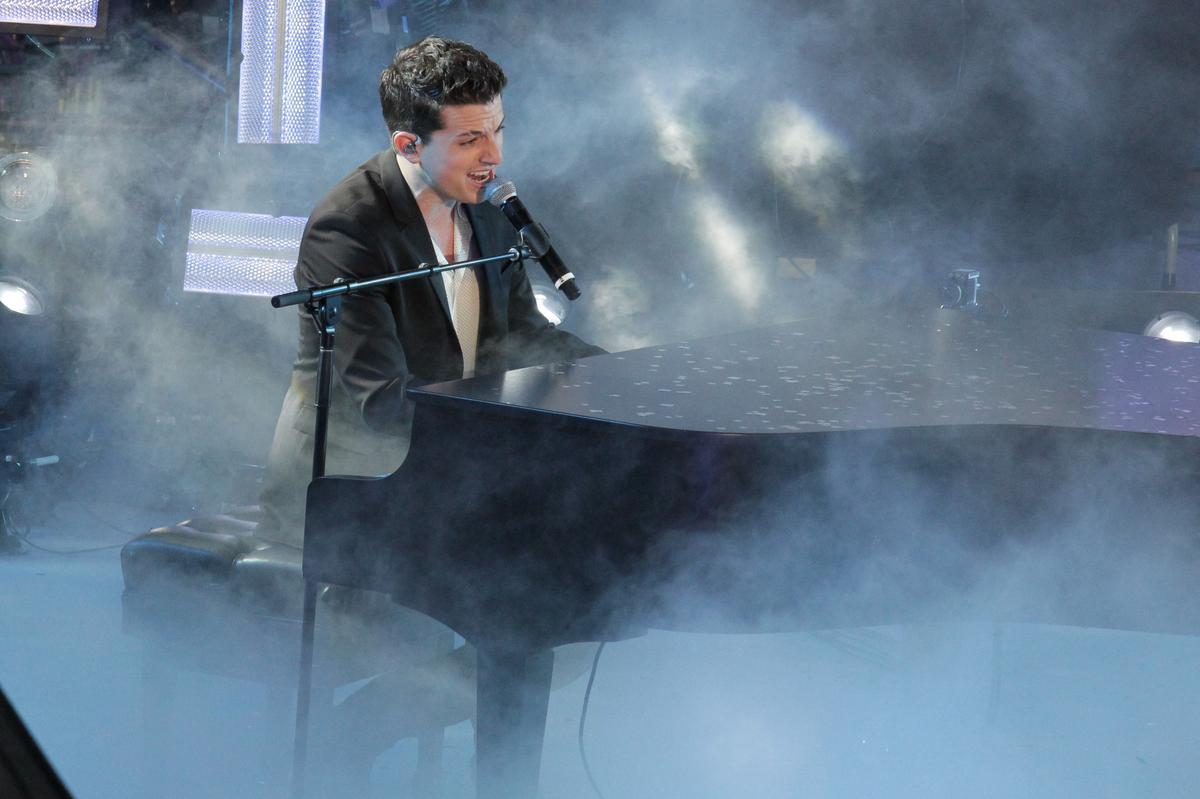
Charlie Puth performs in Times Square in New York during the New Year’s Eve celebration, Thursday, Dec. 31, 2015. (AP Photo/Ted Shaffrey)
| Photo Credit:
TED SHAFFREY
Published – November 07, 2025 03:58 pm IST