




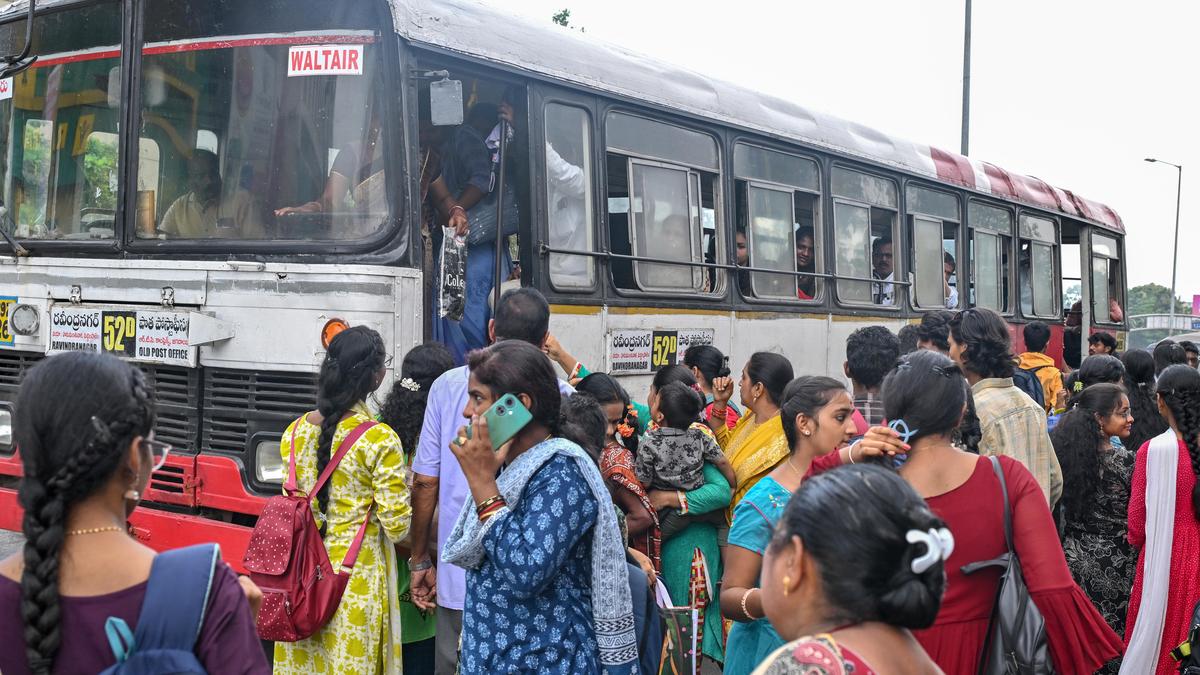
The researchers analysed 2.89 crore bus trips operated by BMTC between January 2023 and January 2025.
| Photo Credit: K R DEEPAK
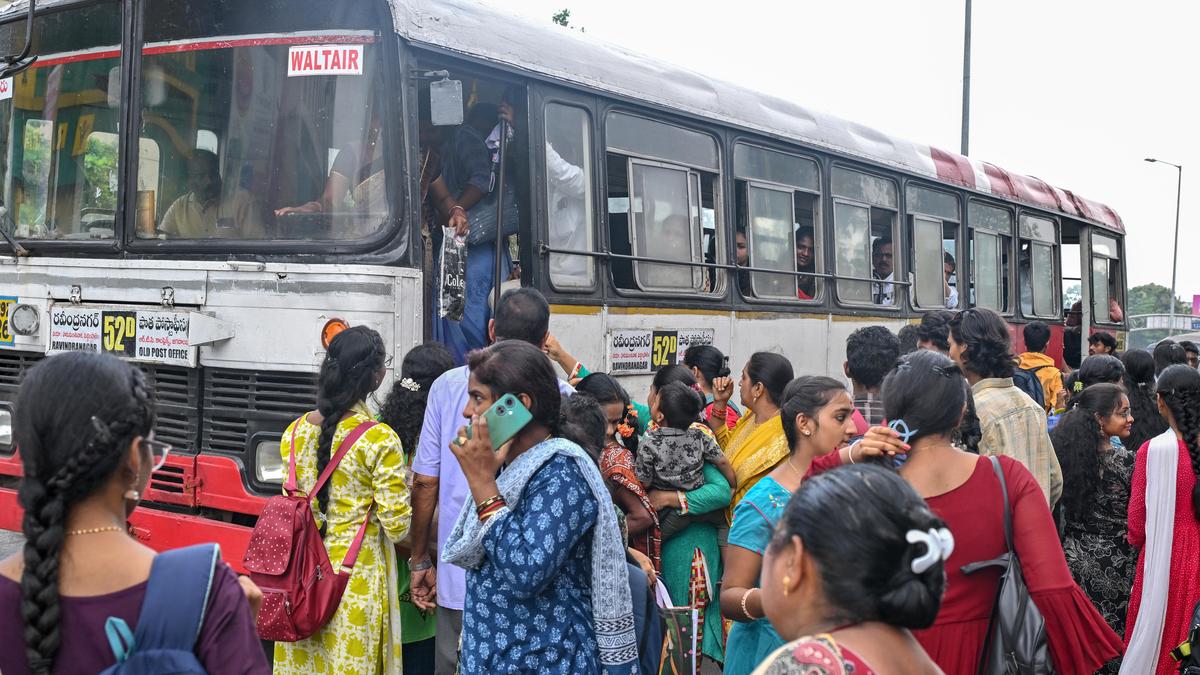
Metro feeder routes connecting industrial and residential areas of north-west Bengaluru have recorded a sharp increase in women passengers after the launch of the Shakti scheme, which provides free bus rides to women in Karnataka, according to a study by Azim Premji University.
The study, ‘Gender, Welfare, and Mobility: Impact of Shakti Scheme on BMTC Transport transformation’, conducted by Tamoghna Halder and Arjun Jayadev of the Centre for the Study of the Indian Economy (CSIE), Azim Premji University, based on two years of BMTC trip-level data, shows that routes around Jalahalli and Peenya have seen one of the most significant shifts in ridership patterns with women now forming the majority of passengers on many metro-linked buses.
The researchers analysed 2.89 crore bus trips operated by BMTC between January 2023 and January 2025. Since the Shakti scheme came into effect on June 11, 2023, the data allowed them to compare six months of bus operations before implementation with 18 months after.
The study examined metro feeder routes that connect neighbourhoods like Jalahalli, Peenya, Nagasandra, Laggere, and Chikka Banavara to nearby metro stations and industrial clusters. These corridors include factories, garment units, and public-sector workplaces employing large number of women.
Jalahalli–Peenya corridor
The study focuses on BMTC’s metro feeder services, analysing routes with the highest passenger density. Among them, Jalahalli Cross consistently ranked in the top 30 metro feeder routes across Bengaluru throughout 2023 to 2025.
A closer look at these routes showed that most feeder services around Jalahalli are short-distance loops linking interior residential areas to the highway, where key bus stops and metro stations are located. This pattern, researchers note, is significant given Jalahalli’s position in Bengaluru’s urban geography — the area, along with Peenya and Nagasandra, is a long-established industrial zone surrounded by dense residential layouts.
The region’s identity is defined by large employers like Bharat Electronics Limited (BEL), along with clusters of garment units and several pre-university colleges. The Jalahalli, Peenya and Nagasandra metro stations sit along the national highway towards Tumakuru, while adjoining corridors connect to Rajajinagar and Hebbal, making it a key labour market hub that is also heavily residential, said the study.
On metro feeder routes covering Jalahalli and nearby areas such as Peenya 2nd Stage, Laggere, and Chikka Banavara, the average number of Shakti passengers in 2024 rose by about 78% from 2023. During the same period, the average number of fare-paying passengers declined by 29.5%.
Metro expansion did not displace women riders
The study also examined the K.R. Puram–Whitefield corridor after the Purple Line metro extension opened in March 2023. The data show that bus ridership on this stretch fell by 25.6% after the metro began operations, indicating that some passengers switched modes. However, the decline was driven mainly by non-shakti or fare-paying passengers.
Women travelling under the Shakti scheme continued to use BMTC buses even after the metro’s introduction, with ridership remaining steady on routes connecting residential and peri-urban areas such as Chikka Tirupathi, Kalkunte Agrahara, Dodda Dunnasandra Cross, Dinnur, and Arehalli.
The study notes that routes ending at K.R. Market, Majestic, and Tin Factory which are major commercial and labour hubs also saw continued high use among Shakti travellers.
The study points to this as a sign that women are prioritising affordability and flexible access over speed, since the bus network reaches neighbourhoods beyond metro coverage and remains free to use.
Published – November 05, 2025 09:02 pm IST