



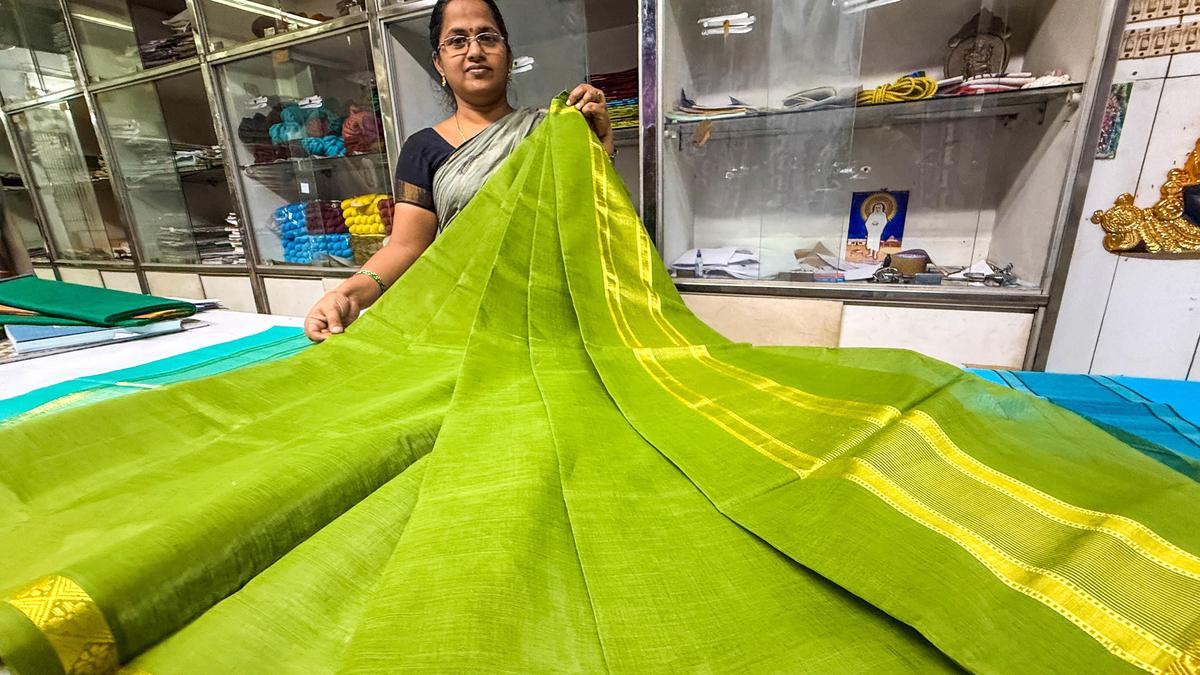

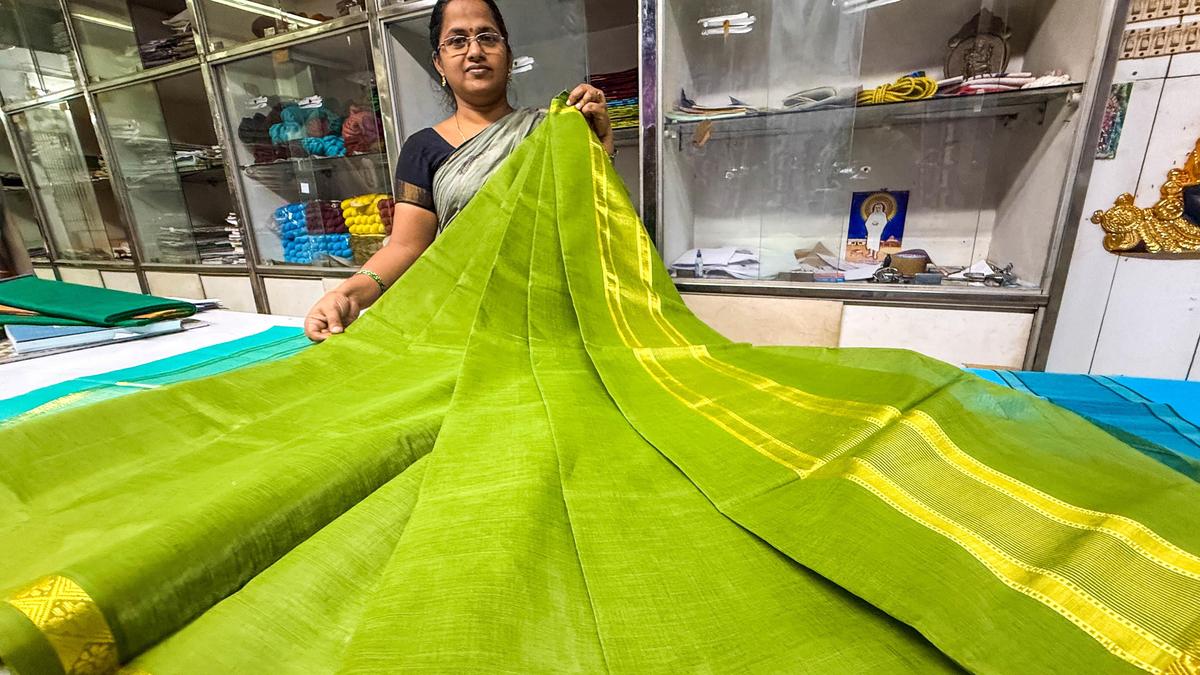
The Woraiyur cotton sari that was granted a Geographical Indications (GI) tag on Tuesday.
| Photo Credit: Selva Muthu Kumar
There was jubilation among weavers in Tiruchi as the famed Woraiyur cotton sari was granted a geographical indication (GI) tag by the Geographical Indications Registry in Chennai on Tuesday, three years after the Woraiyur Devanga Handloom Weavers’ Co-operative Society applied for the recognition.
The sari was one of five products from Tamil Nadu granted the GI tag on Tuesday, the others being Kavindapadi nattu sakkarai (jaggery powder), Namakkal makkal pathirangal (soapstone cookware), the traditional Thooyamalli rice variety and Ambasamudram choppu saman (wooden toys).
Intellectual Property Rights (IPR) attorney P. Sanjai Gandhi who filed the applications on behalf of the respective associations, said that Tamil Nadu now had 74 products with GI tags.
As per documents on the official Intellectual Property India website, the Woraiyur cooperative applied for the GI tag on March 25, 2022.
According to an official press release on Tuesday from the Assistant Director of the Department of Handlooms and Textiles, Tiruchi, at present, the Woraiyur sari is produced in Woraiyur, Kottathur, Paithamparai, and other clusters in the vicinity.
Of 100 looms, 86 are actively working, producing saris of 5.5 m in length. In its modern avatar, the Woraiyur cotton sari is actually a composite product, with the yarn sourced through National Handloom Development Corporation in Coimbatore, dyed in Jaymkondan, and woven in Manamedu.
The cotton sari is known for its high thread count (80 single warp yarns X 80 single weft yarns), with a pick count of 68 per inch. Woraiyur cotton saris usually carry motifs of mango, bangle, geometric shapes, and pearl designs in the body and border.
Weavers, operating singly or in teams, produce saris that priced upwards of ₹1,000 apiece. “Getting a GI tag will improve the image of these saris in the market and could raise the wages of the weavers who currently earn ₹890-₹1,200 per sari,” a senior department official told The Hindu on Tuesday.
The industry body, which groups members of the Devanga Chettiar community, began operations in 1936, and had over 600 weavers in its fold up to the 1990s, until the advent of power looms and synthetic fibre in the Indian textile industry slowly edged out handloom weaving.
The fineness and simplicity of the sari design is thought to be related to the British Raj’s use of Woraiyur’s looms to produce light cotton medical dressing fabric during the World War.
References to the historicity of the weave can also be seen in Song 66 (Pukar Kaandam) of the Tamil epic Silapathikaram by Ilango Adigal, that talks of the fineness of Woraiyur’s cotton garments, said the department release.
Published – December 02, 2025 10:23 pm IST