



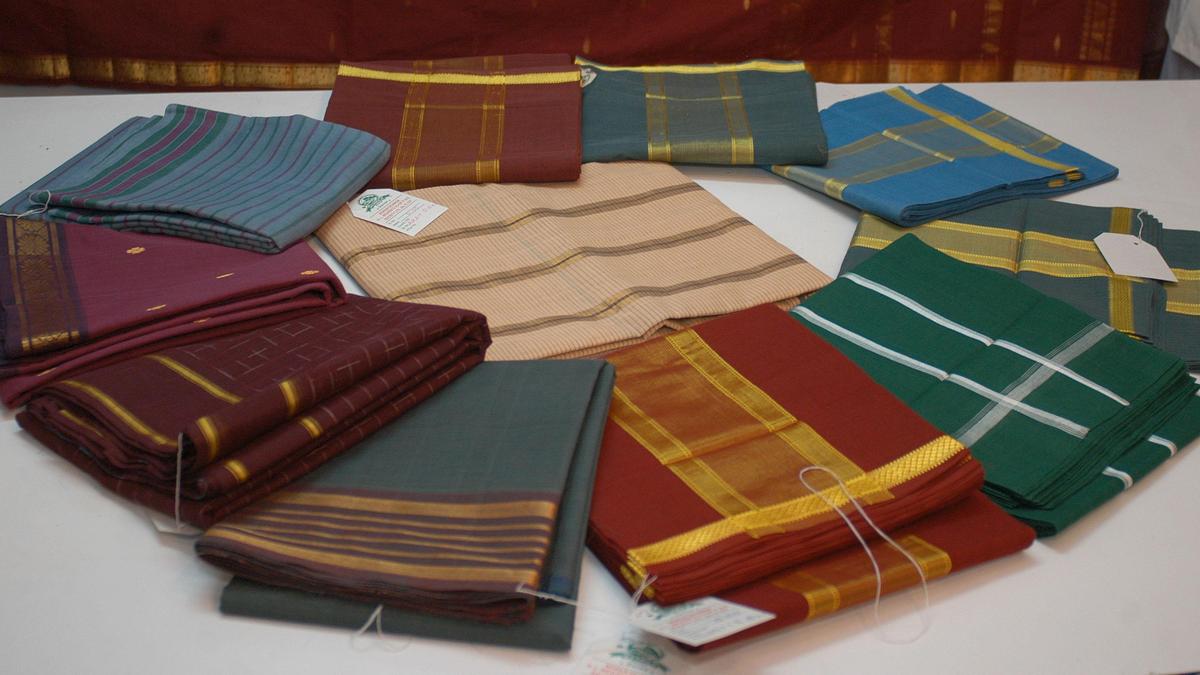

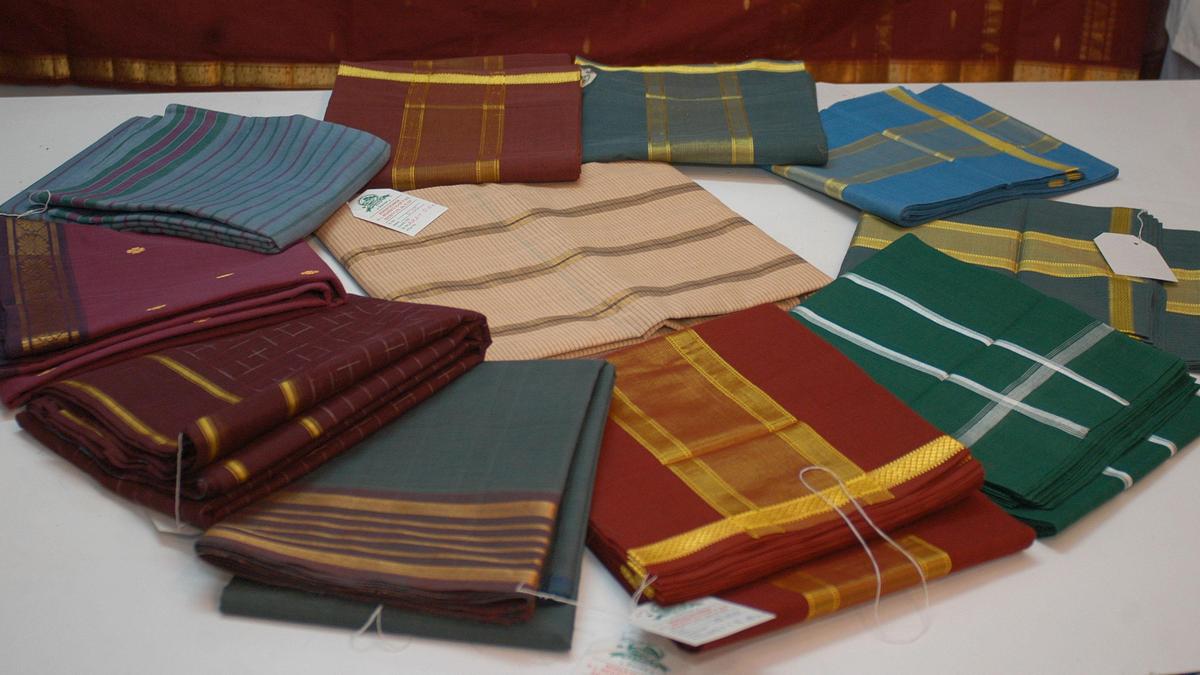
Woraiyur cotton saris on display in Tiruchi. File
| Photo Credit: M. Moorthy
Five products from Tamil Nadu — Woraiyur cotton sari, Kavindapadi nattu sakkarai (jaggery powder), Namakkal makkal pathirangal (soapstone cookware), the traditional Thooyamalli rice variety and Ambasamudram choppu saman (wooden toys) — have secured the Geographical Indications (GI) tag, spotlighting the State’s diverse craftsmanship and agricultural heritage.
With this, Tamil Nadu now has 74 products with GI tags, said Intellectual Property Rights (IPR) attorney P. Sanjai Gandhi who filed the applications on behalf of the respective associations.
Woraiyur cotton sari
The Woraiyur cotton saris, native to Tiruchi district, are woven in Manamedu on the banks of the Cauvery. The cotton yarn is sourced from Coimbatore and Rajapalayam, while the dyes come from Jayamkondam.
Kavindapadi ‘naatu sakkarai’
Kavindapadi in Erode district is a major supplier of jaggery powder in Tamil Nadu, with vast stretches of sugarcane fields nourished by the Lower Bhavani Project canal. The village’s signature jaggery powder is made locally by mechanically crushing the cane and slowly evaporating the extracted juice.
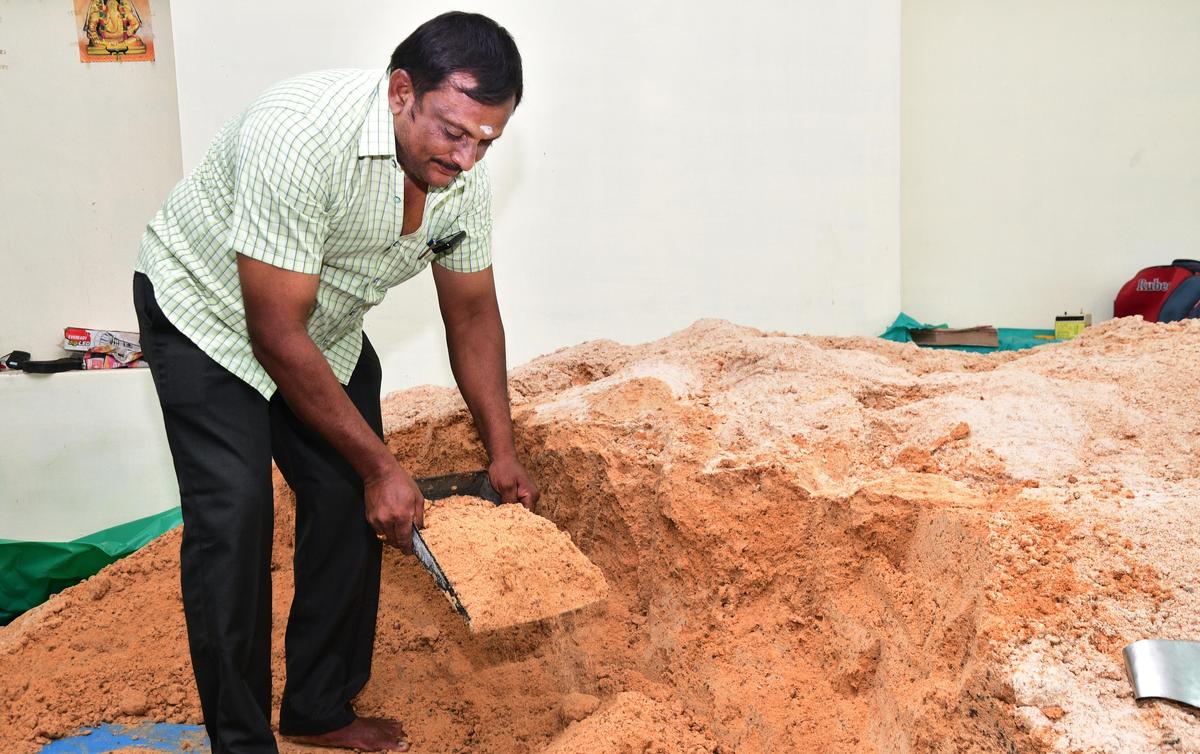
A farmer at Kavindapadi village in Erode district who makes and sells ‘naatu sakkarai’. File
| Photo Credit:
S. Siva Saravanan
Thooyamalli rice
Thooyamalli, meaning ‘pure jasmine’, is a traditional sambha-season rice variety grown over 135 – 140 days. The Tamil Nadu State Agricultural Marketing Board applied for the GI tag for this variety of rice, with support from the NABARD Madurai Agri Business Incubation Forum.
Namakkal ‘kalchatti’
Namakkal’s famed cookware made using soapstone (makkal pathirangal), popularly known as kalchatti, have been a staple in South Indian kitchens for generations, with their use tracing back to the ancient era.
Earlier, the first GI application for Namakkal Makkal Pathirangal was submitted by Tamil Nadu Handicrafts Ltd. (Poompuhar). In July 2019, the organisation sought additional time from the GI Registry to gather more supporting documents, but later withdrew the application in November 2019. In 2022, an application was filed by the Namakkal Stone Products Manufacturers and the MSME Technology Development Centre – Intellectual Property Facilitation Centre. And the product has now received the GI tag.
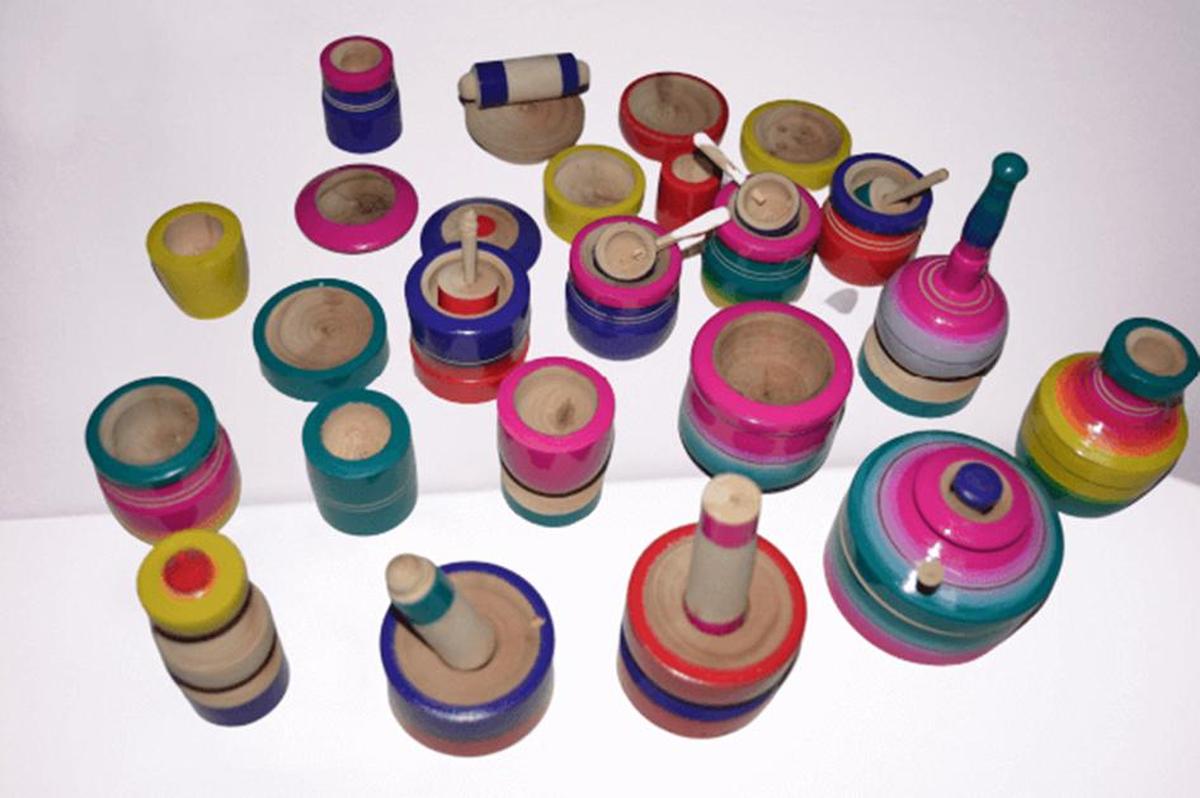
Ambasamudram ‘choppu ‘saman’ (wooden toys) including miniature kitchen utensils, tables and chairs.
| Photo Credit:
The Hindu
Ambasamudram ‘choppu saman’
The art of making choppu saman (wooden toys) has been practiced for over two centuries, with origins tracing back to the 18th century. This craft involves the careful handcrafting of miniature wooden toys — from tiny kitchen utensils to small tables, chairs, and other play objects — designed to spark children’s imagination and creativity. Traditionally, these toys made at Ambasamudram in Tirunelveli district, were carved from indigenous trees like the Manjal Kadamba tree (Neolamarckia cadamba), teak, and rosewood.
Published – December 02, 2025 04:13 pm IST