







Hexaware Technologies is going after a slice of the $900 billion global SaaS market, betting that AI has made it cheap and fast enough to build custom software that can replace licensed enterprise applications rather than simply migrate customers from one subscription vendor to another.
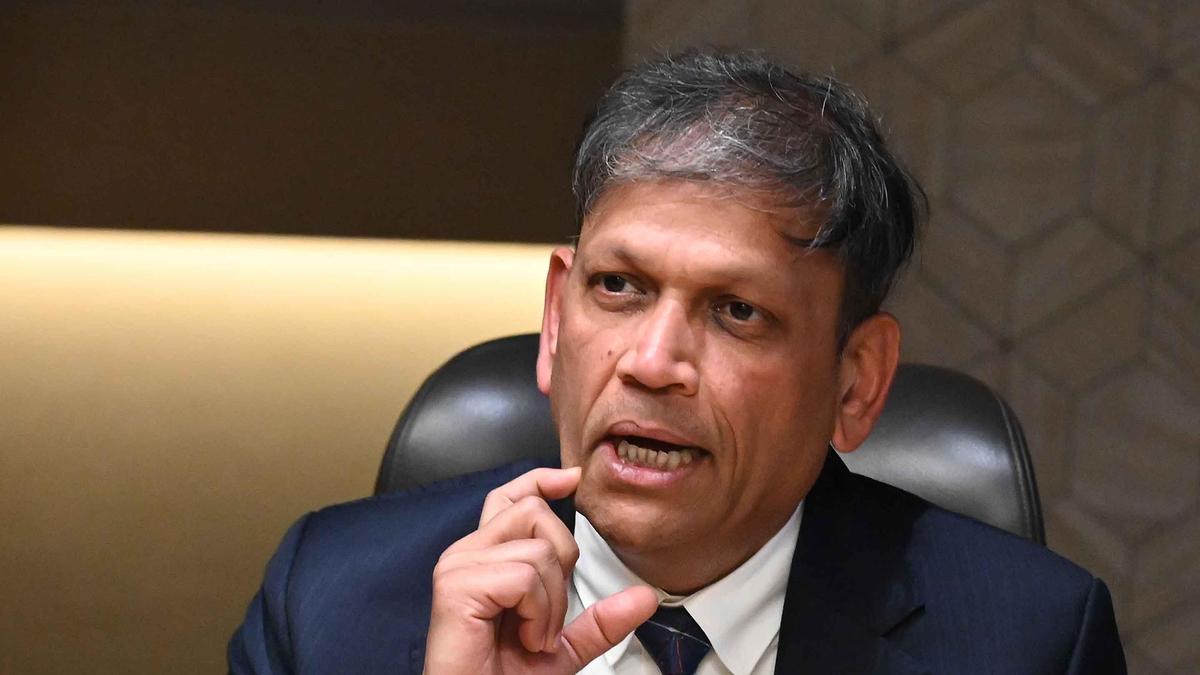
“It’s no longer expensive or time consuming to build custom software to replace SaaS. We do it in weeks or months,” CEO R. Srikrishna said during an interaction with reporters.
Mr. Srikrishna said labour is the largest cost in a client’s IT budget, followed by software licensing and cloud, while AI tokens are expected to become the fourth-largest cost by 2027.
To illustrate the economics, Mr. Srikrishna gave a hypothetical example of a customer spending $10 million a year on a large enterprise SaaS platform. Replacing that spend with custom-built software, he said, could cost around $2 million as a one-time investment, though he noted this particular category is not an immediate target area.
However, Hexaware does not expect to displace the entire SaaS market, he said, pointing to regulated industries and compliance-bound clients who will continue relying on licensed software, as well as customers who simply prefer to stay on established platforms.
The clearer opportunity, he said, lies with SaaS products that vendors are sunsetting, and with low-code and no-code use cases where enterprises are more willing to build their own.
Zero License is one of six “zero” pillars, alongside Zero Vulnerability, Zero Tech Debt, Zero Backlog, Zero Defects and Zero Tickets, that Hexaware is packaging under a new AI delivery layer called Zerovity.
The platform is designed to give Hexaware a common context of a client’s business across services that have traditionally been handled in silos.
Mr. Srikrishna likened Zerovity’s deployment model to Tesla, where a customer starts with the core platform and can add individual capabilities as needed.
“You get a car, you turn on features by paying a software fee. That’s the same thought process,” he said. Hexaware would similarly deploy Zerovity as the base platform and allow customers to add or enable individual “zero” capabilities through software.
The CEO said the combined addressable opportunity across the six pillars is roughly $200 billion, while stressing that Hexaware does not view the entire underlying markets as addressable.
More than half of revenue already AI-infused
Mr. Srikrishna disclosed a new figure on how deeply AI has already penetrated Hexaware’s business. “We just put a number for the first time today that greater than 50% of our revenues is already AI-infused,” he said, referring to work in which Hexaware uses AI in delivering services to clients.
Managing token costs
When asked about AI expenditure not appearing as a core part of Hexaware’s overall budget, Mr. Srikrishna said much of the spending is borne by clients because the company often works in clients’ development environments and uses their tokens.
However, he said Hexaware’s Zerovity platform includes a “harness” that selects AI models in real time based on the task. He said model capabilities can differ by about 5%, while costs can differ by as much as 20 times.
He cited one client that had been running out of tokens, forcing developers to return to manually writing code. After Hexaware implemented the harness, he said, the same client had tokens left over at the end of the month.
Revenue deflation
Not all of Hexaware’s six pillars work in the company’s favour financially. Mr. Srikrishna said Zero Tickets and Zero Defects are “deflationary” (reducing revenue from existing services) for its core IT services business, while Zero Backlog is partly deflationary because AI reduces the work required even as it may unlock higher volumes. The remaining pillars, he said, represent new addressable markets.
That erosion is a dynamic Mr. Srikrishna said he is pushing his own sales organisation to get ahead of.
Mr. Srikrishna said the company is asking its sales teams to proactively offer clients lower-cost delivery as AI makes existing IT services more efficient. The logic is that if Hexaware does not reduce the cost of a service itself, a competitor could use AI to do the same work more cheaply and eventually take the business altogether. He said Hexaware intends to offset that pressure by expanding into new lines of work.
“So we are not running away from deflation. But I think we can outrun it by picking new lanes of work,” he said.
Workforce overhaul
The strategy is accompanied by an aggressive internal AI training mandate. Hexaware’s management team must now complete 20 hours of AI learning, up from eight hours previously, while sales employees who fail to complete the training risk losing their bonus, with a second failure resulting in termination, the CEO said.
He said he also expects the industry’s talent profile to shift toward younger, AI-native engineers, even as Hexaware continues to need Forward Deployed Engineers (FDEs) to identify problems that clients need solved, AI architects to design solutions, and engineers to execute them.
Published – August 22, 2026 04:09 pm IST