





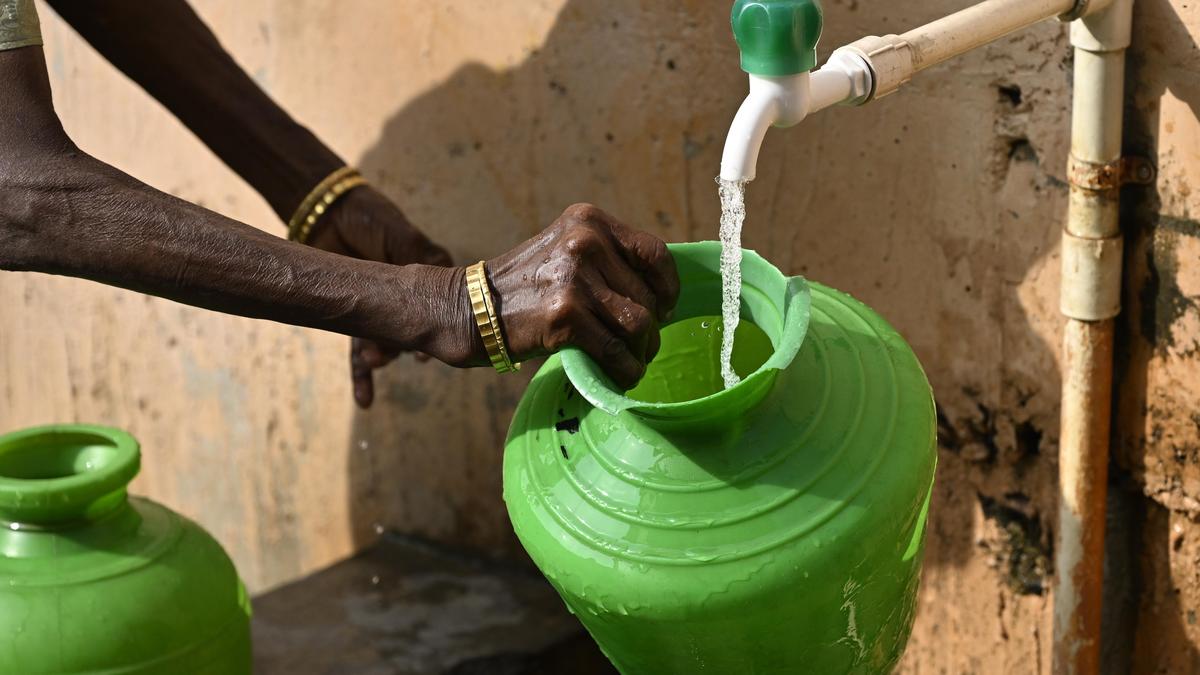


The deficit has resulted in a drinking water shortage in 17 villages in three taluks.
| Photo Credit: File Photo
A 45% rainfall deficit in Dharwad district this monsoon has prompted the district administration to step up measures to conserve water and appeal to the public to use the available resources judiciously.
According to the Deputy Commissioner and Chairperson of the District Disaster Management Authority, Snehal R., the district has received 247.9 mm of rainfall against the normal 450.3 mm as of Friday.
The deficit has resulted in a drinking water shortage in 17 villages in three taluks. The administration is currently supplying drinking water through 19 private borewells in the affected areas, Ms. Snehal said in a statement.
The administration has also made arrangements to meet the drinking water requirement in the coming months. 55 drinking water tanks in Navalgund, Annigeri, Hubballi, and Kundgol taluks were filled through canals from the Malaprabha reservoir in August. The water is expected to be sufficient until the end of November, she said.
Dharwad district has five local bodies covering 100 wards, where drinking water is supplied daily. In the Hubballi-Dharwad Municipal Corporation limits, 13 of the 82 wards receive water round the clock, while the remaining wards receive drinking water once every two to six days.
Appeal to public
The administration has urged residents to avoid wastage and adopt simple water-saving practices. People have been advised to use buckets instead of showers, turn off taps while brushing their teeth and washing their faces, and use only the required quantity of water while washing utensils.
Water used to wash vegetables may be reused for watering plants. Residents have also been advised to operate washing machines only with full loads and to repair leaking taps, showers, and pipelines immediately.
The administration has suggested using a bucket and sponge instead of a hose to wash cars and two-wheelers. Watering plants during the morning or evening would also help reduce evaporation, they said.
Schools, colleges, and hostels have been asked to immediately attend to leaking taps in toilets and playgrounds.
“The responsible and judicious use of water by every individual is essential, as the deficient monsoon could lead to water scarcity in the coming days,” Ms. Snehal said.
Published – September 18, 2026 08:59 pm IST