






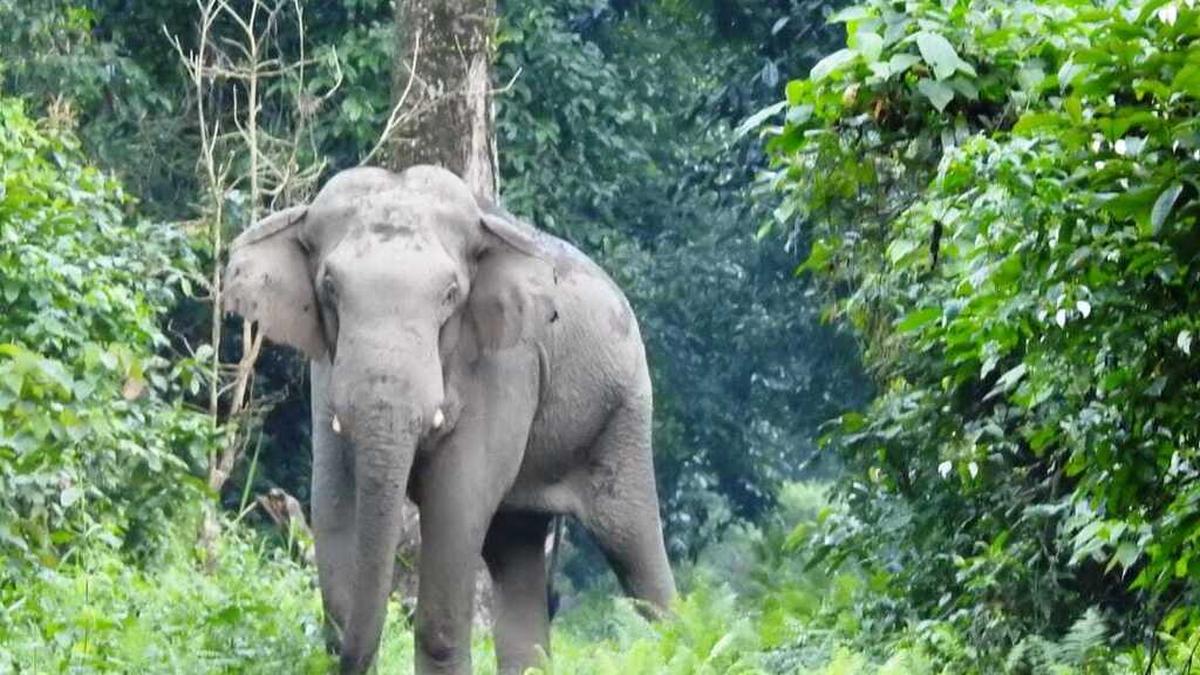


Wildlife in and around Guwahati, photographed by school students during a month-long biodiversity survey.
A month-long citizen science initiative involving school students across Assam’s Kamrup Metropolitan district has resulted in the documentation of 1,517 species of flora and fauna.
Guwahati is the headquarters of the 1,528-sq. km Kamrup Metropolitan district, comprising three development blocks and five revenue circles.

Wildlife in and around Guwahati, photographed by school students during a month-long biodiversity survey.
Help Earth, a Guwahati-based biodiversity conservation organisation, conducted a 30-day taxonomic survey in association with the Assam Climate Change Management Society. Students from seven schools participated in the exercise, titled Guwahati Bioblitz 2025. Its results were announced on Tuesday (September 22, 2026).

Wildlife in and around Guwahati, photographed by school students during a month-long biodiversity survey.
“The survey was conceived as an intensive biodiversity documentation (exercise) to encourage students to discover, document, and understand the biological diversity within a largely urban landscape. Students were allowed to explore and observe their surroundings and contribute scientifically useful records,” said Help Earth general secretary Jayaditya Purkayastha.

Wildlife in and around Guwahati, photographed by school students during a month-long biodiversity survey.
According to the data released at a school in Guwahati’s Barsajai area, 48 students logged 5,932 observations and documented 1,517 unique species.

Wildlife in and around Guwahati, photographed by school students during a month-long biodiversity survey.
The final tally comprised 993 plant species, 221 insect species, 117 bird species, 25 mammal species, and 10 reptile species.
The survey introduced the participants to biodiversity awareness, field exploration, digital photography, species identification using iNaturalist app, monitoring, and continued engagement with biodiversity.

Wildlife in and around Guwahati, photographed by school students during a month-long biodiversity survey.
“The initiative was designed not merely as a competition, but as a platform to develop a lasting habit of observation, documentation, and appreciation of nature among young learners. The broader vision presented during the programme was to transform biodiversity assessment from a one-time activity into a continuous learning and monitoring process, with schools functioning as living classrooms,” Mr Purkayastha said.

Wildlife in and around Guwahati, photographed by school students during a month-long biodiversity survey.
“Large-scale biodiversity conservation through student participation can go a long way in promoting ecological literacy and the exploration of urban microhabitats, from school grounds to surrounding areas,” said Amlan Kumar Dey, the principal of Maharishi Vidya Mandir III, where the concluding programme of Bioblitz 2025 was organised.
Published – September 23, 2026 04:51 pm IST