





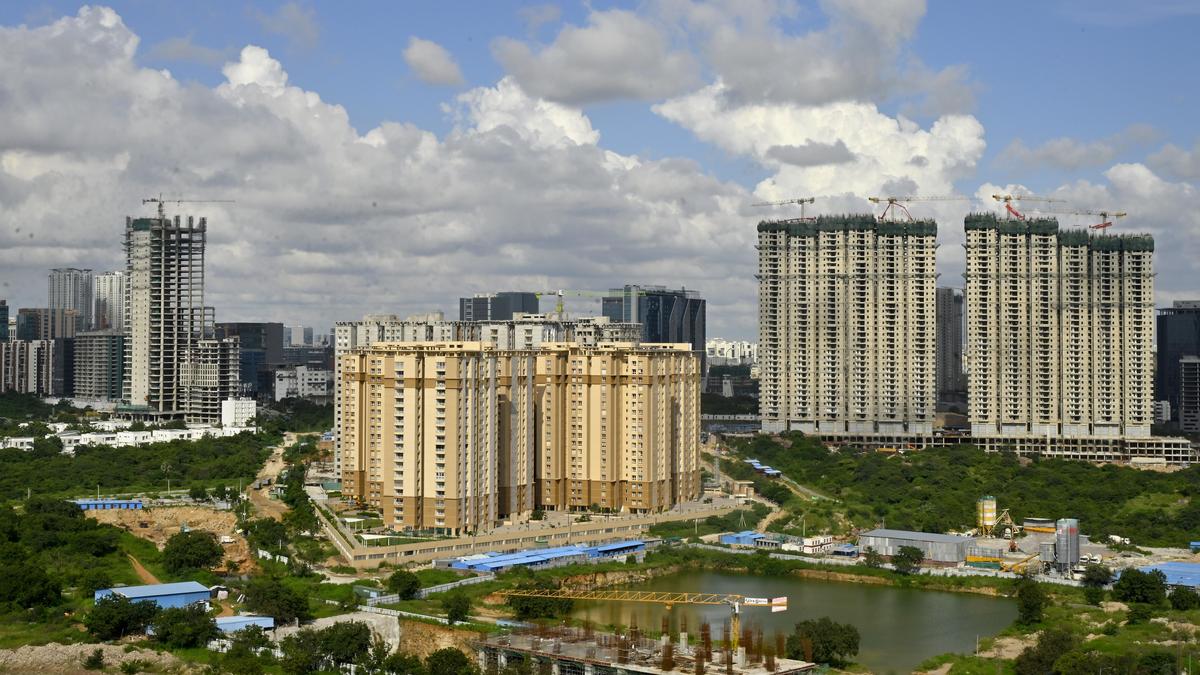


Under the new legislation, property tax will shift to the Capital Value System, under which tax will be calculated as a percentage of the property’s registration guideline value.
| Photo Credit: Representational Photo
The Greater Hyderabad Municipal Corporation (GHMC) Act, 1955, which governed the GHMC and the areas under its jurisdiction, has become history with effect from October 2.
It has been replaced by the Core Urban Region (Integrated Governance) Act, 2026, or simply, the CURE Act, which provides the governance framework for the three municipal corporations in the CURE area: the GHMC, the Malkajgiri Municipal Corporation and the Cyberabad Municipal Corporation (CMC).
Officials said the Act had been published in the Telangana State Gazette, formalising the transition.
One of the major changes introduced by the CURE Act concerns the calculation of property tax. Under the GHMC Act, tax was calculated on the basis of a property’s Annual Rental Value. Under the new legislation, this will shift to the Capital Value System, under which tax will be calculated as a percentage of the property’s registration guideline value. The change is part of the urban reforms being pushed by the Union government.
The shift is expected to increase property tax across the CURE area, with tax on some properties likely to double. The impact could be particularly pronounced in the CMC, where property values are significantly higher than in other areas.
The CURE Act also removes the role of elected councils in deciding property tax increases. Under the earlier GHMC Act, elected representatives had a say in such revisions. Under the new system, any increase in registration guideline values by the government will automatically raise property tax.
The CURE Bill proposes a minimum of 0.1% and a maximum of 0.5% tax on the capital value of a residential property, and a minimum of 0.2% and a maximum of 2% on the capital value of a commercial property.
New property assessments will immediately come under the revised calculation system. The new method may reportedly also be extended to properties that have already been assessed from the next financial year.
Another significant provision prohibits the transfer of properties with unauthorised constructions. It is not yet clear whether the restriction will apply to existing properties as well. The Act also bars the provision of electricity, water and sewerage connections to properties without an occupancy certificate, and provides for disciplinary action against officials who violate this requirement.
The power to grant permission for public advertisements will also be taken away from the municipal corporations and vested in an Advertisements Regulatory Committee. The respective Commissioners will retain the authority to remove advertisements.
The new legislation vastly curbs the powers of the Mayor and elected members of the municipal corporations. It provides for an Apex Governance Council, chaired by the Chief Minister, and an Executive Committee, chaired by the Principal Secretary, Metropolitan Area and Urban Development. It also establishes a CURE Appellate Authority where citizens can file appeals.
Published – October 02, 2026 08:31 pm IST