



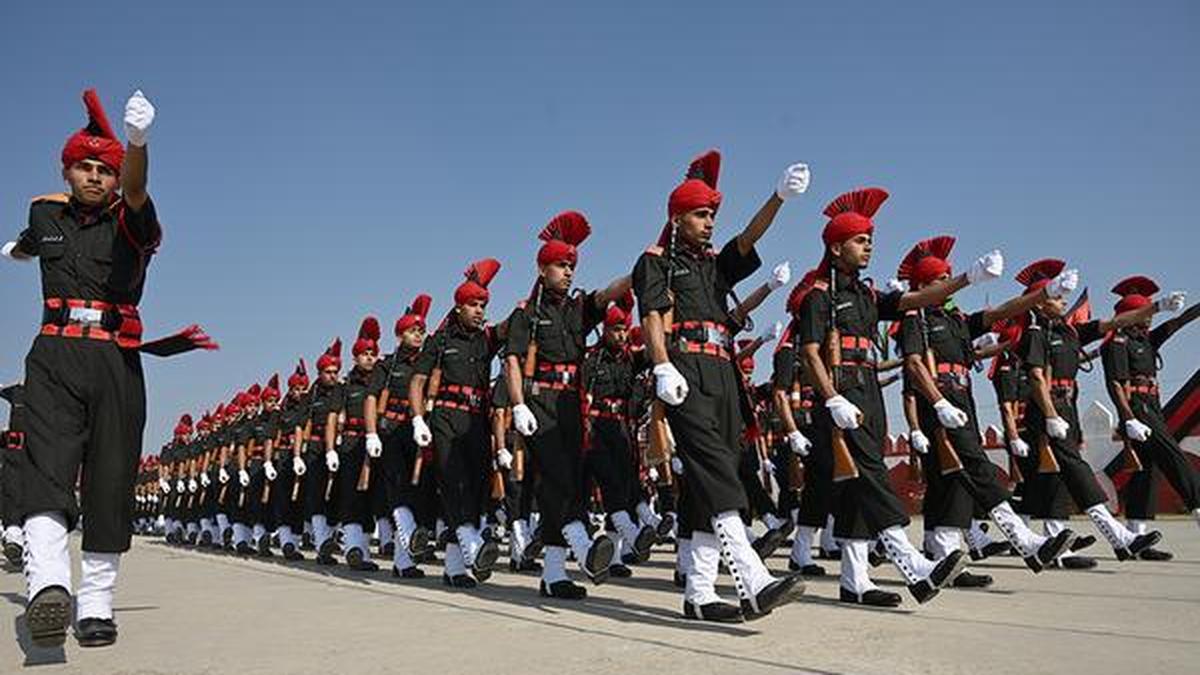


A view of the newly inducted Agniveer batch. File
| Photo Credit: The Hindu
With the first batch of Agniveers set to complete their four-year tenure later this year, the Army, Navy, and Air Force have submitted recommendations to the Department of Military Affairs on ways to improve the implementation of the Agnipath scheme.
A senior Ministry of Defence official confirmed that the three services had shared their suggestions based on their experience of implementing the scheme over the past four years. A report incorporating the recommendations has been sent to the competent authority for consideration.
The official, however, declined to disclose the nature of the recommendations.
Balancing youth with experience
This comes amid a renewed focus on the Agnipath scheme as the first batch of Agniveers, who enrolled in 2023, are scheduled to complete their contractual tenure in October 2026.
Under the existing policy, up to 25% of each batch of Agniveers can be retained in the regular cadre based on organisational requirements and performance. Those retained go on to serve as regular armed services personnel, while the remaining 75% exit after four years.
The reassessment of the scheme comes as the armed forces seek to balance the objective of maintaining a younger force with the need for operational experience and continuity. The three services have been implementing the scheme since 2022 and have gained experience in training and deploying Agniveers across various operational and support roles.
Only 25% retained
Introduced in June 2022, the Agnipath scheme marked a major change in the armed forces’ recruitment policy. Under the scheme, young men and women between 17.5 and 21 years are recruited as Agniveers for a four-year period, including six months of training.
At the end of the four-year engagement, up to 25% of the cohort can be selected for permanent enrolment, while the remaining personnel exit the services with a tax-free Seva Nidhi package. The package is built through monthly contributions from the Agniveer, matched by the government, and currently stands at around ₹11.71 lakh. Those exiting after four years do not receive any pension or gratuity benefits.
The recommendations from the three services are expected to provide inputs for further refinement of the scheme based on its implementation experience, even as the government continues to maintain that there is no move to alter the existing permanent retention ratio.
Published – October 04, 2026 07:59 pm IST