




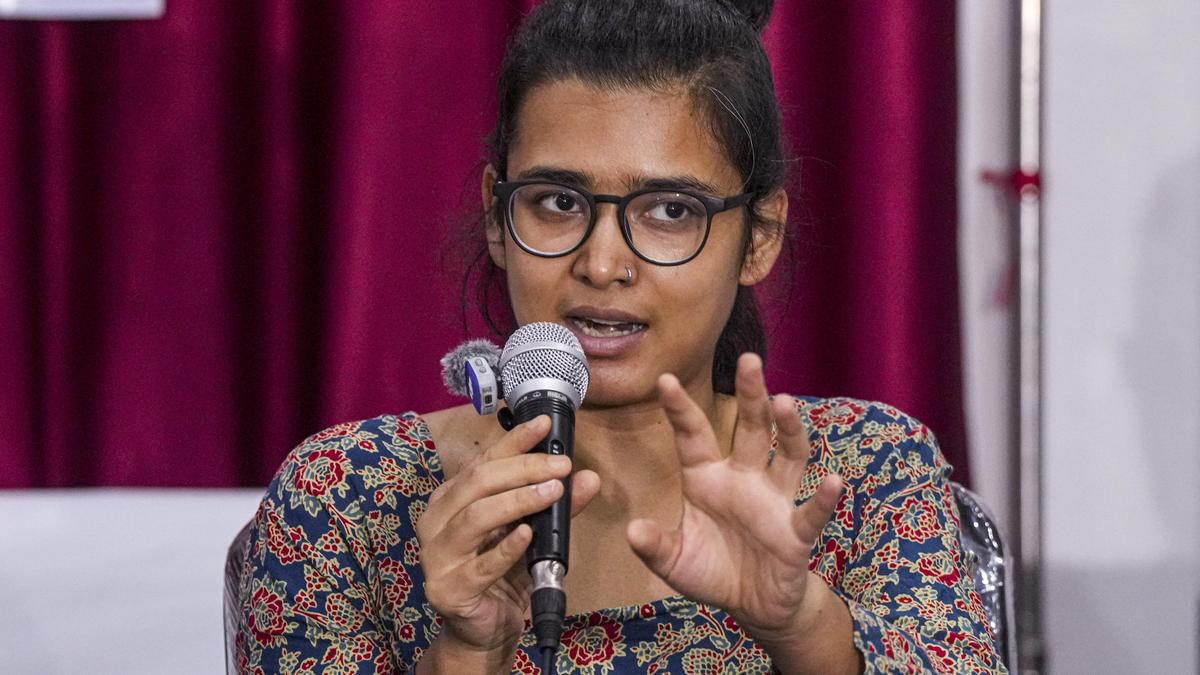

In the run-up to a collective protest on October 10 seeking the scrapping of the special intensive revision of electoral rolls and the removal of Chief Election Commissioner Gyanesh Kumar, the All India Students’ Association (AISA) and the Cockroach Janta Party (CJP) have been coordinating despite differences in their ideologies and approaches. In an interview with The Hindu, AISA national president Neha Bora speaks about the ties between the two organisations, their differences and the scope for a broader alliance. Edited excerpts:

In response to comparisons between you and [Abhijeet] Dipke as leaders, you said the idea is solidarity instead of comparison. What do these collaborations look like on the ground, and is a larger alliance on the radar?

AISA and CJP are two very different kinds of groups. Our understanding is not the same; our ideology is not the same. We are very clearly a Left, radical-Left student movement, while they are still figuring out what they want to be, as they say. So, this coordination that we have with them is on an agenda basis. A common agenda on common ground — that is the extent of our coordination. And, of course, we have a working relationship with the spokespersons because we shared such a long movement at Jantar Mantar [in July].
For us, alliances are always on the radar. And I appreciate that they are always on the radar because, at different points in time, people do feel comfortable reaching out to one another. For instance, I was on a panel with Saurav [Das] and Ratna [from CJP] for the October 10 protest. When the ink attack happened while I was in Jharkhand, the Leader of the Opposition [Rahul Gandhi] called me and extended solidarity.
We also reached out to CJP when we gave the call for the October 2 protest and said that since they had called for a protest in Mumbai, those who could not travel to Mumbai could be asked to join us here at Jantar Mantar. We have been reaching out to the NSUI (National Students’ Union of India) and IYC (Indian Youth Congress).
For us, alliances are always on the radar. And I appreciate that they are always on the radar because, at different points in time, people do feel comfortable reaching out to one another. On October 4, it was clear that their protest call was different from ours. But when our bus was being detained, the NSUI did show up.
There is scope to come together, and we are always ready to serve as mediators or do whatever is required for this larger unity to happen.
What is the idea behind the October 10 protest?
The point is to take back everything they have laid siege to, beginning with Jantar Mantar, which, on paper, is a designated protest site but has been made completely inaccessible to the people. And, of course, why are we trying to reclaim our right to protest? To hold the Election Commission of India (ECI) accountable. So, that’s the game plan; we keep coming back till Gyanesh Kumar is held to account.
With roadblocks such as the area being cordoned off, how difficult is it to mobilise people, especially those affected by the issue?
It’s very difficult because a major section of the people whose names have been struck off are poor, working-class people.
Now, the point is also to reach areas like Okhla, Jamia Nagar and Mangolpuri, where so many people have been struck off the rolls. Over the next few days, we will probably have programmes there to mobilise them for the October 10 protest, which falls on a Sunday.
It is difficult, and it is ironic, that the system affects you the most, and also makes your participation in protests, the most difficult.
And how do you see this generation’s response to everything through humour and trends?
When they [the government] try to create fear, where neither the police nor the judiciary upholds the law, what do you have as a citizen?
You have nothing. So then, are people expected to sit, live in fear and never speak out or step out of their houses? No. And it is in such moments that we use humour and satire.
Even in front of institutions that seem insurmountable, people have always used jokes, satire, songs as a way of protest. It is then that people find a way, humor finds a way, and resistance finds a way.
Both this time and last time, do you think women and queer people are at the forefront of the protests?
Fascist governments are inherently patriarchal, and it has taken the women’s movement years to bring conversations around menstrual leave, abortion rights and other issues to the forefront. When the government brings in the Transgender Amendment Bill while completely disregarding the board it constituted, it is essentially saying, “We don’t see you as human beings.” Every time they double down on patriarchy, they are essentially humiliating women and queer people. That humiliation does not simply disappear; it finds expression in resistance to that domination.
And therefore, women, queer people and trans people feel that because we were the ones at the frontlines of this humiliation, we will be the ones at the frontlines of the resistance.