





When Telangana’s MeeSeva platform moved from Oracle to the open-source PostgreSQL database in April 2026, it was more than a change in the software running behind a government website. It marked an attempt to move a critical public-service platform away from a proprietary database after about 15 years of use.
The migration story could also offer a case study for other governments looking to reduce recurring software costs. Telangana’s Commissioner of Electronic Services Delivery, Ravikiran Tirumala, said in a LinkedIn post that Oracle licensing and maintenance for MeeSeva had cost about ₹10 crore a year and that the migration would eliminate that recurring expenditure.

The effort began in 2023, when the State started examining how to reduce its spending on proprietary software licences. The project subsequently went through multiple government committees before the migration was completed in April 2026.
The technical details of the migration were presented at IndiaFOSS 2026 by Hari P Kiran, founder and CEO of OpenSource DB, a PostgreSQL-focused services company. Mr. Kiran led the database migration on the ground.
French database expert Gilles Darold, creator of the open-source Ora2Pg migration tool used in the project, also wrote an article documenting the migration. He said MeeSeva had been running on Oracle for 15 years, handled about 80,000 government-to-citizen transactions a day and was moved to PostgreSQL with less than four hours of downtime.
Why does the move matter?
Government technology systems often remain in place for years. Once applications and databases are built around a particular technology, moving away from it can become difficult because of accumulated code, dependencies, testing requirements and institutional familiarity.

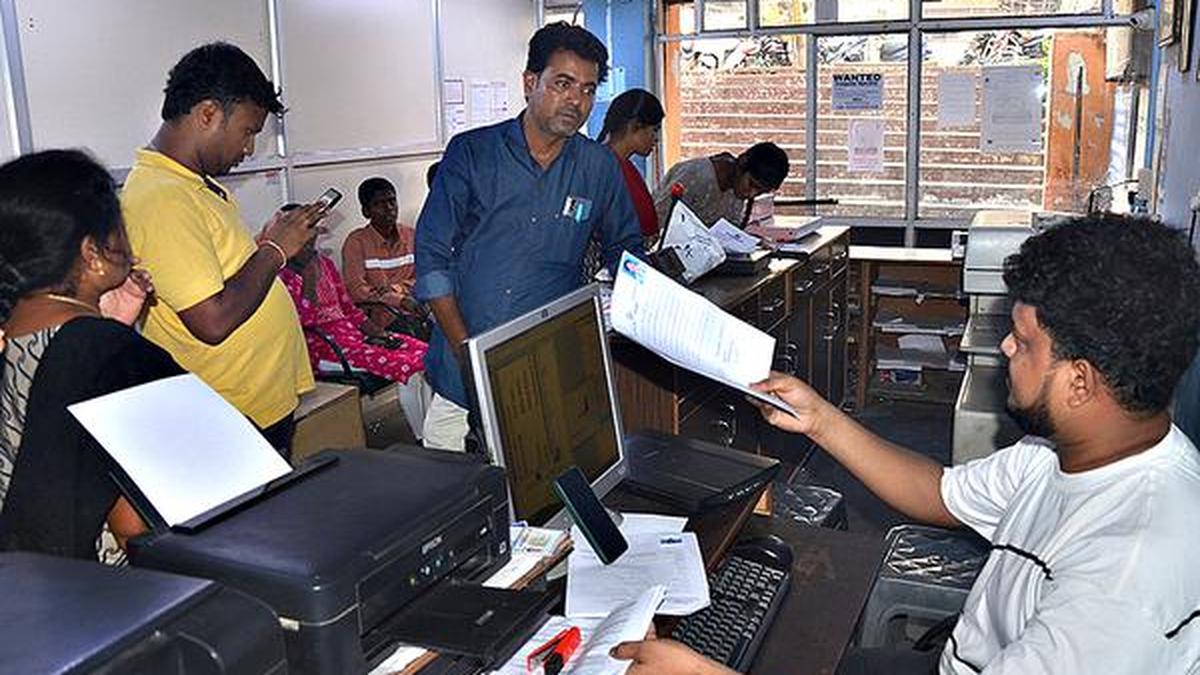
MeeSeva provides more than 500 government-to-citizen and government-to-business services. Mr. Kiran said the migration covered more than 85 microservices and involved three Oracle servers and 1,939 tables. In simple terms, the exercise involved moving the database infrastructure supporting the platform while ensuring that the individual software components using the database continued to function.
The task, therefore, was not simply to install PostgreSQL and switch off Oracle. The team had to establish that a new database could continue to support a critical citizen-facing platform without compromising data integrity or performance.
In a LinkedIn post announcing the completion, Mr. Kiran said MeeSeva had handled nearly 200 million transactions across 5,000 service centres and that the migration resulted in no data loss and no critical issues after migration.

What is PostgreSQL?
Oracle Database is proprietary software developed by US-based technology giant Oracle. PostgreSQL is an open-source relational database that can be used without a proprietary database licence fee. The distinction is important in the Telangana case because the State identified Oracle licensing as a recurring expenditure.
Open source, however, does not mean that running a system is cost-free. Organisations still need infrastructure, engineers, security, monitoring, backups, support and maintenance.
In Telangana’s case, the attraction was therefore not simply that PostgreSQL does not carry a proprietary licence fee. It was also the possibility of reducing recurring Oracle expenditure and dependence on a single proprietary database vendor.
Mr. Kiran made that broader argument in his IndiaFOSS presentation saying, “Every rupee spent on a proprietary database license is a rupee not spent on the public.”
What did the migration involve?
The team used Ora2Pg, an open-source tool created by Mr. Darold, to help convert the Oracle database to PostgreSQL.
Mr. Kiran said Ora2Pg automated roughly 60-70% of the migration. The remaining work required human intervention, including converting application code, validating data and tuning performance. The tool therefore did not make the migration automatic.
Oracle-specific functions and other database constructs had to be examined and reworked. The team also had to validate that the PostgreSQL environment behaved as expected.
The migration was carried out in phases. At one stage, the system wrote data to both Oracle and PostgreSQL, allowing the team to validate the new environment before the final switch.
Oracle was eventually decommissioned and PostgreSQL became the primary database. Mr. Kiran said the team had recorded zero incidents on the PostgreSQL database for two quarters after the migration.
How much did Telangana save?
This is where the ₹10-crore figure needs to be understood carefully. Mr. Tirumala said Oracle licensing and maintenance had cost about ₹10 crore a year and that the migration would eliminate that recurring expenditure.
Mr. Darold, in his account of the project, put the previous Oracle licensing and maintenance cost at approximately $1.2 million a year. He also said the migration cost cited by Mr. Tirumala was below $120,000.
The ₹10 crore figure, therefore, refers to the reported annual Oracle licensing and maintenance expenditure that Telangana says it will no longer incur.
Was it risky?
The migration involved significant technical and administrative risks. Mr. Kiran said the project went through several steering committees because of the importance of MeeSeva, and that government officials had to be convinced that the migration could be carried out without disrupting citizen services.
The migration was completed with less than four hours of downtime, according to Mr. Tirumala and Mr. Darold. Downtime refers to the period during which the MeeSeva services were temporarily unavailable while the database was being migrated.
Mr. Kiran said the new architecture was designed for automatic failover, with a recovery time objective of about 30 seconds. In other words, if the primary database fails, the system can automatically switch to a backup, with the team targeting recovery within about 30 seconds.
The team did not simply replicate the existing Oracle architecture. Mr. Kiran said it initially considered doing so, but eventually redesigned and consolidated parts of the database architecture to work with PostgreSQL.
What does this mean for other governments?
The Telangana experience does not mean that every government system running on Oracle can immediately be moved to PostgreSQL.
Mr. Kiran said some MeeSeva services did not have staging environments, making conventional testing difficult. The team therefore had to simulate production conditions and conduct extensive validation before the final cutover. There was also a rollback plan in case the migration failed.
The experience therefore offers a more complicated lesson than simply choosing free software. It shows what can be involved in attempting to reduce dependence on a proprietary technology after years of use.
Could open source become a government cost-cutting tool?
Eliminating a proprietary database licence can reduce recurring technology expenditure. But the economics have to be evaluated over the entire life of the system.
Migration itself costs money. Open-source systems require skilled personnel. Infrastructure, support and maintenance still have to be paid for. And the risk of moving a mission-critical system has to be weighed against the cost and risks of remaining with the existing technology.
Mr. Kiran argues that governments should examine their recurring proprietary software bills and assess whether open-source alternatives could perform the same functions. He pointed to government systems such as land records, tax, pensions, transport, health, education and citizen portals as examples of areas where proprietary database licences can form recurring costs.
For other governments, the lesson may be less about replacing proprietary software with open-source alternatives and more about examining whether proprietary technology remains worth its recurring cost and vendor dependence.