






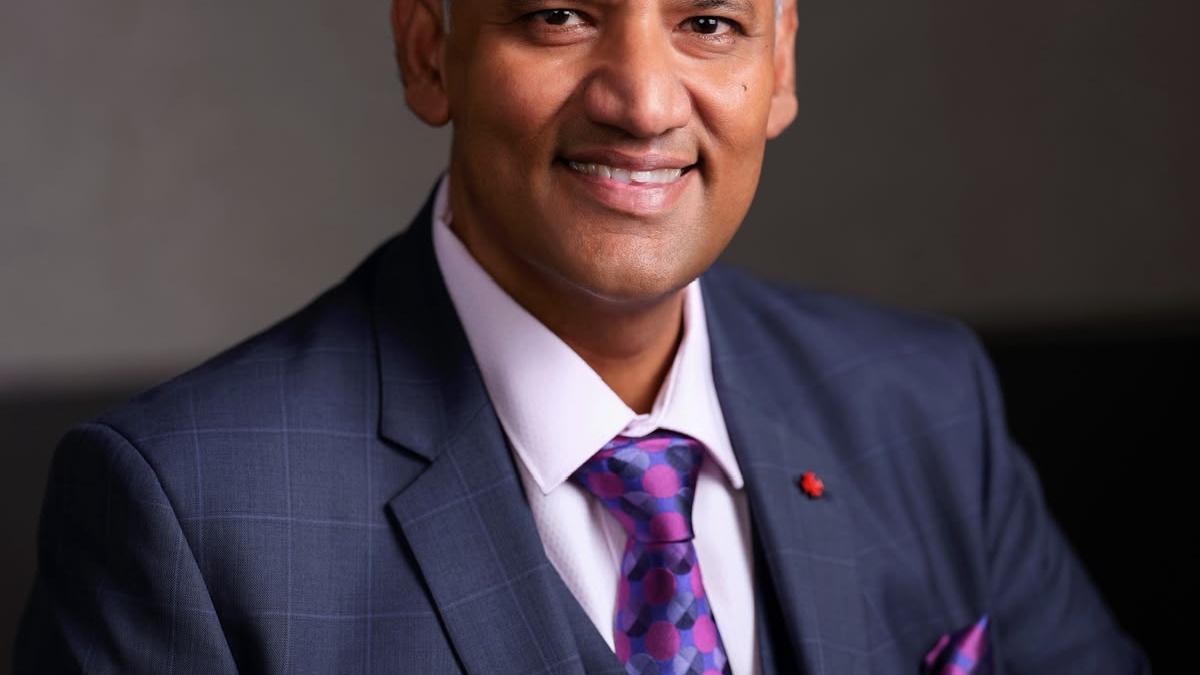


Agilisium CEO Raj Babu says life sciences business has been growing at about 45% annually
| Photo Credit: Special Arrangement
Artificial Intelligence (AI) is prompting life sciences technology company Agilisium to overhaul its hiring strategy, with founder and CEO Raj Babu aiming to reduce computer science (CS) graduates to less than 30% of new recruits and bring in more professionals from biotechnology, microbiology, pharmacy and medicine.
The strategy rests on the belief that professionals with domain expertise in pharmaceutical science and clinical processes can be trained to use AI and develop software more easily than conventional programmers can acquire specialised knowledge of life sciences.
“I am pushing for computer science to be less than 30%,” Mr. Babu said during an interaction with journalists in Chennai on Monday. “We are hiring business people and we are training the business people to do the development and the programming.”
Founded in 2014, Agilisium entered the life sciences segment in 2018. While its earlier hiring was dominated by CS graduates, it now recruits from institutions such as the National Institute of Pharmaceutical Education and Research (NIPER) and Indian Institutes of Management, as well as biotechnology and microbiology programmes. Its recruits include MBBS doctors, dentists and PhDs.
Mr. Babu believes AI is reducing the need for multiple layers of intermediaries between business teams and software developers. Domain experts can increasingly work directly on business problems, using AI to build solutions, while computer science graduates can focus on validating the quality of the output.
The approach is central to Agilisium’s forward-deployment expert (FDE) model, which combines domain knowledge with technology skills, consultative thinking and first-principles problem-solving. Training involves about four months of formal instruction, followed by three to six months of hands-on experience.
Of the company’s global workforce of about 1,400, nearly 100 employees have been trained as FDEs. Agilisium aims to increase that number to more than 700 next year. An AI platform under development is expected to scale training through workflow-specific modules, including one for clinical-trial validation.
Revenue goals
The company is targeting $100 million in revenue next year and aims to reach $500 million within five to seven years. Its life sciences business has been growing at about 45% annually, Mr. Babu said.
The U.S. currently accounts for 95% of its revenue, with India contributing the remaining 5%. At the $500-million revenue mark, Agilisium expects the U.S. share to fall to about 70%, while India could contribute 15–20% and Europe 5–10%, making India its second-largest market.
Mr. Babu said the company was bootstrapped, financially sound and not seeking external funding. It would consider a strategic partner if the arrangement brought capabilities and accelerated growth beyond what capital alone could achieve.
Agilisium works with technology partners, including Anthropic’s Claude, Amazon Web Services and Databricks. It is also looking to partner with specialists in clinical research, research and development, and cell and gene therapy.
One application of Agilisium’s technology is processing pharmaceutical adverse-event reports collected across countries, languages and formats. Mr. Babu said a process developed for some clients could cut the data-processing stage from six months to one or two days, followed by human review.
Hyderabad to emerge as largest India hub
Agilisium is expanding in Hyderabad, which Mr. Babu expects to become its largest Indian hub over the next few years. The company currently employs about 700–800 people in Chennai and nearly 200 in Hyderabad. Its workforce in the Telangana capital could grow to 2,000–5,000, he said, citing the city’s life sciences ecosystem and specialised talent pool. Chennai and Pune will remain important locations.
Published – October 12, 2026 07:50 pm IST