




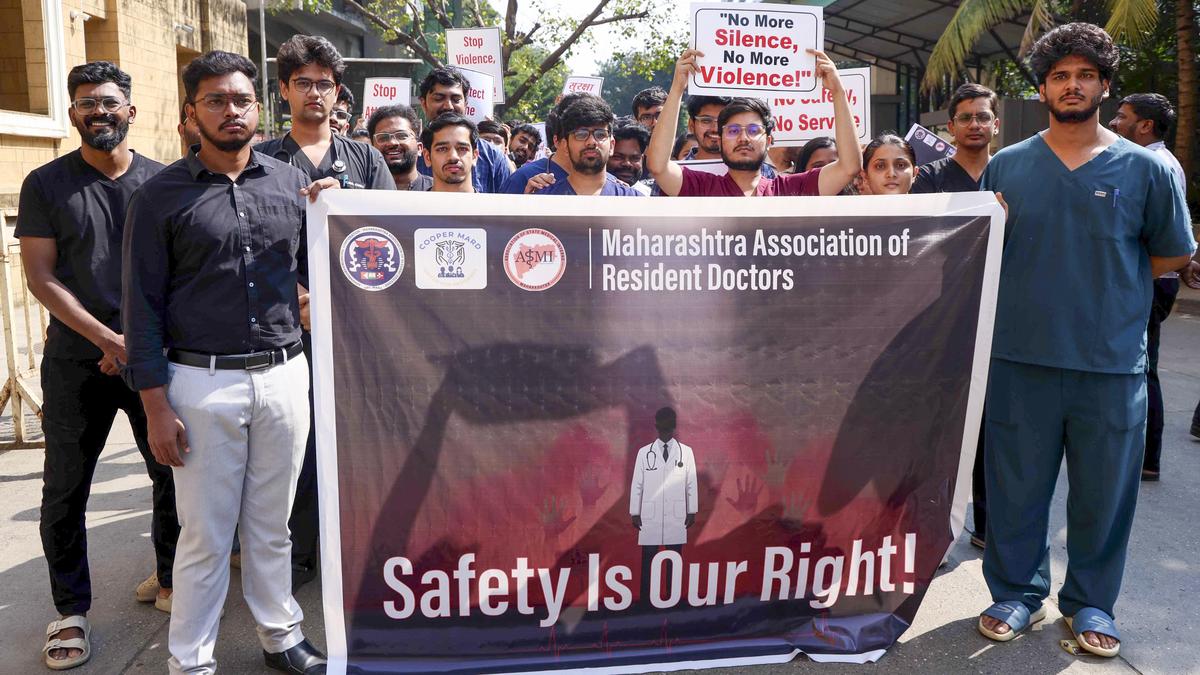

A statewide survey by the Central Maharashtra Association of Resident Doctors (Central MARD) in 2025, has uncovered alarming deficiencies in security, hostel facilities, stipend disbursement and infrastructure across 18 government medical colleges, affecting more than 5,800 postgraduate resident doctors. The findings, released on Friday (December 12, 2025), point to a systemic crisis that compromises doctors’ safety and patient care.
The survey covered major institutions including Sir J.J. Hospital and Grant Medical College in Mumbai, BJGMC Pune, and GMC Nagpur among others. The survey found that security shortfalls remain the most pressing concern, with an average 25% deficit in guard deployment across hospitals.
Kerala HC seeks report on steps taken to ensure safety of doctors, staff at hospitals
While the average sanctioned strength is about 200 guards per institution, only around 150 are deployed, leaving critical areas such as OPD (Outpatient Department), casualty wards, hostels and campus zones vulnerable. “This gap has resulted in increased incidents of violence, harassment and unauthorised entry into restricted areas, including hostels,” the report stated.
Colleges primarily rely on Maharashtra Security Force (MSF) for staffing (72%), followed by Maharashtra Ex-servicemen Corporation (MESCO-16%) and private firms (12%), but administrative delays and agency constraints have stalled improvements.
Hostel conditions are equally dire. The survey reveals that half of the resident doctors have not been allotted on-campus accommodation, forcing them to commute unsafe distances at odd hours. Those housed in hostels face pest infestation, structural hazards, poor sanitation, chronic water shortages, and frequent power cuts.
Nearly half of the hostels lack functional mess facilities, and none provide gender-segregated accommodation, compromising privacy and safety for female residents.
Also Read | Saving doctors: On medical professionals, their safety
Financial insecurity compounds these challenges. One-third of colleges fail to disburse stipends by the 10th of each month, pushing residents, already working 80-hour weeks, into debt and unsafe compromises, including inadequate transport and accommodation. “Delayed stipends add to fatigue and economic vulnerability, limiting access to basic needs,” the report noted.
The psychological toll is stark, the report said, only 39% of resident doctors reported feeling safe at work, while 50% feel partially safe and 11% feel unsafe. Chronic insecurity, coupled with poor living conditions and financial stress, has led to heightened burnout and impaired decision-making among doctors.
The report warns that this is not merely a welfare issue but a public health concern, as doctors working under fear and fatigue cannot deliver optimal care.
Safety, housing and stipend lapses persist
Despite repeated complaints, administrative inaction persists. Half of the colleges that filed formal grievances report zero corrective measures. “Assurances have not been translated into action on security deployment, hostel repairs, or stipend delays,” Central MARD said in its statement, calling the situation a systemic failure, not resource scarcity.
The report also references the August 2024 Kolkata hospital violence incident, which triggered national debate on healthcare worker safety, underscoring the urgency of reforms in Maharashtra.
Central MARD has urged the State government and the Directorate of Medical Education and Research (DMER) to take immediate, time-bound action to address the crisis. The association has called for the implementation of sanctioned security staffing across all colleges within the next 90 days, along with mandatory hostel allotment for every resident doctor, ensuring gender-segregated facilities and functional mess services.
It has also demanded strict enforcement of monthly stipend disbursement to prevent financial hardship, comprehensive upgrades to hospital infrastructure including safe rest spaces and sanitation improvements, and the creation of a transparent accountability mechanism to hold administrations and security providers responsible for lapses.
“Resident doctors are not asking for luxury but only for basic safety, decent living conditions, timely stipend and essential infrastructure. These are the minimum requirements for delivering safe patient care. The data is clear. The crisis is real. We urge the government to act before another tragedy forces action,” said Dr. Suyash Dhavane, General Secretary, Central MARD.
The association warned that without swift action, the crisis could deepen, jeopardising both healthcare workers and patients across Maharashtra’s public hospitals.
Published – December 13, 2025 12:28 pm IST