






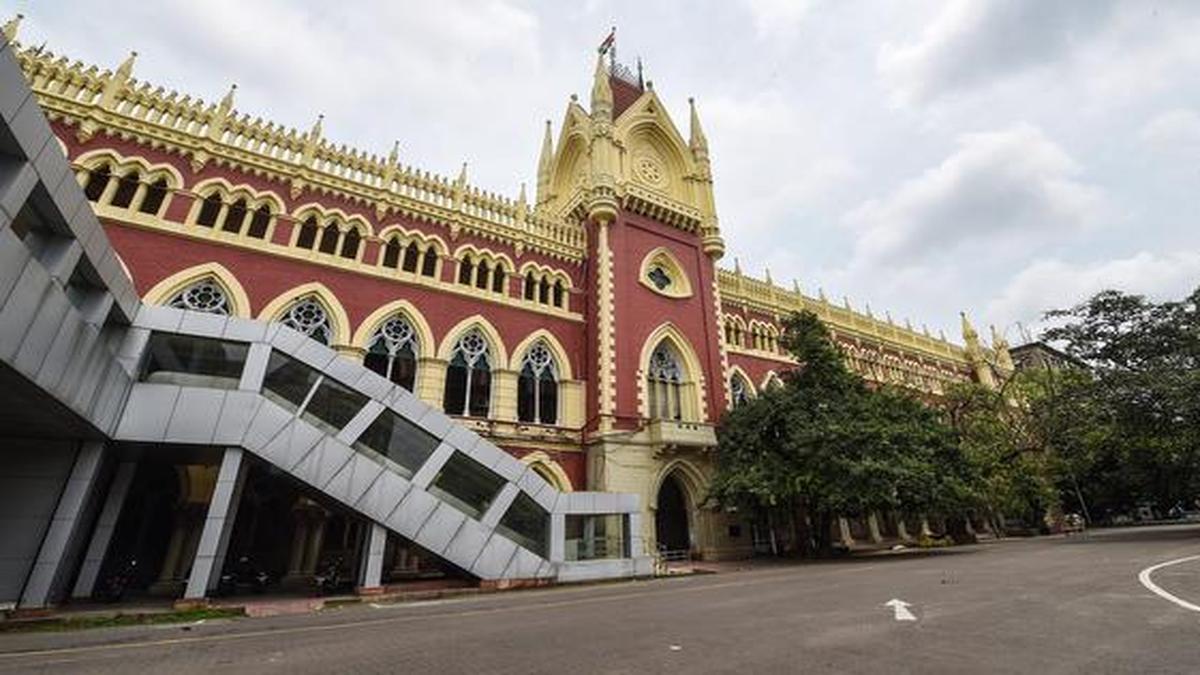

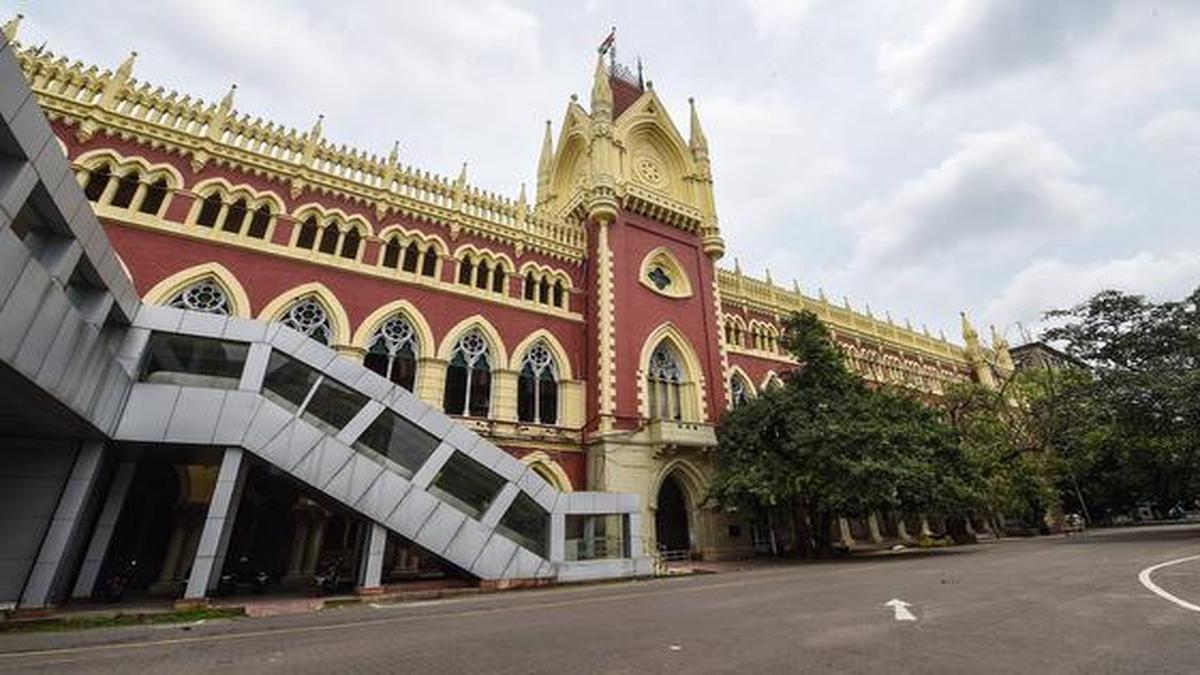
File photo of Calcutta High Court.
| Photo Credit: The Hindu
The Calcutta High Court on Monday (January 19, 2026) took suo motu cognisance of worsening air pollution in Kolkata and its surrounding areas, like Howrah. With Kolkata’s AQI slipping below Delhi’s on some occasions, the Chief Justice of Calcutta High Court also issued notices to the State government, seeking their response on the issue.
The suo motu case is set to be heard along with a Public Interest Litigation (PIL) filed by Advocate Akash Sharma about the continued deteriorating air pollution of Kolkata and sought intervention from the State.
Reply sought by February 28
On Monday (January 19), the division bench of Chief Justice Sujoy Paul and Justice Partha Sarathi Sen asked the State and other respondents in the PIL to reply to the concerns by February 28 and said the case would be listed for hearing after that.
In the PIL, advocate Sharma mentioned that he had notified the West Bengal Government and the West Bengal Pollution Control Board about the deteriorating AQI but “no enforceable” action was taken.
“For that, the continuing exposure of residents of Kolkata and Howrah to “very poor”, “severe” and “hazardous” air quality levels constitutes a direct and ongoing violation of the fundamental right to life and health guaranteed under Article 21 of the Constitution of India,” the PIL further stated.
The PIL further said that this was not a one-time lapse but a recurring issue, in which responsibility is shifted between departments, resulting in a lack of coordinated action.
Experts warn of multi-layered problem
Professor Abhijit Chatterjee of the Bose Institute, who has worked extensively on the issue of air pollution, said that the high AQI and pollution level in Kolkata this winter were not due to the higher emissions of pollutants, but rather the higher accumulation of pollutants compared to recent years, which was favoured by atmospheric and meteorological factors. He added that one of the key factors is the boundary layer. This is the height above the surface, up to which pollutants get trapped. The higher the height, the lower the pollution level is near the surface.
“Extreme cold lowered the boundary layer, trapping pollutants closer to the surface and significantly increasing local pollution levels… Added to this is the burning of waste, including electrical wastes, rubber and other synthetic materials in the city at night, which emits large amounts of organic compounds and helps form a haze early next morning,” Mr. Chatterjee told The Hindu on Monday. (January 19)
He said that stringent action is required against indiscriminate waste burning and called for widespread public awareness.
An analysis by Respirer Living Sciences using its Atlas AQ platform revealed that on 82 days in 2025, Kolkata’s AQI was primarily driven by toxic gaseous pollutants, such as nitrogen dioxide (NO₂) and ground-level ozone (O₃), rather than particulate matter (PM2.5 or PM10). The firm stated that this posed significant health risks for residents of the city and surrounding areas, which could be overlooked if the role of toxic gases is not studied.
“If city action plans focus only on PM2.5 and PM10, we risk under-responding to real exposure scenarios,” Ronak Sutaria, founder and CEO, Respirer, said. “AQI is designed to be multi-pollutant, and our responses must reflect that.”
The analysis found that industrial areas in Dunlop, Ultadanga, Moulali, Rabindra Sarobar, and Howrah Bridge corridors had a much higher air pollution level due to toxic emissions.
Published – January 19, 2026 09:21 pm IST