







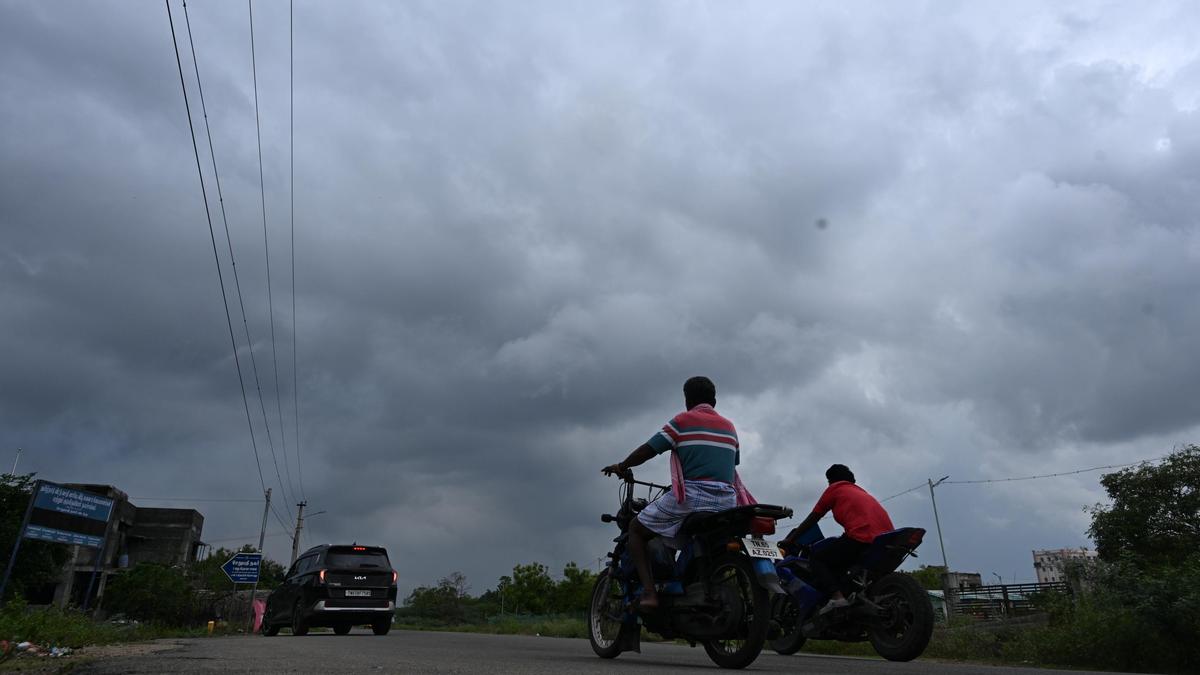

The story so far: El Nino, meaning ‘the little boy’ in Spanish, has emerged as one of this year’s most widely discussed climate phenomena. The exceptional warming of sea surface temperatures in the central and eastern Equatorial Pacific Ocean is already influencing weather disruptions worldwide and is also hitting hard on Indian monsoon.
With the Southwest monsoon beginning to retreat and leaving rainfall deficits across parts of India, El Nino is being closely monitored as meteorologists await its impact during the ensuing northeast monsoon in the southern peninsula, including Tamil Nadu.

What is the status of El Nino?
While several weather factors influence the monsoon, El Nino is one of the key climate signals being closely watched this year. Sea surface temperatures across the central-eastern equatorial Pacific are well above average and are continuing to rise. According to models from various countries, including the Australian government’s Bureau of Meteorology, both oceanic and atmospheric indicators are consistent with a strong El Nino.
The widely used Niño 3.4 index, which measures sea surface temperature anomalies in the central-eastern equatorial Pacific, has strengthened considerably to an average of +2.51 degrees Celsius, which is well above the El Nino threshold. (+0.80 degrees Celsius). Some models indicate that it may peak above +3.0 degree Celsius in the coming months.
Why is El Nino being closely watched this year?
El Nino conditions that started developing over the equatorial Pacific have been steadily strengthening throughout the year. It is likely to persist till May or June 2027.
The usual cycle of El Nino occurrence is between two and seven years.

The World Meteorological Organisation has warned that a very strong El Nino can significantly shift rainfall and temperature patterns across the world and fuel extreme weather events. However, strong El Nino conditions alone do not determine the severity of impact over various regions. Its effects may vary according to region and seasons and may be altered by other climate drivers like Indian Ocean Dipole and conditions in the Indian and Atlantic Oceans, noted international meteorological agencies.
The significance of El Nino comes against the backdrop of a rapidly warming world. 2024 was the warmest year in record, with the global temperature exceeding 1.5 degree Celsius threshold set by the Paris agreement. 2023 and 2025 were also some of the warmest years.
With the Pacific expected to get warmer and El Nino conditions expected to peak in winter and continue next year, 2026-2027 could surpass previous records. The period between 2023 and 2027 could be the warmest five years historically. 1997 experienced one of the strongest El Nino events earlier. This has turned all eyes on El Nino and its impact over the country and coming seasons, noted Sivananda Damodara Pai, Head, Regional Meteorological Centre, Chennai.
What does El Nino mean for TN?
A strong El Nino is generally considered favourable for a wetter northeast monsoon over the southern Peninsular region. El Nino has the potential to change the tracks, frequency and intensity of cyclones in different ocean basins. It could shift monsoon pattern across the globe. This year, it had brought rainfall deficit during southwest monsoon in India, including Tamil Nadu.

El Nino years are normally associated with fewer weather systems forming over Bay of Bengal, with many of them tending to be less intense. Most systems would have a westwards track towards Tamil Nadu-Andhra Pradesh coasts. However, El Nino may not be the only factor for extreme weather events like prolonged dry period or urban flooding. Rising global temperatures and climate change fueled by urbanisation and changes in land use and land cover could amplify its impact, said Mr.Pai.
Meteorologists cited previous records where several El Nino years have been associated with above-normal rainfall between October and December in Tamil Nadu. Y.E.A. Raj, former deputy director general of meteorology, RMC, said northeast monsoon rainfall was exceptionally good during 1997, 2009, 2015 (when Chennai experienced floods) and 2023 when there was El Nino.
However, 2002 was an exception, as TN recorded poor northeast monsoon rainfall despite being an El Nino year. Similarly, there were many years like 2005, 2010, 2011 and 2021 that registered above-normal monsoon rainfall, but they were not El Nino years.

A strong El Nino is definitely a favourable factor for a good northeast monsoon, but it is not a necessary condition. In 1982, there was El Nino, both Southwest and northeast monsoons failed over India, he said.
Meteorologists point out that the northeast monsoon is of a volatile nature, and El Nino is not the only weather parameter controlling monsoon. The northeast monsoon performance could vary depending on other oceanic and atmospheric conditions.
Why is upcoming monsoon rainfall important?
The northeast monsoon, active between October and December over Tamil Nadu, provides a major share of the State’s annual rainfall. With the Southwest monsoon likely to end rain deficit, northeast monsoon is crucial to bridge the rainfall shortage and replenish drying-up water resources. While meteorologists have suggested a El Nino and a negative Southern Oscillation Index may favour a wetter northeast monsoon, the India Meteorological Department will release seasonal forecast towards September end.
The Tamil Nadu government has formed an Expert Advisory Committee to monitor and assess the potential impact of a strong El Niño and advise the government on preparedness and mitigation measures. IMD and Tamil Nadu Disaster Risk Reduction Agency are planning to host a northeast monsoon seasonal outlook forum on October 1.
Published – September 23, 2026 08:06 am IST