






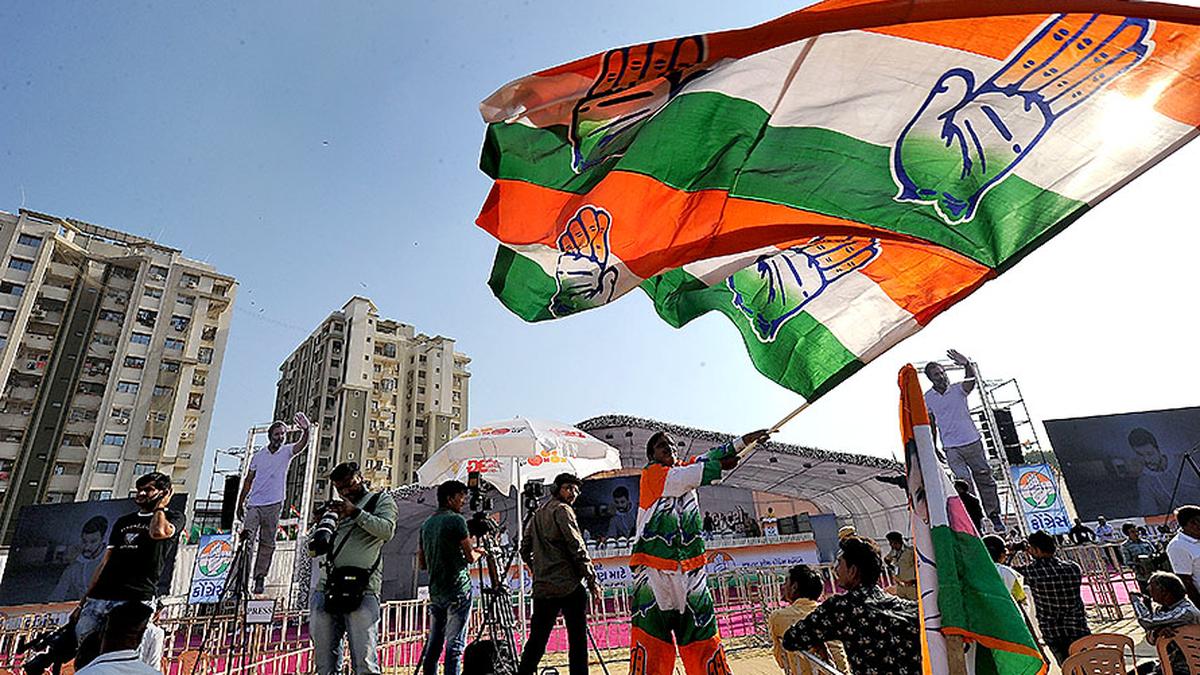

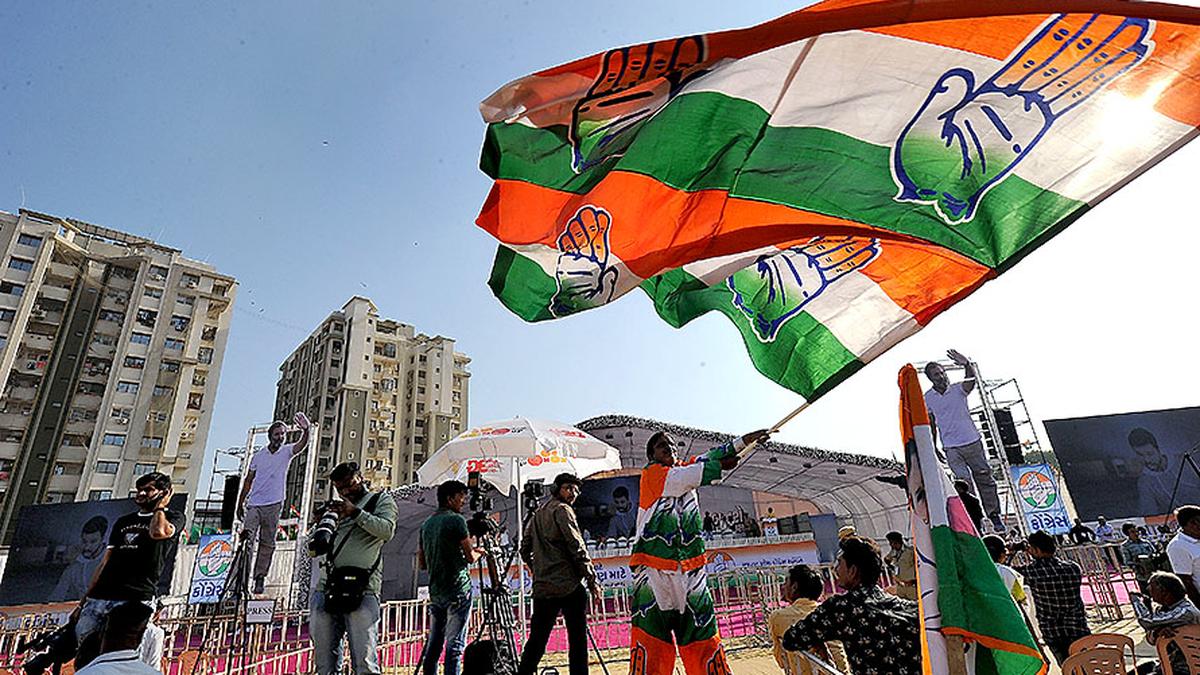
The Congress said the exercise was aimed at placing “facts” before the public ahead of what it described as a government-driven “propaganda” push through the President’s address, the Economic Survey and the Budget. File
| Photo Credit: The Hindu
On the eve of the Union Budget session of Parliament, the Congress on Tuesday questioned the credibility of official economic data, alleging that inequality was widening even as welfare measures were being rolled back.
The party’s Research Department released its annual report, ‘Inequality on the Rise, Welfare in Retreat – Real State of the Economy 2026’, two days before the tabling of the Economic Survey and the presentation of the Union Budget on February 1.
The Congress said the exercise was aimed at placing “facts” before the public ahead of what it described as a government-driven “propaganda” push through the President’s address, the Economic Survey and the Budget.
“It [the report] correctly identifies the key challenges to the Indian economy stemming from ‘K-shaped’ unequal growth, inadequate and low-quality job-creation, erosion of social security nets, and the under-investment in basic public services of clean air, water, and healthcare,” Congress communications chief Jairam Ramesh said in a post on X, adding, “We hope that the Finance Minister and the Chief Economic Advisor will grapple with some of the realities presented in this report in the forthcoming Economic Survey and Union Budget.”
Releasing the report along with party colleague Amitabh Dubey, All India Congress Committee (AICC) Research Department chairman Rajeev Gowda questioned whether the Narendra Modi government’s economic numbers could be trusted.
“The IMF gave India’s statistics a C grade. 0.5% inflation rate is not the reality of people’s lives. Former Chief Economic Advisor Arvind Subramanian calculates that GDP figures are at least 2.5% higher than actual reality,” Mr. Gowda said.
He pointed out that in 2024, the government’s production-side GDP estimate showed growth of 9.2%, which was 47% higher than the 4.9% growth indicated by the expenditure-side GDP metric. “In the first half of 2025-26, manufacturing reportedly grew at 8.4%. But the Index of Eight Core Industries showed only 2.9% growth,” he said.
On rupee depreciation
Mr. Gowda also criticised the government over the depreciation of the rupee, stating that it had emerged as Asia’s worst-performing currency in 2025. “In 4 of 10 months of 2025, net FDI was negative. More investors withdrew money and more Indian money was invested abroad compared to foreign investments into India,” he said.
Highlighting employment trends, he said the share of workers in manufacturing declined from 12.1% in 2017-18 to 11.4% in 2023-24. “What happened to Make in India? Agriculture’s share rose from 44.1% to 46.1%…Job growth is concentrated in low value, informal, and gig economy,” Mr. Gowda said.
Flagging what he described as “rising inequality”, the Congress leader said the top 10% accounted for 58% of national income, while the bottom half received only 15%. He further claimed that four out of five Indians subsisted on less than ₹200 per day, while one-third lived on less than ₹100 a day. “Net household financial savings are at a five-decade low of 5.2%, household debt is sharply up to 41% from 35% in 2019,” Mr. Gowda said.
Tax burden
He also pointed to a shift in the tax burden, saying individuals were paying more direct taxes than corporates, with the share rising from 38.1% in 2013-14 to 53.4% in 2023-24.
Mr. Dubey said the nature of growth being pursued by the government was deeply flawed. “Growth that benefits only a few is not success. It is a warning sign. Rising inequality and shrinking welfare are the clearest markers of massive economic mismanagement,” he said.
“But fundamentally good policy begins with honest data. We ask the government to place the real numbers before the country, not manipulated figures that mislead the people,” Mr Dubey added.
He also flagged what he described as the “failures” of the Make in India initiative, citing the decline in manufacturing and the pressures faced by micro, small and medium enterprises. He also said the Mahatma Gandhi National Rural Employment Guarantee Act (MGNREGA), which he described as the biggest support system for the poor, was now “under assault” from the Modi government.
Published – January 27, 2026 07:52 pm IST