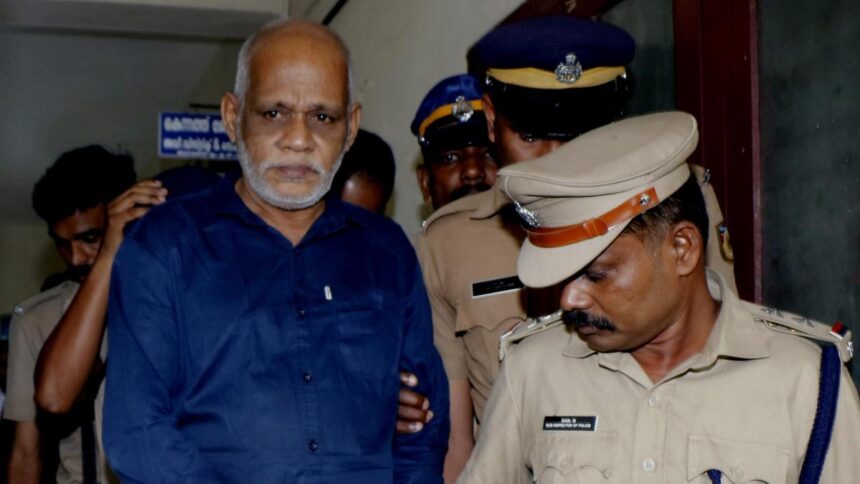







The Madras High Court has found that a Caste Hindu had joined the Chennai Port Trust (CPT) in 1982 in a post reserved for a Scheduled Tribe (ST) candidate, served the organisation for 32 years by prolonging the inquiry into his caste status and attained the age of superannuation in 2013 thereby depriving an unknown person, suffering social stigma, of the constitutional benevolence shown by the nation.
Justice D. Bharatha Chakravarthy dismissed a couple of writ petitions filed by A. Jegannathan and refused to interfere with the State Level Scrutiny Committee’s (SLSC) conclusion that the petitioner actually belonged to Urali Gounder community and not the Urali tribe. The judge refused to direct CPT to pay full pension or release other terminal benefits such as gratuity, leave salary and so on.
He pointed out that a community certificate produced by the petitioner, to claim the benefit of reservation, was referred to the Salem Collector for verification by the CPT way back in 1983 itself. On verification, the revenue officials found that the petitioner had actually studied in Tiruchi district and had been identified as belonging to Urali Gounder community in his school records.
Therefore, in 1984, the Salem Collector informed the CPT that the community certificate was not genuine and that the writ petitioner had failed to prove his tribal status despite having been accorded an opportunity to do so. Aggrieved over it, Mr. Jegannathan filed a writ petition in 1985 and got the Collector’s order quashed in 1986. Then, the High Court also ordered a fesh inquiry.
Accordingly, a fresh inquiry was initiated in 1986 and was concluded in 1990 confirming that the petitioner was a Caste Hindu and not a Scheduled Tribe. He was also discharged from ther services of CPT on September 26, 1990. However, the petitioner filed another writ petition and obtained an interim stay of the discharge order. The High Court once again ordered a re-inquiry into his caste status.
Thereafter, the inquiry got prolonged due to it being shuttled between the SLSC and the District Level Scrutiny Committee and the delay led to his attaining the age of superannuation. It was only in 2021 that the SLSC concluded that the petitioner had produced a bogus community certificate obtained fraudulently with the mala fide intention to derive constitutional benefits meant for a genuine scheduled tribe.
Hence, the petitioner had approached the High Court with the present writ petitions urging it to quash the SLSC’s conclusion since it was passed without hearing him and also to direct CPT to pay him full pension and other terminal benefits. However, on persual of records, the judge found that the SLSC had arrived at the conclusion on the basis of documentary evidence since the petitioner failed to appear for inquiry.
The SLSC had found that the petitioner’s brother, paternal uncles and cousins had given statements that they were not part of any scheduled tribe. The Village Administrative Officer too had confirmed that the petitioner did not belong to the Urali tribe. Since there was overwhelming evidence against the petitioner, the SLSC’s order could not be interfered with on sole ground of violation of principles of natural justice, the judge concluded.
Published – September 20, 2026 01:05 am IST