


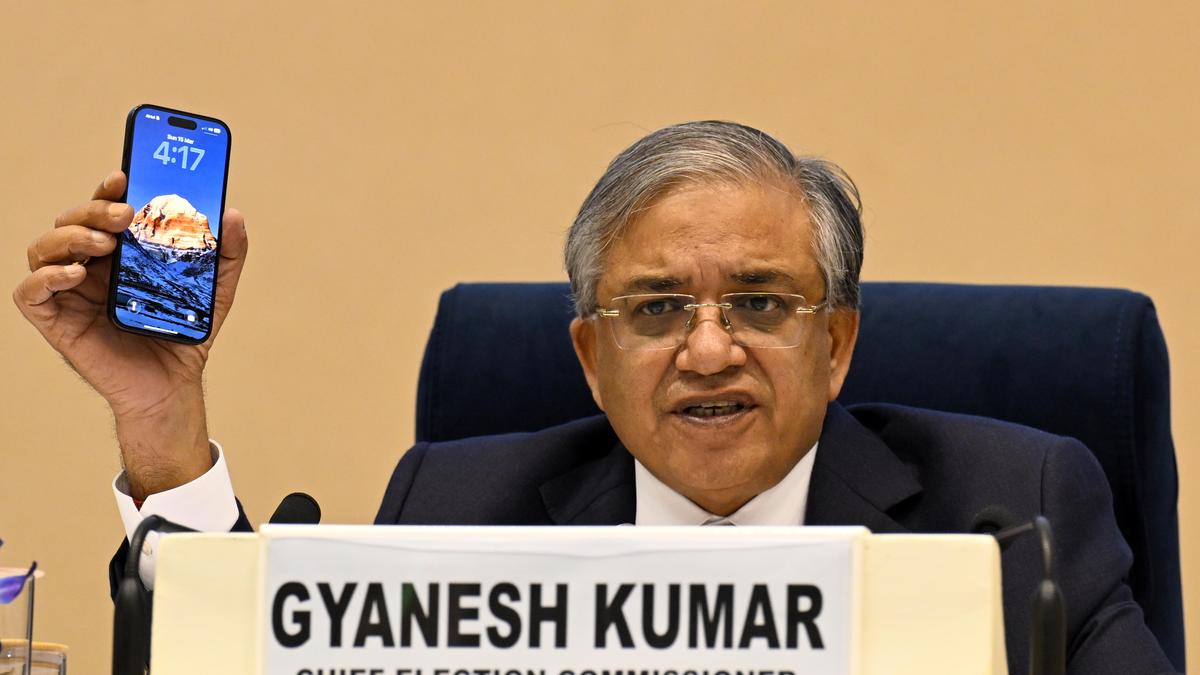


Chief Election Commissioner Gyanesh Kumar during the announcement of the Elections in Five states Assam, Keralam, Puducherry, Tamil Nadu and West Bengal. File
| Photo Credit: MOORTHY RV
A group of senior retired bureaucrats, civil society activists, and academics accused Chief Election Commissioner Gyanesh Kumar of six instances of “proved misbehaviour” and sought his removal, but could not submit their “notice of impeachment” to him in person, as heavy barricading and police deployment prevented the delegation from reaching the Election Commission of India’s (ECI) office on Mondy (October 5, 2026).
They subsequently emailed their “chargesheet” to the CEC. It invokes Article 324(5) of the Constitution, which protects the CEC from removal except on grounds of “proved misbehaviour or incapacity”, and alleges that the CEC’s conduct amounted to a sustained disregard of law and constitutional duty.
The 14-member delegation included former Delhi Lieutenant-Governor Najeeb Jung, former Union Home Secretary G.K. Pillai, and other former IAS officers and ambassadors.
‘People’s impeachment notice’
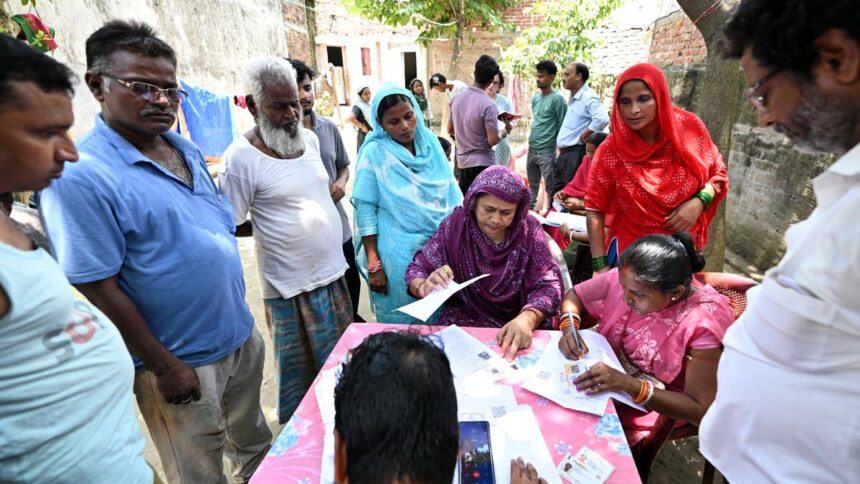
The chargesheet lists six accusations against Mr. Kumar, including that he undermined the collective functioning of the ECI, made unauthorised changes to the statutory Form 6, centralised electoral-roll functions through the ECINET platform, and presided over the Special Intensive Revision (SIR) of electoral rolls that the activists alleged has resulted in large-scale disenfranchisement.

The group said the charges amounted to a “people’s impeachment” of the CEC and argued that he had lost the public trust necessary to continue in office. “EC is functioning illegally and failing in its responsibility. We believe that the CEC must resign,” activist Anjali Bhardwaj said.
The group alleged that the CEC had weakened the Commission’s collective decision-making, introduced changes to Form 6 that placed an additional burden on voters seeking inclusion in the rolls, and used technological systems in ways that encroached on the statutory functions of Electoral Registration Officers. The chargesheet alleges that the conduct of the Commission during the SIR had compromised citizens’ ability to establish their eligibility for inclusion in the electoral rolls, adding that such conduct undermined the Commission’s independence and public credibility.
‘No moral authority’
“It is losing the trust. CEC Gyanesh Kumar has no moral authority to stay in office. First [it] defended [the changes], saying changes to Form 6 have been upheld by the Supreme Court but the court denied that today. How do people trust the Commission?” Ms. Bhardwaj said.
The delegation listed in the chargesheet comprises former Delhi Lieutenant-Governor Najeeb Jung, former Union Home Secretary G.K. Pillai, former Union Secretary Amitabha Pande, retired IAS officer Jayashree Mukherjee, former Ambassador Ashok Sharma, former Special Director of the Intelligence Bureau and Central Information Commissioner Yashovardhan Azad, former civil servant Ashish Joshi, student activist Aishe Ghosh, N. Sai Balaji, Dinesh Srirangarajan, Sandeep Yadav, Amrita Johri, Yogendra Yadav, and Ms. Bhardwaj.

“Since we could not reach there, we emailed them the chargesheet,” Ms. Bhardwaj said. “We first planned to meet at the Constitution Club and then go to the Nirvachan Bhawan [the Commission building] from there. But we couldn’t reach there because of barricading. Then we met at the Press Club and decided to go from there, and we got to know Election Commission itself is heavily barricaded and police deployment is there. Whichever roads we were taking were barricaded,” she added.
Published – October 05, 2026 09:57 pm IST