






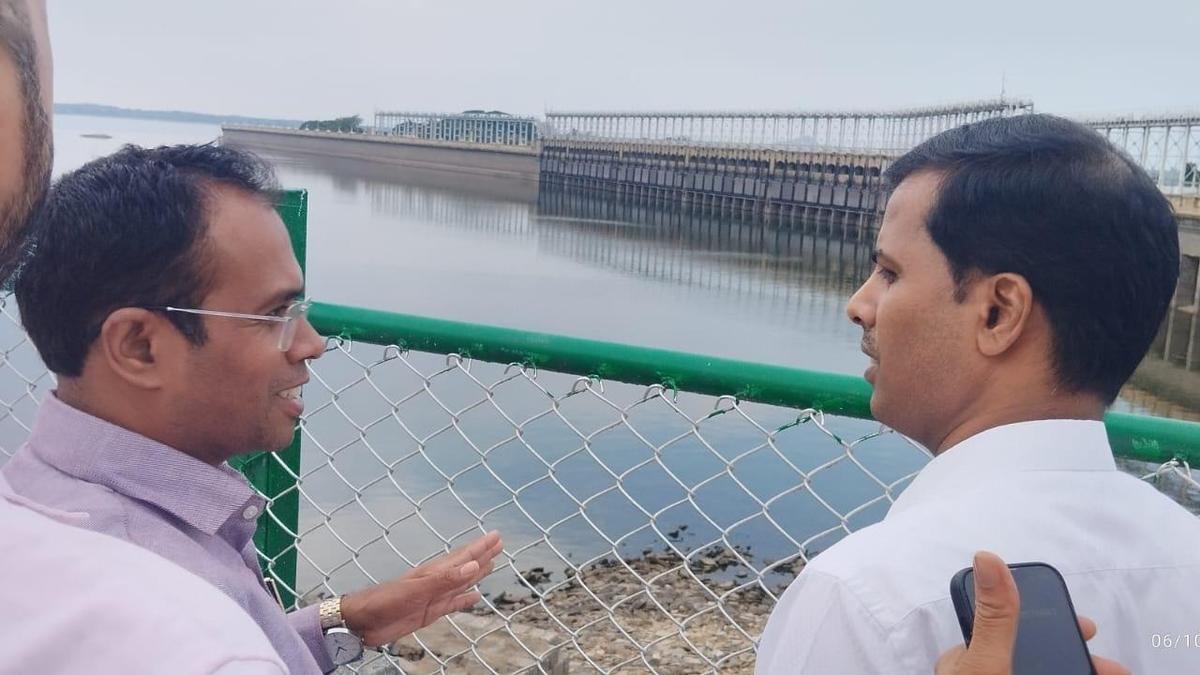


The Central drought assessment team at KRS reservoir on Tuesday (October 6).
| Photo Credit: Special Arrangement
A Central drought assessment team visited KRS reservoir on Tuesday (October 6) and gathered information on the rainfall deficit this year in Mandya district and the availability of water in the reservoirs.
Apart from shortfall in rains this year, the Central team also collected information from the officials on the impact of poor rainfall on agricultural activities and availability of drinking water and water storage in the reservoirs.
The Central team comprising Deputy Commissioner, Department of Animal Husbandry and Dairying, Government of India, Sudham Baig, Deputy Advisor, Department of Drinking Water and Sanitation, New Delhi, Ashish Pandey, Under Secretary, Department of Food and Civil Supplies Pradeep Kumar, Deputy Director, Mahalanobis National Crop Forecast Centre (MNCFC) Karan Chaudhary held a meeting with officials at Cauvery Hall at KRS.
Mandya Deputy Commissioner Kumar said the district recorded a significant rainfall deficit this year by receiving only 173 mm of rainfall so far against the normal of 360 mm during the southwest monsoon, which is 44% below normal.
An analysis of rainfall records over the past 20 years showed that the current year was among the years with the lowest rainfall in the district. The rainfall deficit had adversely affected agricultural activities and crops in most parts of the district, he said.
Cauvery Neeravari Nigam Limited managing director Mahesh said the Cauvery basin covered around 18.85 lakh acres and that Cauvery water was the main source for agricultural activities.
He said Cauvery was also a major source for drinking water in several areas including Bengaluru, Mandya and Mysuru.
With water availability declining, the situation called for giving the highest priority to drinking water, he said, while emphasising on the need to judiciously manage the available water for the next eight months.
As the reservoirs did not have adequate storage, providing the required quantity of water for agricultural activities would be a challenge, he said before pointing out that rainfall deficit had already damaged crops.
Steps were being taken to prioritise drinking water supply while providing water for agricultural activities in accordance with the quantity available, he said.
Drinking water shortage
Mandya Zilla Panchayat CEO K.R. Nandini said 289 villages had been identified as being potentially vulnerable to drinking water shortages due to the rainfall deficit and a significant decline in groundwater levels.
The number of villages facing drinking water problems fluctuated depending on rainfall. At present, the situation was acute in around 29 to 30 villages. The rainfall deficit had resulted in a significant decline in the yield of borewells, she said, while adding that emergency measures including deepening existing borewells had been taken up at more than 56 locations.
During the meeting, the Central team gathered information from officials on various aspects of the drought situation, including the status of agriculture and crops, availability of drinking water and water storage in reservoirs.
Published – October 06, 2026 07:41 pm IST