







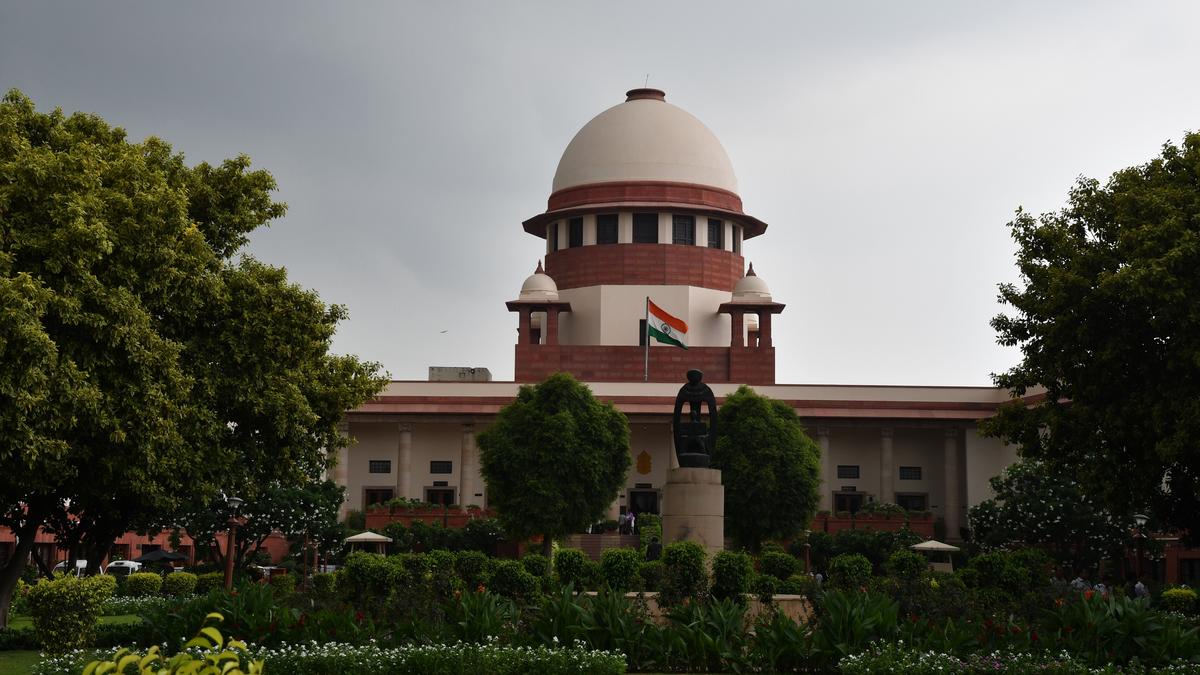

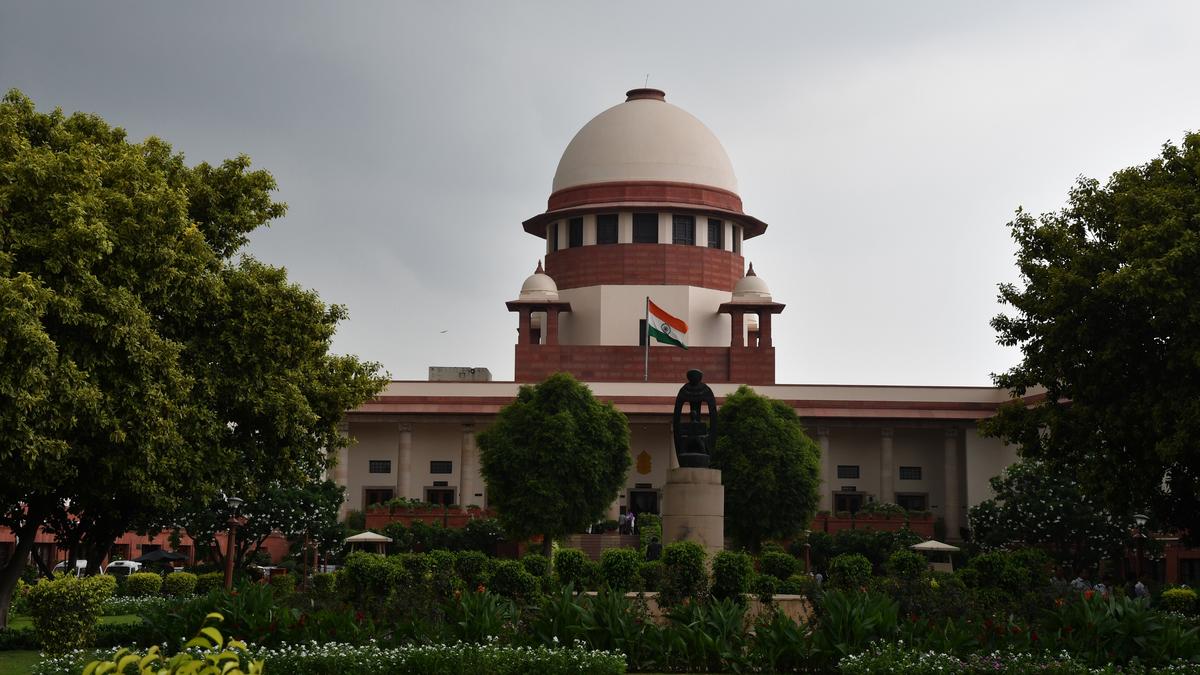
Justice Bagchi, who authored the judgment, termed child trafficking and sexual exploitation as an offence that struck at the very foundations of dignity and bodily integrity. File
| Photo Credit: The Hindu
The Supreme Court, in a judgment on Friday (December 19, 2025), observed that child trafficking and commercial sexual exploitation of children by organised cartels is a “deeply disturbing reality” in India which continues to flourish despite protective laws.
The court said child trafficking networks have a complex and layered structure which operate at various levels of recruiting, transporting, harbouring, and exploiting minor victims.

The judgment, which laid down guidelines for appreciating evidence in child trafficking cases, said courts must not disbelieve the testimony of a trafficked child just because of minor inconsistencies in her evidence.
Due regard and credence
“Such organised crime activities operate as apparently independent verticals whose insidious intersections are conveniently veiled through subterfuge and deception to hoodwink innocent victims,” a Bench of Justices Manoj Misra and Joymalya Bagchi said.
Also read: 964 children rescued so far by anti-child trafficking cell: NCPCR
A victim’s sole testimony must suffice if her version appeared to be credible and convincing. A trafficked child must not be treated as an accomplice by the courts. “Her deposition is to be given due regard and credence as that of an injured witness,” the court directed.
Justice Bagchi, who authored the judgment, termed child trafficking and sexual exploitation as an offence that struck at the very foundations of dignity and bodily integrity.
‘Moral and material abandonment’
The judgment concerned a minor who was forcibly pushed into illicit sexual intercourse by a gang of traffickers in Bengaluru. Her persistent refusal to consent had led her to be confined in a rental apartment, isolated from the outside world, until she was rescued by the police in November 2010.
The top court, while upholding the conviction of the gang members under the Immoral Traffic (Prevention) Act, said the case laid bare the “moral and material abandonment” of a child whom the state was constitutionally obliged to protect from harm’s way.
Justice Bagchi said courts must not discard a trafficked victim’s version as improbable or “against ordinary human conduct” solely on the ground of her failure to promptly protest against the “ostensibly innocuous yet ominous agenda of the trafficker”.
“Diffused and apparently disjoint manner in which the crime verticals operate in areas of recruitment, transportation, harbouring and exploitation make it difficult, if not impossible, for the victim to narrate with precision and clarity the interplay of these processes as tentacles of an organised crime activity to which she falls prey,” Justice Bagchi observed.
Recognise vulnerability
In the present case, the victim’s testimony about the topography of the rented apartment was rebutted by two prosecution witnesses, prompting the defence to attempt to discredit her evidence.
The Bench underscored that courts must bear in mind, while examining a victim, her “inherent socio-economic and, at times, cultural vulnerability when the minor belongs to a marginalised or socially and culturally backward community”.
Judicial appreciation of the victim’s evidence must be marked by sensitivity and realism, it said.
“Recounting and narration of the horrible spectre of sexual exploitation even before law enforcement agencies and the Court is an unpalatable experience leading to secondary victimisation,” the top court emphasised.
Published – December 19, 2025 09:09 pm IST