

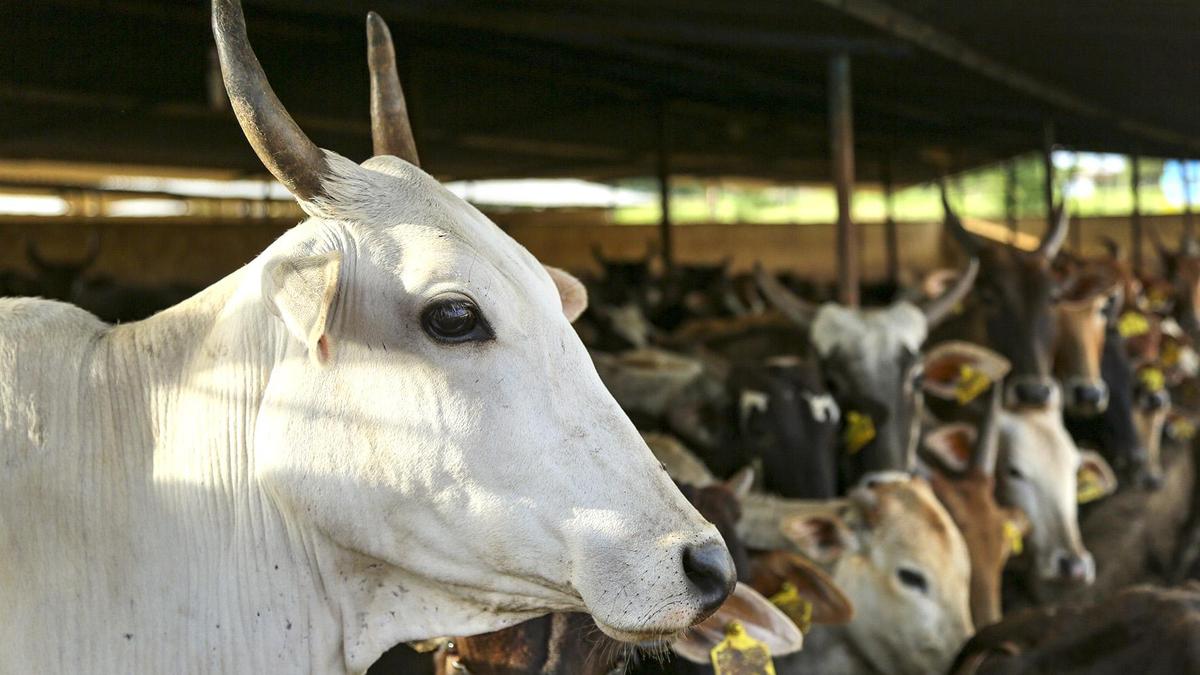


Gut instinct: In the study, researchers identified specific enzymes from bovine rumen (cow gut) that can break down the polysaccharide components of these biofilms.
| Photo Credit: Getty Images/iStockphoto
Researchers at the Indian Institute of Science (IISc) have identified enzymes from a cow’s gut that can break down the polysaccharide components of biofilms on wounds and medical surfaces, which contribute to persistent infections and delayed healing.
According to IISc, the bacterium Acinetobacter baumannii poses a substantial threat in healthcare settings forming biofilms on wounds and medical surfaces.
Biofilms are communities of bacteria encased in a matrix made up largely of polysaccharides, proteins, lipids, and extracellular DNA. They form a physical barrier that reduces antimicrobial penetration and the effectiveness of host immune cells.
Specific enzymes
In the study, researchers identified specific enzymes from bovine rumen (cow gut) that can break down the polysaccharide components of these biofilms.
They used genomic data from rumen microbes to identify enzymes capable of digesting cellulose – a polysaccharide also abundant in a cow’s diet.
“Polysaccharides are one of the major components of bacterial biofilms, constituting between 45% and 95%. These polysaccharides enhance biofilm strength and structural stability by cross-linking with each other,” said Debasis Das, associate professor at the Department of Inorganic and Physical Chemistry (IPC), IISc and co-corresponding author.
The team found that a specific enzyme named CRhAB (Cow rumen hydrolase against A. baumannii) was highly effective against the bacterium’s biofilms as well as those of the bacterium Klebsiella pneumoniae.
This enzyme drastically reduced biofilm formation and substantially suppressed the expression of key biofilm-related genes in the bacteria.
“Both A. baumannii and K. pneumoniae are among the most notorious of the ESKAPE pathogen group, and thankfully, this enzyme acts against both. It’s a dual bacterial strategy with one enzyme,” said Dipshikha Chakravortty, professor in the Department of Microbiology and Cell Biology (MCB), IISc, and co-corresponding author.
To manage wound infections, the team also developed a gauze with the enzyme imbibed in it.
Wound-dressing
The researchers are also working on a patch-like wound dressing to treat challenging infections such as diabetic foot infections. In addition, they are investigating delivery systems for respiratory infections, including those caused by K. pneumoniae, and the possibility of combining multiple enzymes to target a broader range of pathogenic biofilms.
“A long-term goal is to develop an inhalable or nebulisable CRhAB formulation that delivers the enzyme directly to the lungs, thereby preventing biofilm formation and disrupting established biofilms. Such a localised, non-invasive approach could offer a promising new treatment for chronic A. baumannii respiratory infections,” said Reshma Ramakrishnan, former PhD student in IPC and first author of the study.
Published – August 25, 2026 07:46 pm IST