



Union Water Resources Ministry says Dakshina Kannada district has been placed in the ‘safe’ category as far as groundwater levels and extractions are concerned.
| Photo Credit: ANIL KUMAR SASTRY
The Union Water Resources Ministry has categorised the Dakshina Kannada district as “safe” regarding its groundwater levels and extraction rates, as only about 45% of the total extractable groundwater is being utilised for all purposes, including domestic, agricultural, and industrial use, in 2025.
While answering Dakshina Kannada Member of Parliament Captain Brijesh Chowta’s unstarred question on including Dakshina Kannada in the Atal Bhujal Yojana, Minister of State for Jal Shakti Raj Bhushan Choudhary stated that there could be some pockets experiencing seasonal groundwater stress.
Mr. Chowta had also asked whether the government had conducted any recent study to identify the causes of water scarcity or depletion of drinking water sources in Mangaluru and other parts of Dakshina Kannada.
Mr. Choudhary said the Atal Bhujal Yojana, a community-led participatory groundwater management, was implemented in 1,199 gram panchayats across 41 over-exploited taluks in 14 districts of Karnataka, excluding Dakshina Kannada.
Only 45.71% extracted
Stating that dynamic groundwater resources of the country were being assessed jointly by the Central Groundwater Board (CGWD) and state governments, the Minister said the total groundwater recharge in Dakshina Kannada was 73,327 hectare metre (ham) and the annual extractable groundwater resource was 65,995 ham.
The total annual groundwater extraction of the entire district for the year 2025 was estimated at 30,166 ham and the stage of groundwater extraction (SoE), which was a measure of annual groundwater extraction for all uses (irrigation, industrial and domestic uses) over annual extractable groundwater resources, was arrived at 45.71% for the district as a whole, placing it in the “safe” category, Mr. Choudhary said.
Ease of access

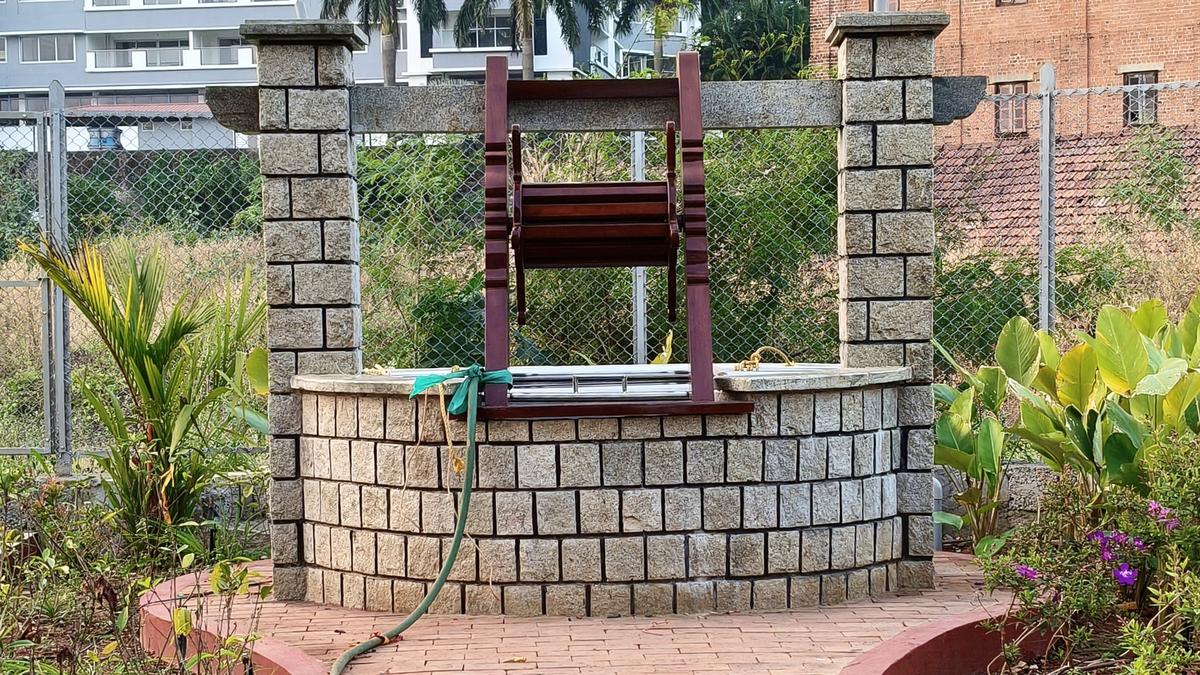
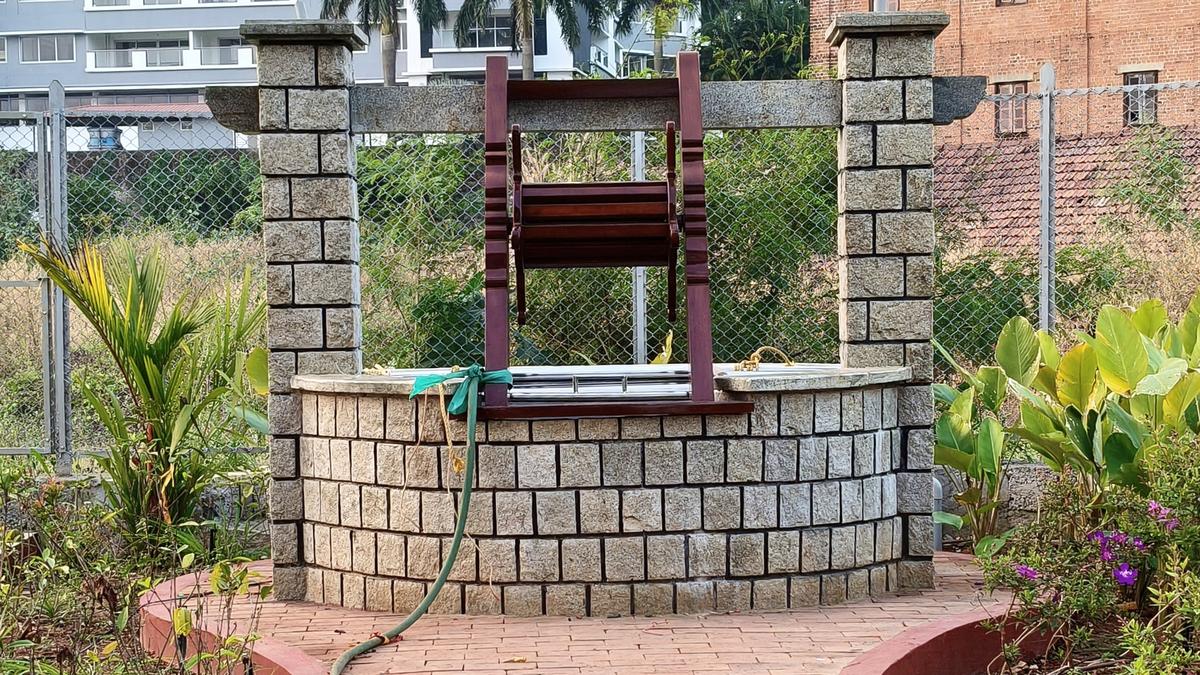
The block-wise groundwater level data measured during post-Monsoon 2024 for Dakshina Kannada indicated that approximately 95% of the analysed wells had water levels ranging between 0-10 metres below ground level (mbgl), says the Union Jal Shakti Ministry. (In picture) An open well from where water is supplied to neighbouring areas at Kadri in Mangaluru.
| Photo Credit:
H.S. MANJUNATH
Mr. Chowdhary said the CGWB monitors groundwater levels four times every year through its network of monitoring stations and not gram panchayat-wise. The block-wise groundwater level data measured during post-Monsoon 2024 for Dakshina Kannada indicated that approximately 95% of the analysed wells had water levels ranging between 0-10 metres below ground level (mbgl), indicating ease of access to groundwater, he said.
Stating that CGWB also assesses long-term fluctuation in groundwater levels, Mr. Choudhary noted that the post-Monsoon 2024 groundwater levels was compared with the mean water level data of previous years, i.e., November 2020-2024. Analysis of the data indicated that about 86% of the wells monitored had registered a rise in groundwater levels in 2024 as compared to the mean data of the previous five years.
Published – December 28, 2025 10:53 pm IST