



More than 350 electors in Delhi’s draft electoral roll, who were flagged for notices during the ongoing Special Intensive Revision (SIR), have been marked “ineligible” for the final electoral roll in less than a month into the hearings process, The Hindu has learnt. About 200 of these electors are in the Vikaspuri constituency.

Delhi Chief Electoral Officer (CEO) Ashok Kumar has, meanwhile, warned Electoral Registration Officers (EROs), who alone hold the statutory power to mark an elector “ineligible”, against taking such decisions without completing the required verifications. In a letter issued on Friday (September 25, 2026), officers have been directed to follow a 10-point checklist before declaring an elector ineligible or deleting their name from the roll, specifically instructing that no deletion should be made on “flimsy or frivolous grounds”.

The 350-plus voters marked ineligible were among 33.1 lakh names flagged by the Election Commission of India (ECI) for notices in the “unmapped” or “logical discrepancies” categories. These are voters who submitted their enumeration forms during the enumeration phase of the SIR and appeared on the draft electoral roll published on August 31. A total of 97.5 lakh electors were on the draft roll in Delhi, while 47.6 lakh names, which were on the roll before the SIR, were deleted.

Most of those who were flagged for notices have to undergo a hearing process that has been underway since the draft roll was published. The last date for disposal of all notices has been extended to November 30 from October 29.
Once a voter is marked ineligible, this cannot be rolled back at the level of the ERO or even the State CEO, officials said.
Apart from Vikaspuri, other constituencies where voters have been marked ineligible so far include Madipur, Malviya Nagar, Sangam Vihar and Tughlakabad.
The process
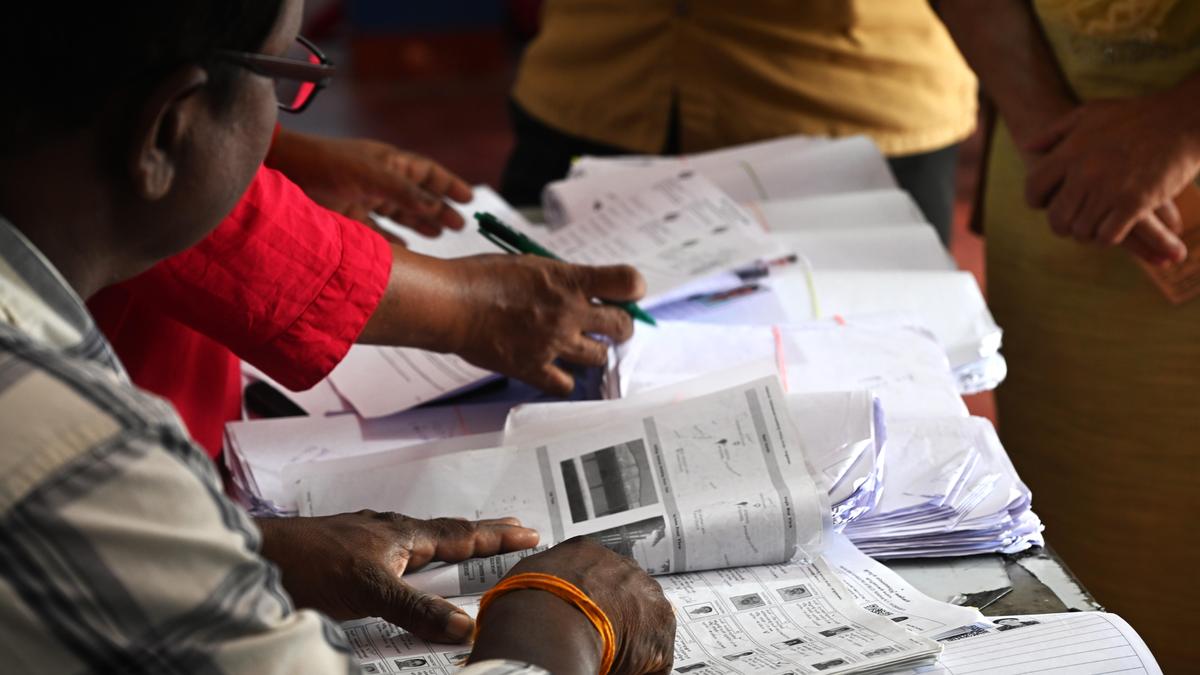
EROs told The Hindu that they can mark an elector ineligible on the ECI’s software, either by specifying that the elector did not appear for their hearing after rescheduling attempts or in cases where documents produced by the elector are found unsatisfactory. Merely not appearing for a hearing does not establish that an elector is ineligible to vote. EROs also need to send a notice, and a Block Level Officer (BLO) has to go for field verification before initiating deletion.

EROs are the officers at the constituency level who have final authority over the preparation of the electoral roll of that area.
As per the letter issued by the CEO’s office to all District Election Officers (DEOs) and EROs, the officials have been directed to ensure that an elector is marked ineligible only in case the person fails to meet at least one of the following conditions as under Article 324 of the Constitution: the person is a citizen of India, the person is not below 18 years of age, and the person is ordinarily resident of the assembly constituency.
The ERO must record the decision in a “speaking order” and clearly state which eligibility condition the elector has failed to meet.
“Deleting a voter is not easy. It should be proven beyond doubt,” said Iti Agarwal, ERO at the Rajouri Garden constituency, where she has marked one voter ineligible so far due to the elector’s death. Meanwhile, Madipur constituency ERO Dinesh Singh said all the eight electors marked ineligible are either dead or are duplicate entries.
While Assistant Electoral Registration Officers (AEROs) can also mark an elector “found ineligible” after uploading documents, this goes to the ERO for a review.
The ERO from Sadar Bazaar, where over 30 electors have been marked “ineligible”, said she was not aware of the situation. “We are not marking anyone ineligible. We are giving ample time for noticees to respond and reschedule,” the ERO said.
No-rollback concern
In a meeting of EROs held earlier this week, it was flagged that more than 200 electors in Vikaspuri were marked “ineligible”. The officials asked to examine whether decisions could be rolled back in cases where hearings had not been rescheduled or adequate time had not been given.

“It is important to be cautious because, as we saw in the case of Goa, if we mark some electors ineligible without thorough verification, then we cannot reverse the decision. We will need to reach out to ECI headquarters,” an ERO who attended the meeting said.
The Vikaspuri ERO was not available for comment on the cases or the grounds on which the electors were declared ineligible.
West District Election Officer Hari Kallikat said the DEO had no authority over the process. “It is under the statutory powers of the ERO. They are supposed to pass a speaking order with the reason mentioned and upload it,” he said.
An official familiar with the Vikaspuri cases said some electors marked ineligible included those whose hearings had not been rescheduled despite the option being available. The official also said some cases involved electors who had not appeared after receiving a notice once.
Published – September 27, 2026 07:00 am IST