








At a time when the consumption of fly ash in the construction industry is increasing, much to the relief of scientists and environmental activists, who were concerned about its improper disposal by Thermal Power Plants (TPPs), the policies of the Central government seem to be working against it, say researchers.
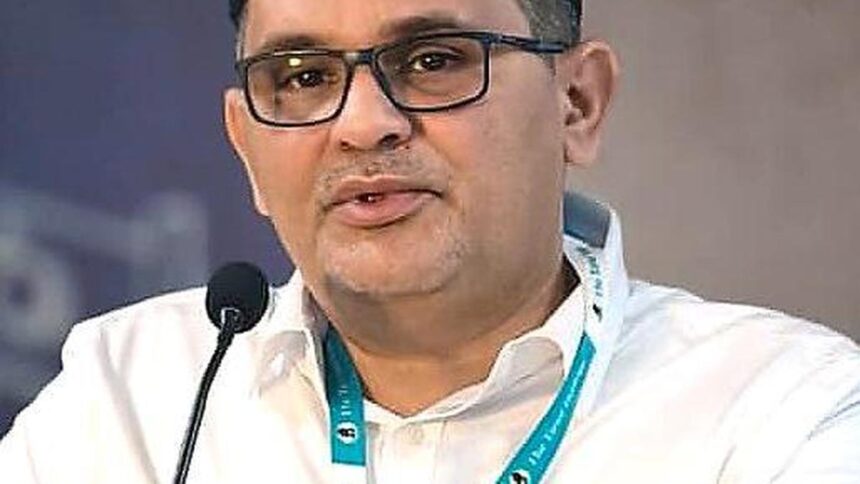
The proposal of the Centre to extract Rare Earth Elements (REEs) from fly ash is like searching for a ‘needle in a haystack’. The far-fetched idea leaves the remaining bulk material in an environmental liability, according to N. Bhanumathidas and N. Kalidas, researchers of the Visakhapatnam-based Institute for Solid Waste Research and Ecological Balance (INSWAREB). They have been involved in research on the subject for over three decades.
Fly ash generated, which is around 250 million tonnes a year, is increasingly reclassified from waste to secondary raw material for brick, cement and other construction industries. While India has other ‘REE-rich resources’, the proposal to take up ‘REE-centric processing of fly ash’ abuses techno-prudence as it degrades the remaining bulk material to an environmental liability, they argued.
Contending the statements of the Ministry of Science and Technology (MoS&T) that ‘fly ash is a rich source of REEs, and other precious elements’, the researchers wonder how REEs at 0.04% by weight become a rich source?
The proposed project aims to use fly ash as an alternative to monazite minerals for REE extraction. They wonder how fly ash with 0.04% is an alternative to monazite sand, which has 55% to 60% REE content.
The demand of REEs in various advanced equipment of electronics, space, medical and defence is understandable and the concern of the government to augment their indigenous production is appreciable towards ‘Atma Nirbhar Bharat’.
Commending the efforts at the PMO to tap every source and opportunity in the country towards self-reliance to keep pace with global advancements, Dr. Bhanumathidas and Mr. Kalidas wrote to the Principal Scientific Advisor to the Government of India Ajay Sood that untenable proposals like spending huge resources to extract negligible amounts of REEs and leaving the residual fly ash in the open can create bigger problems rather than providing effective solutions to the massive generation and improper disposal of fly ash.
While India is the third largest source of REEs in the world, its production is far behind the countries with poor reserves. So, immediate research is necessary in tapping the proven resources for maximising the production of REEs, they said.
Published – February 02, 2026 12:20 am IST